
Ford Thunderbird
Description
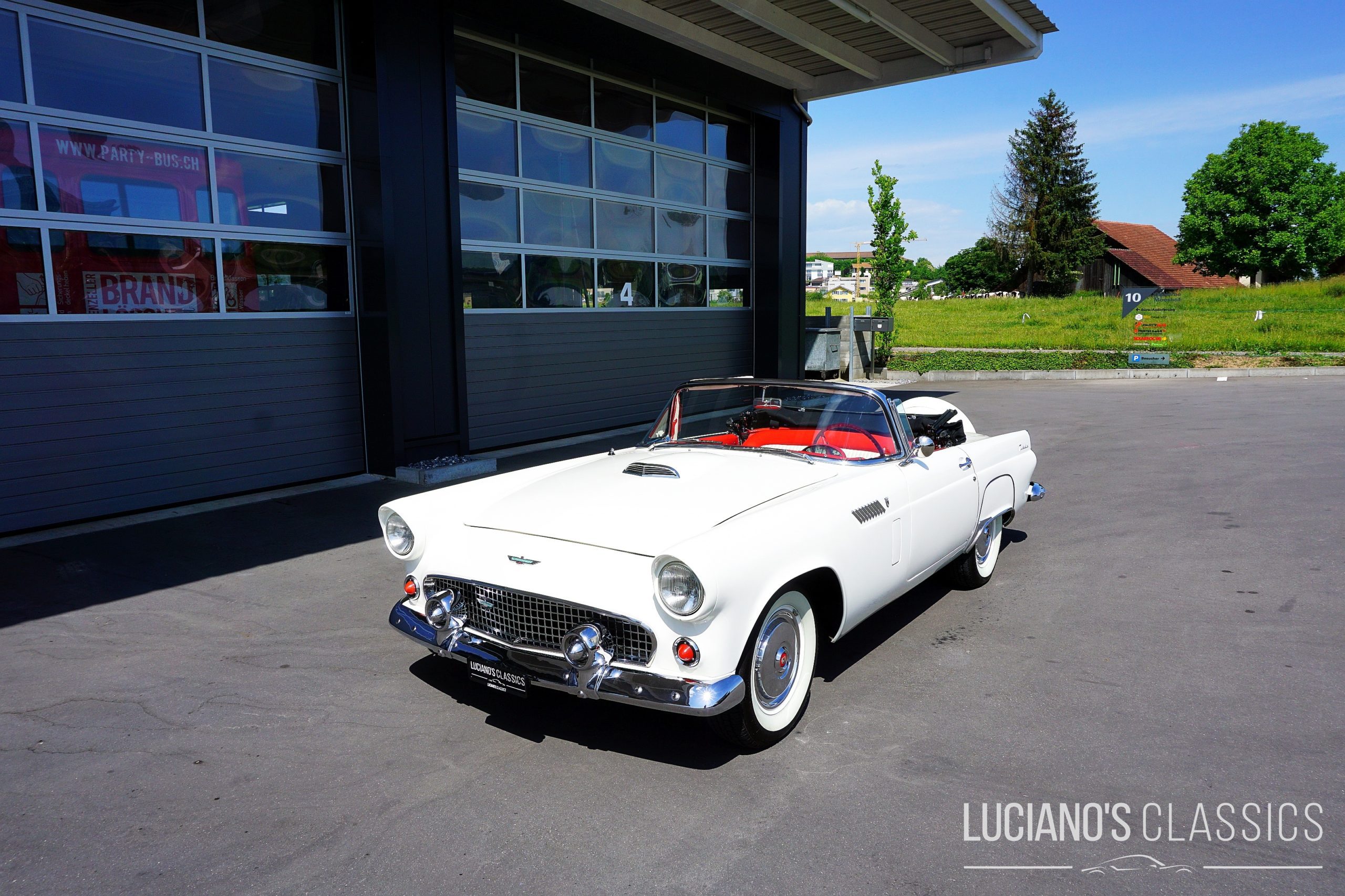
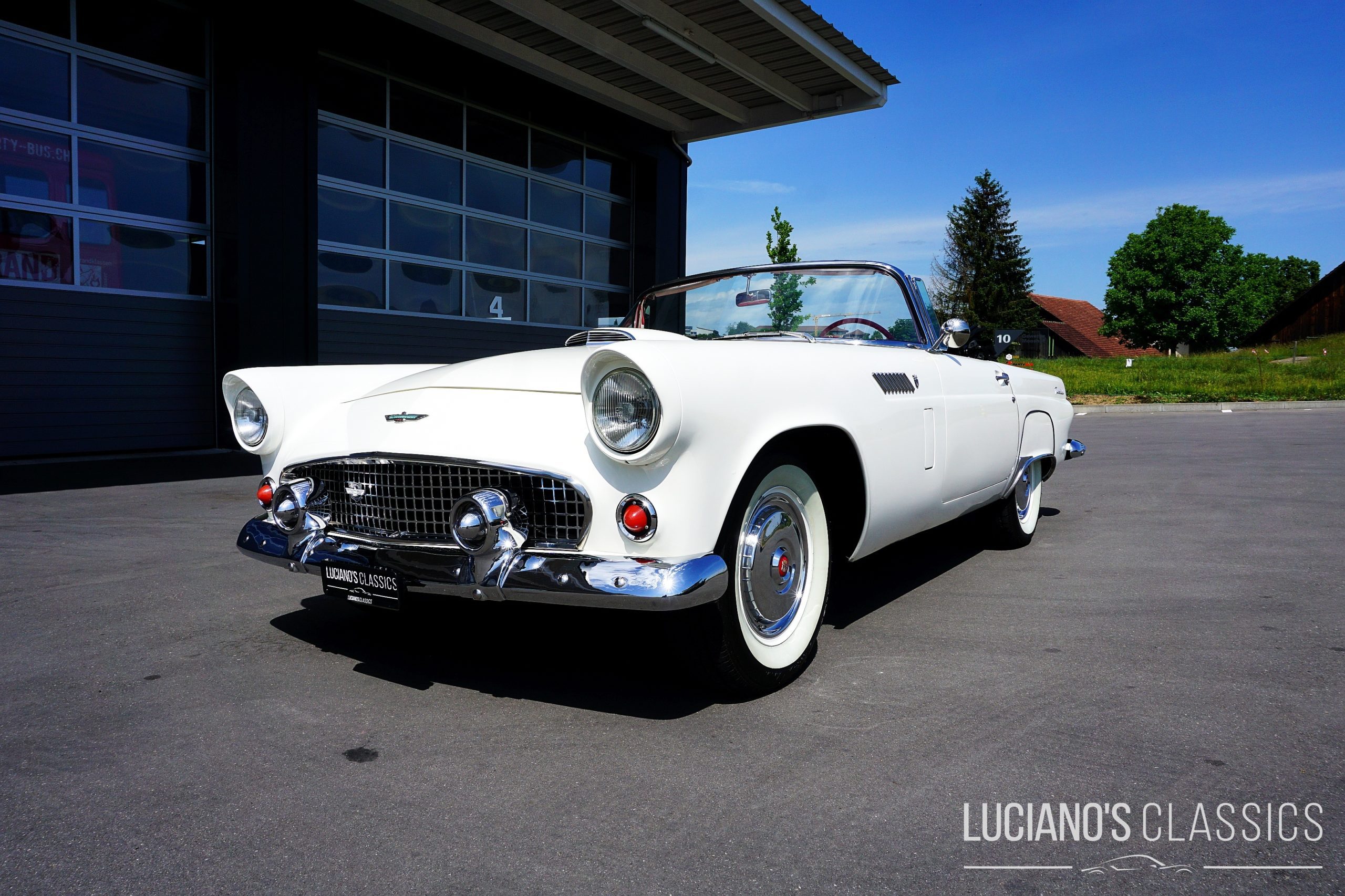
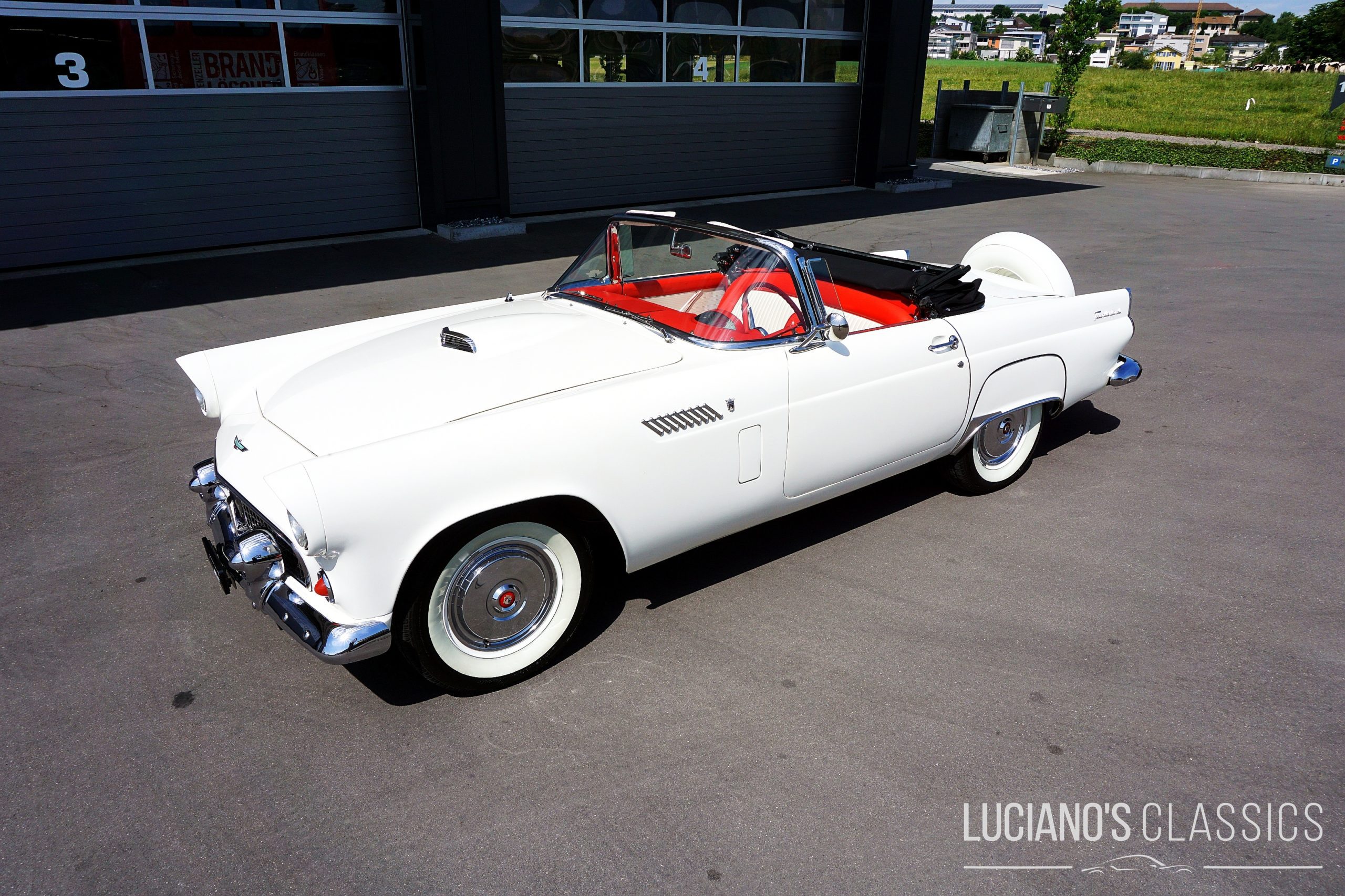
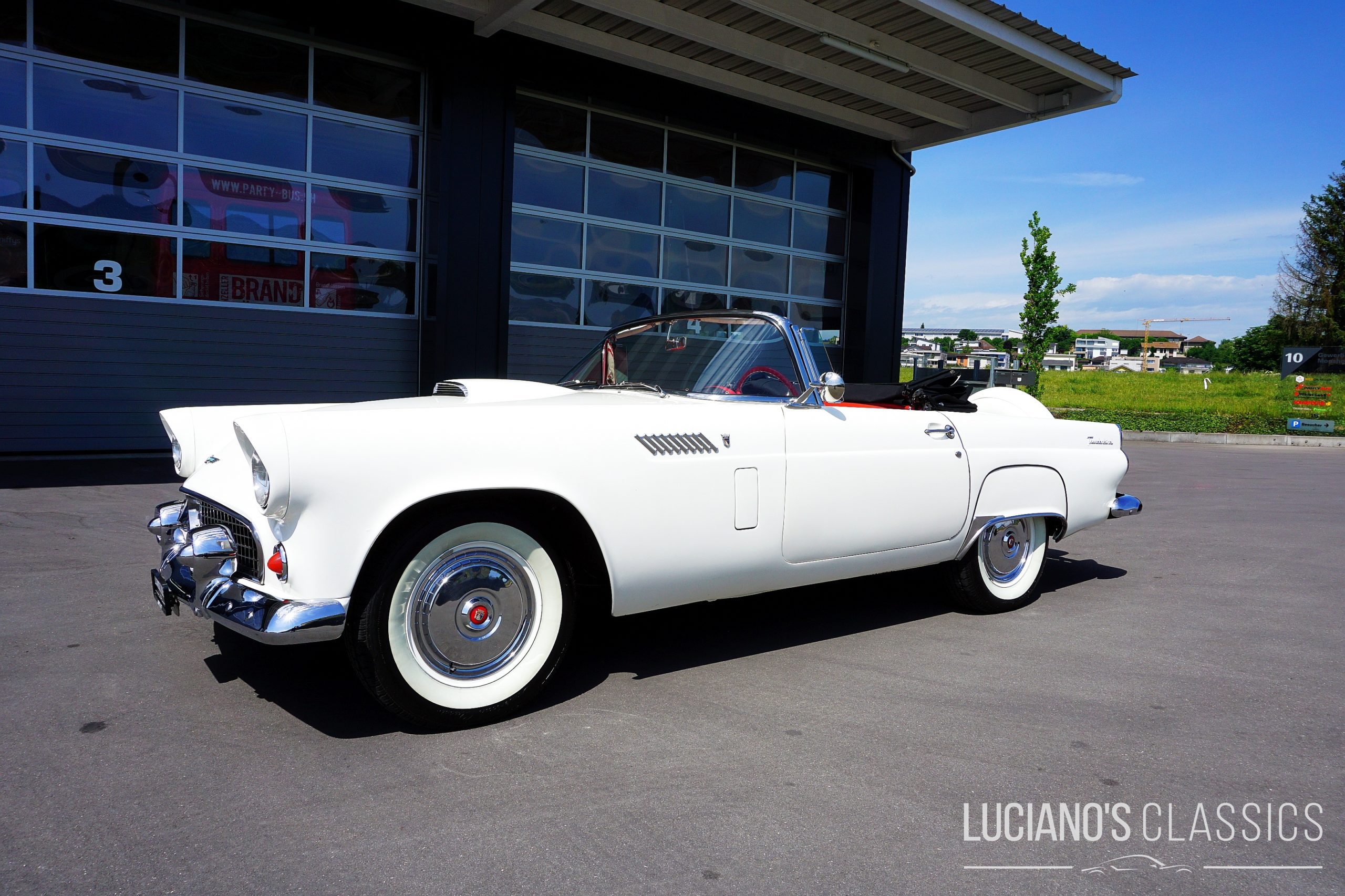
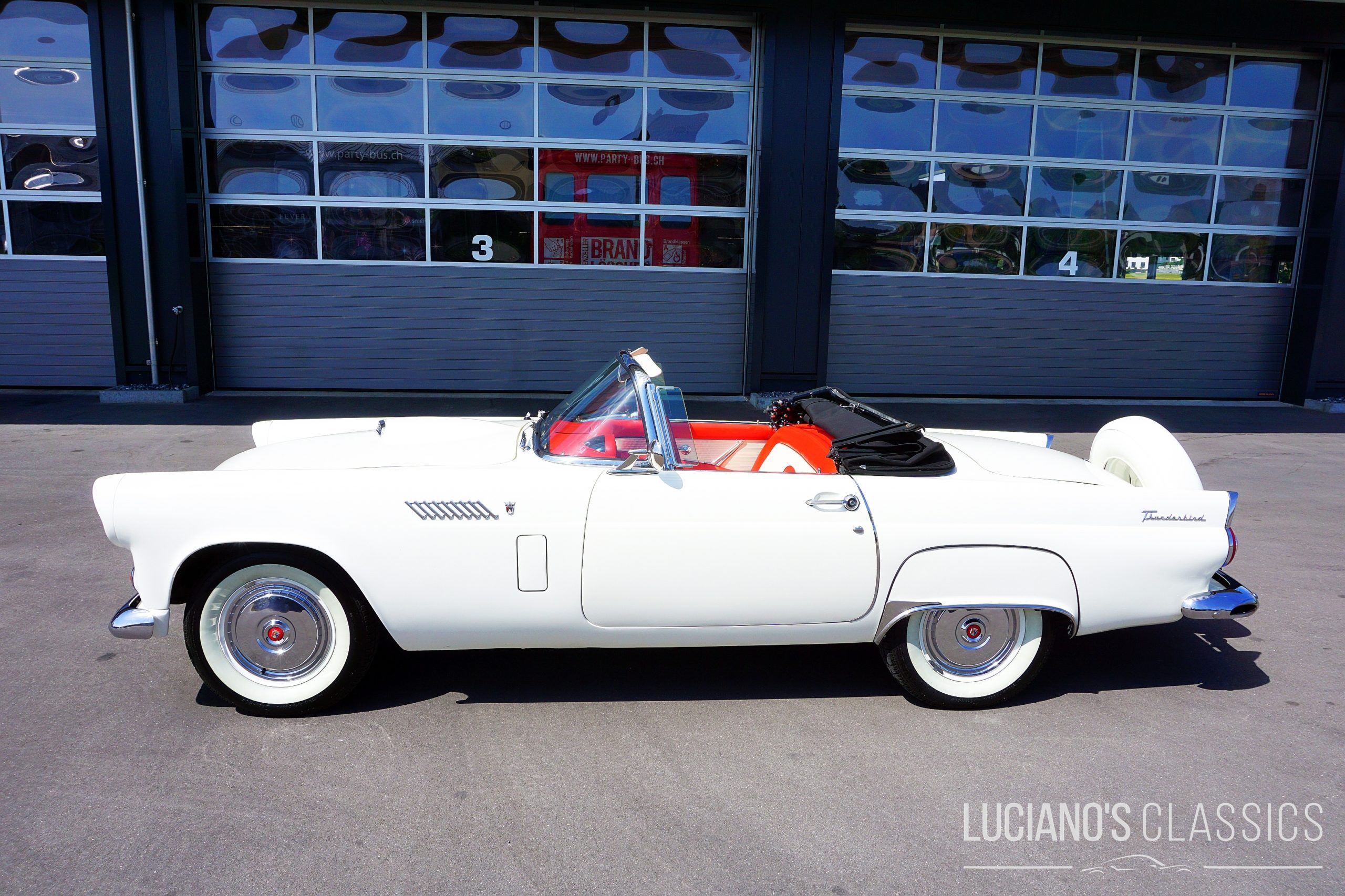
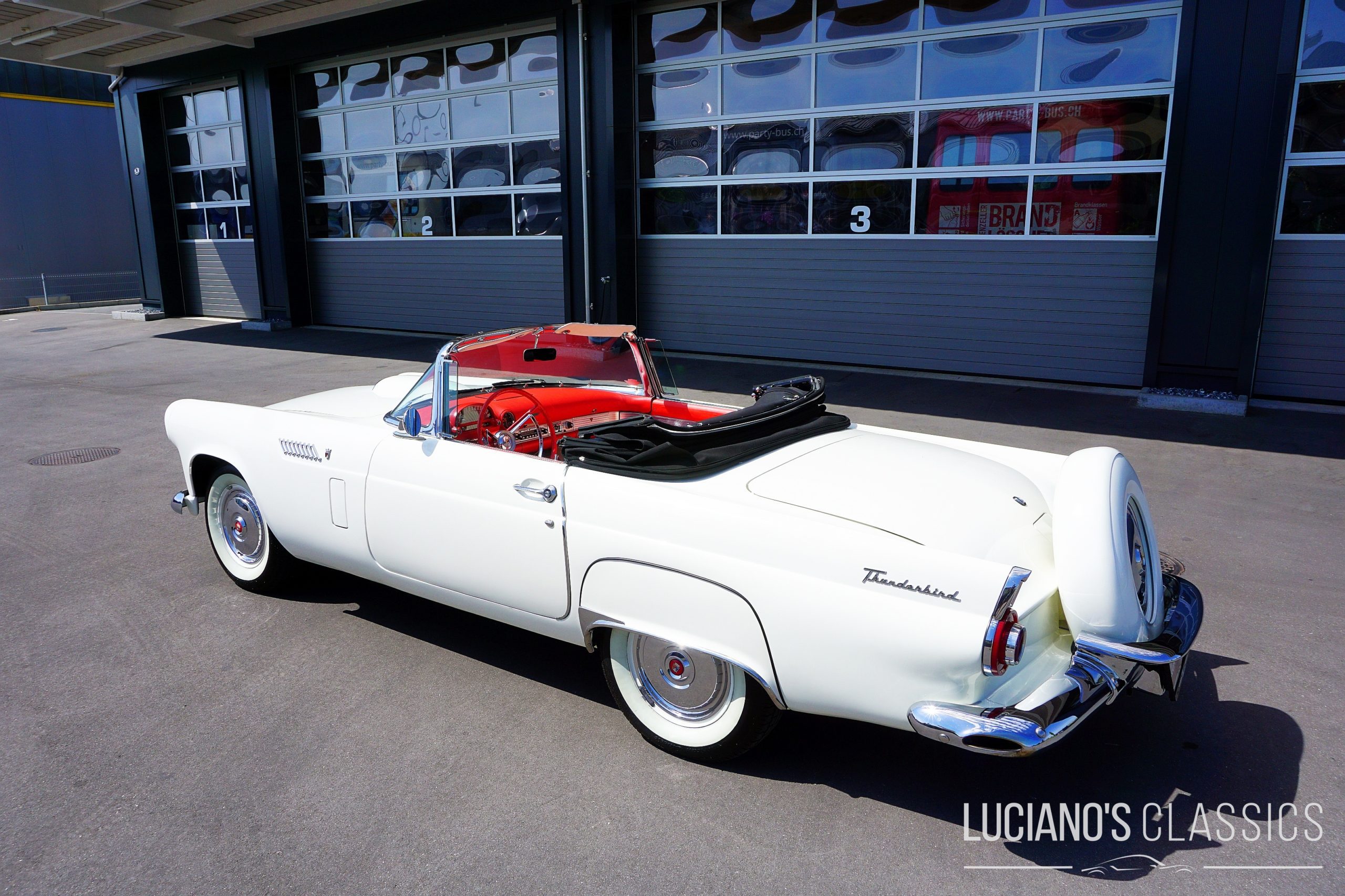
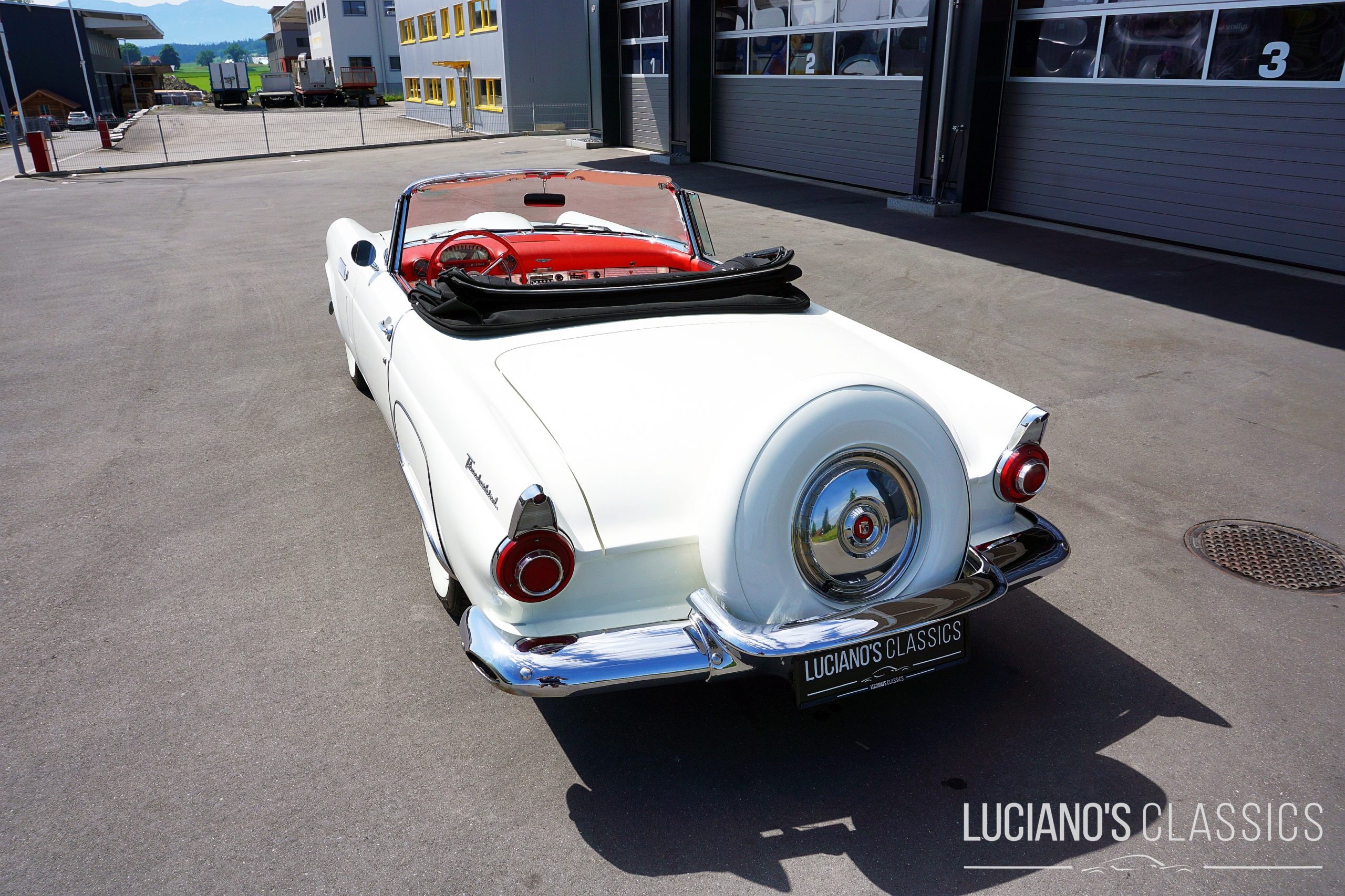
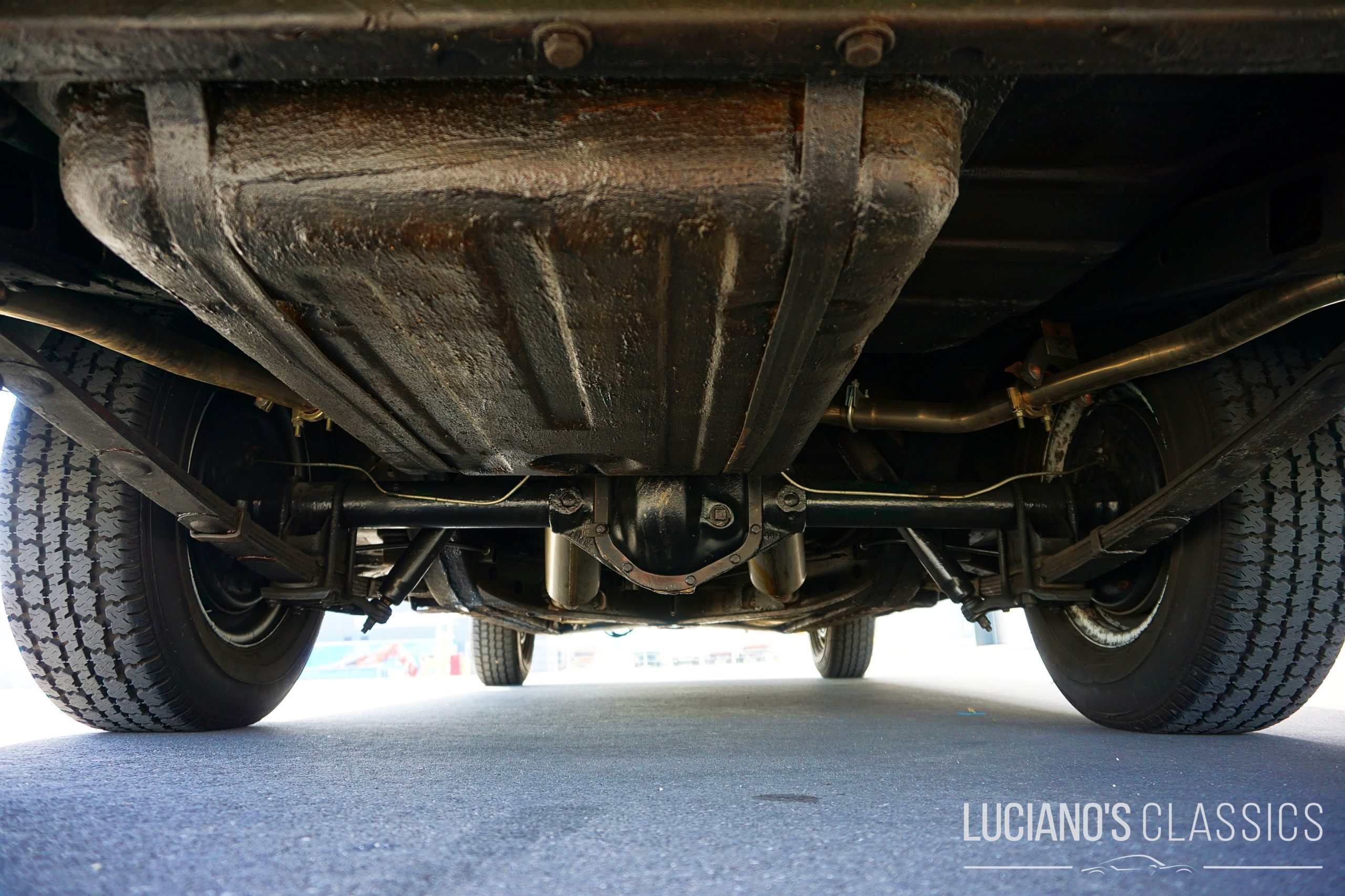
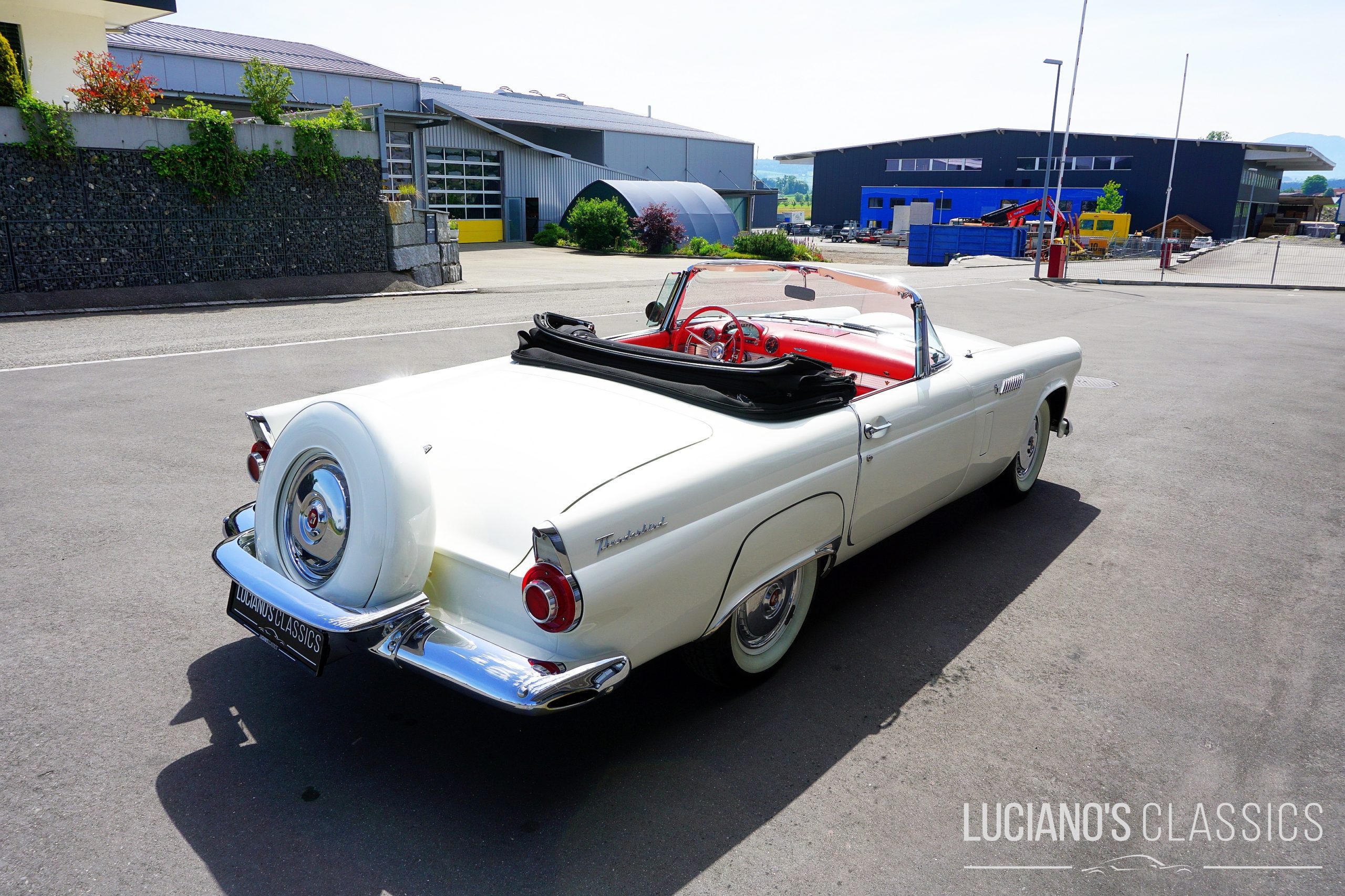
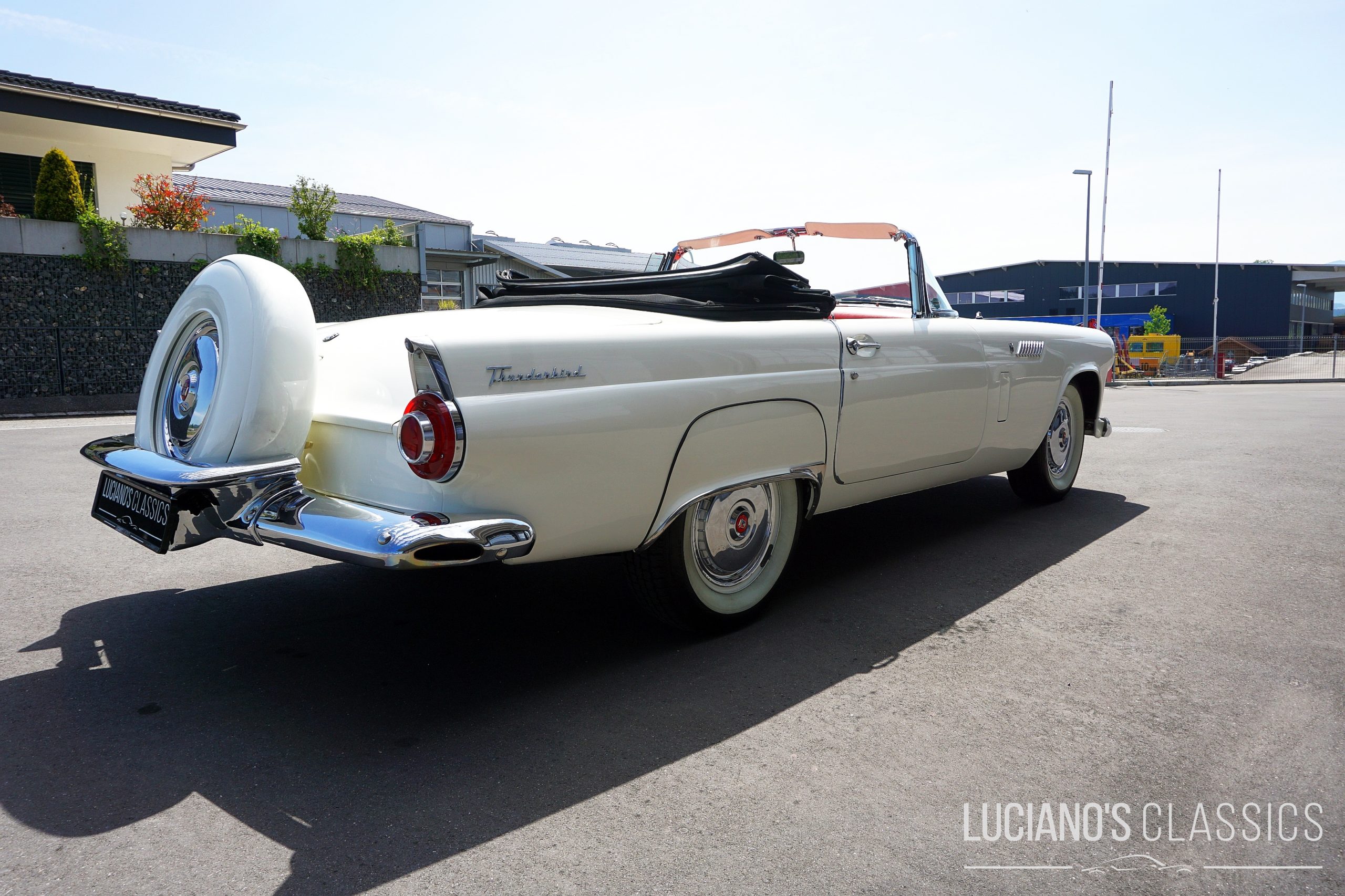
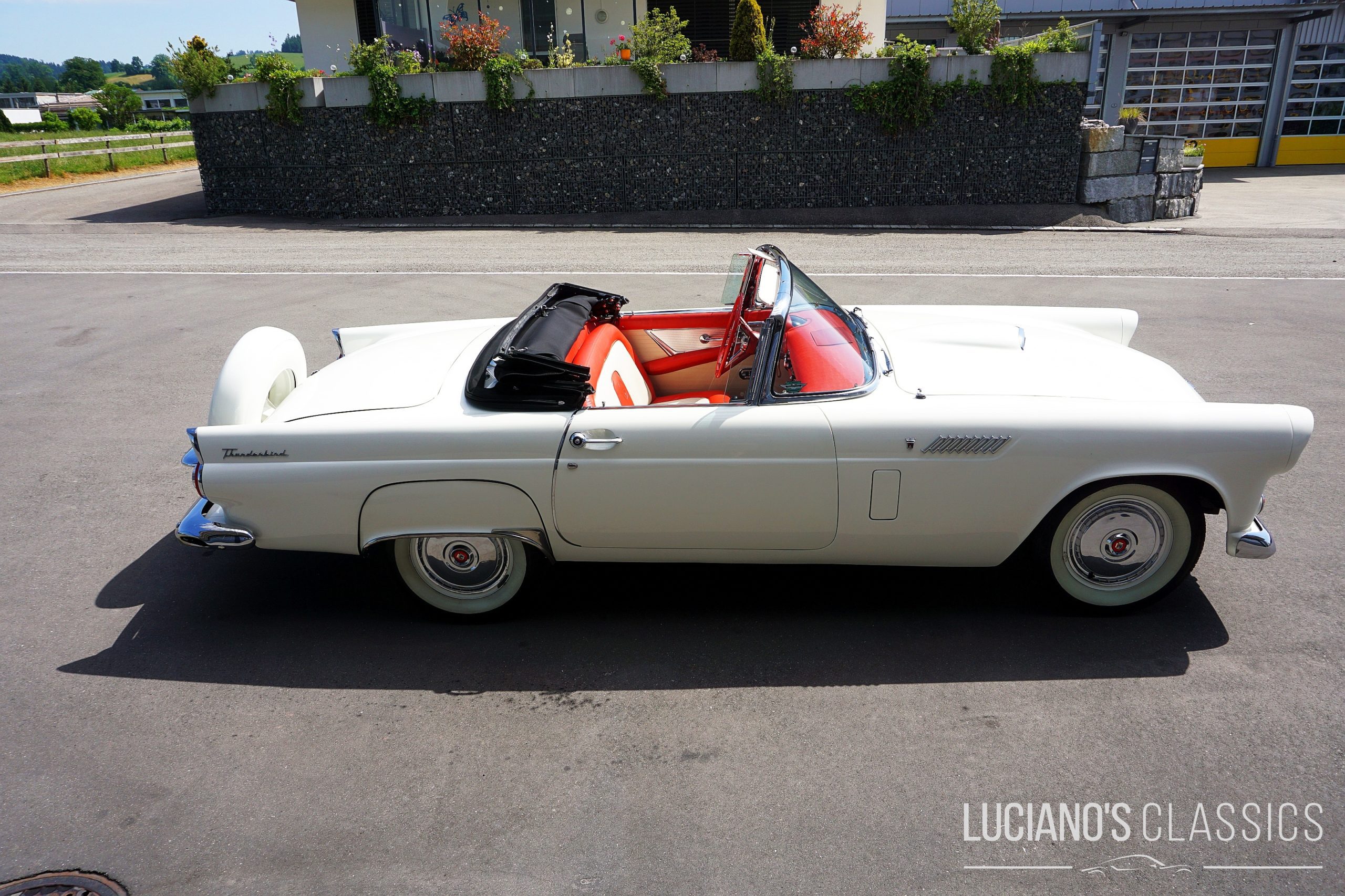
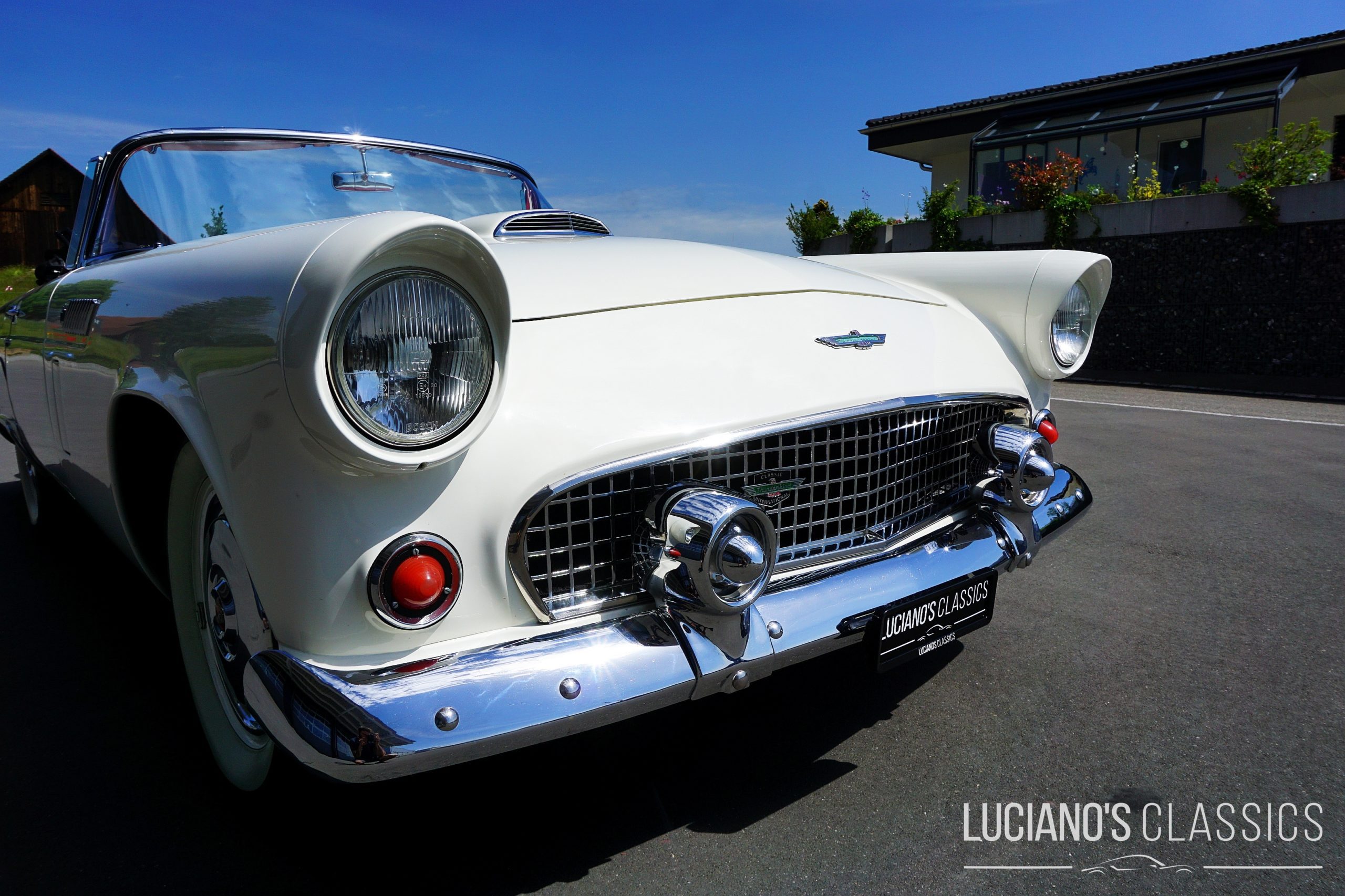
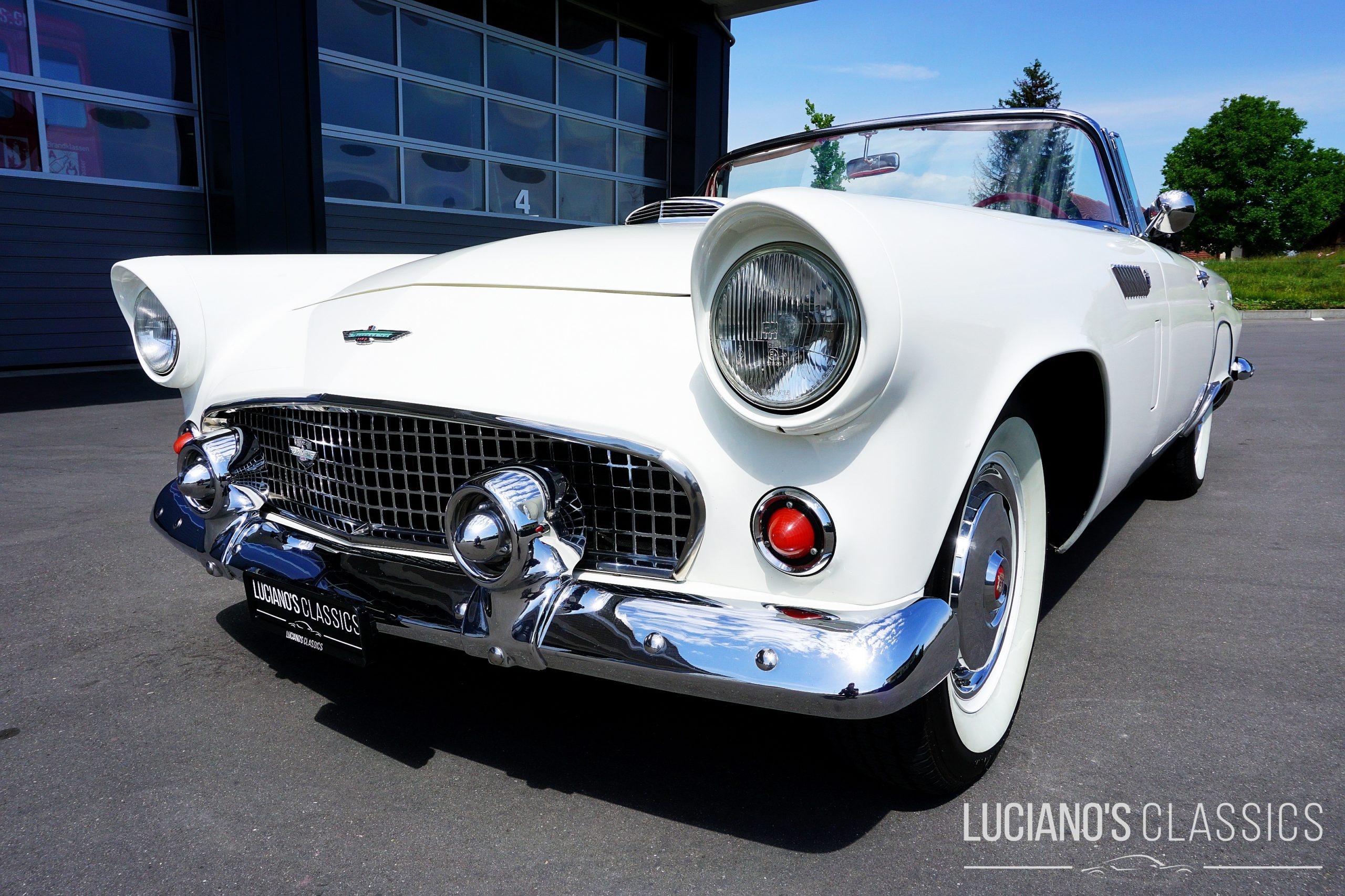
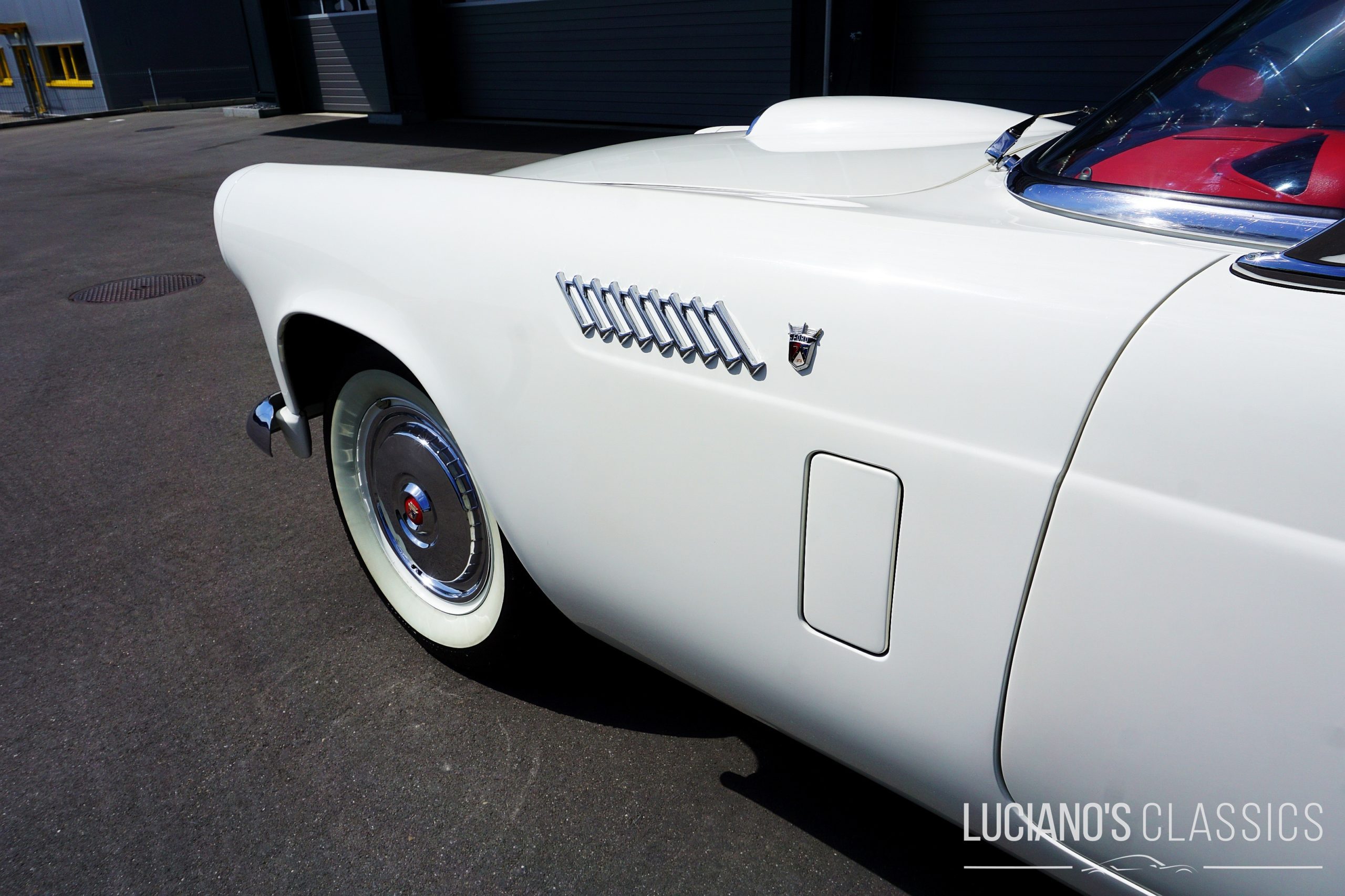
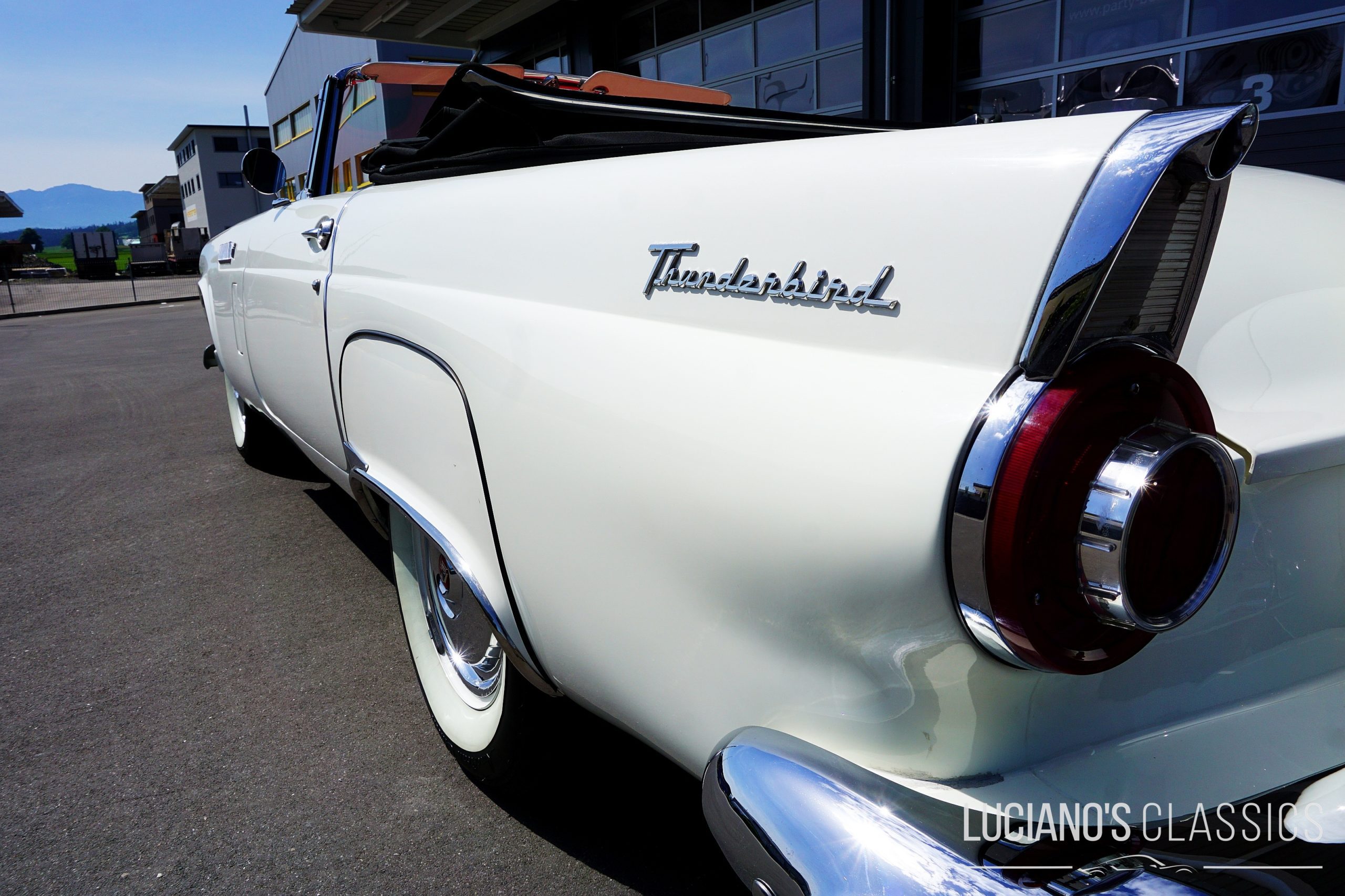
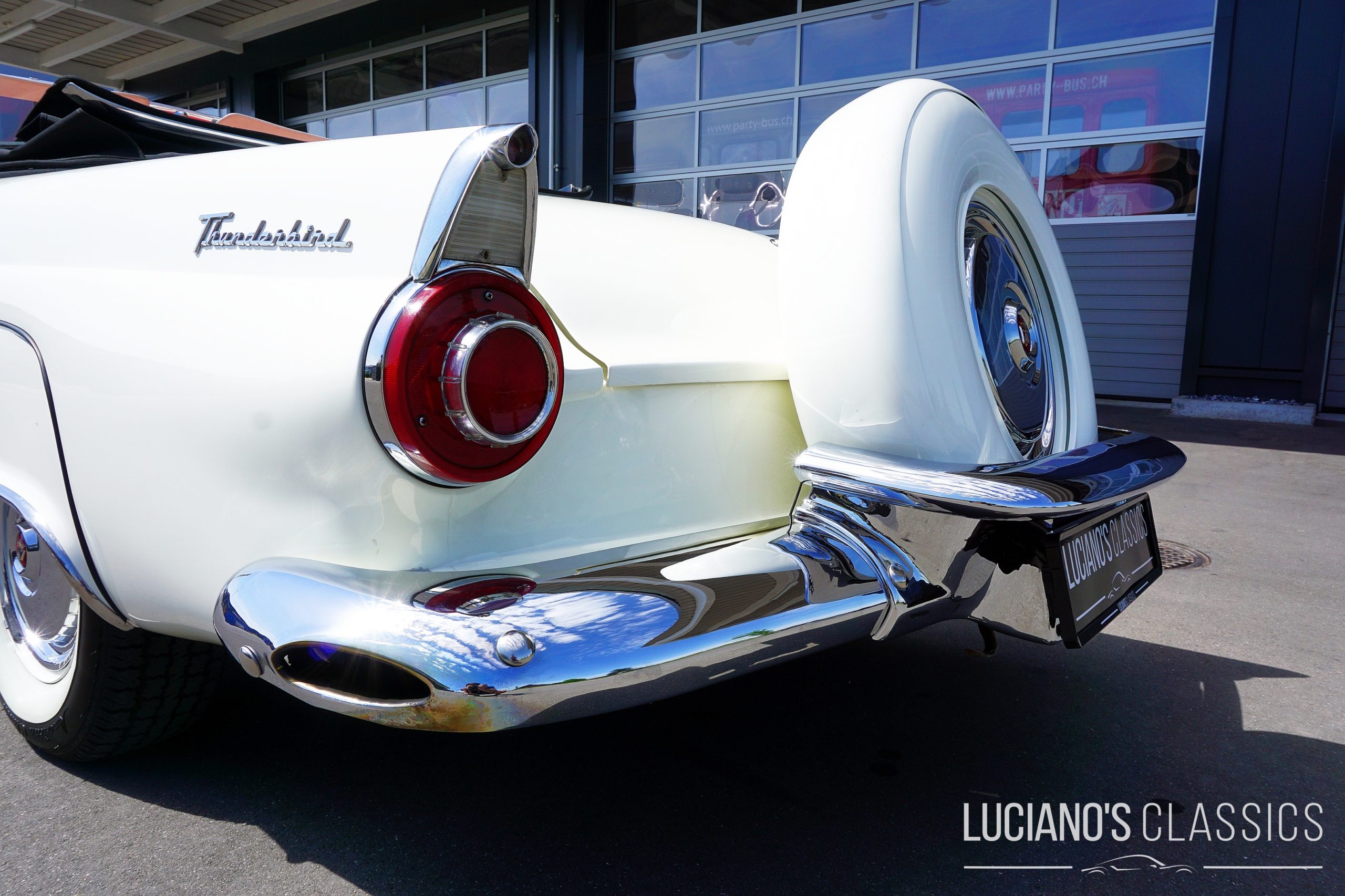
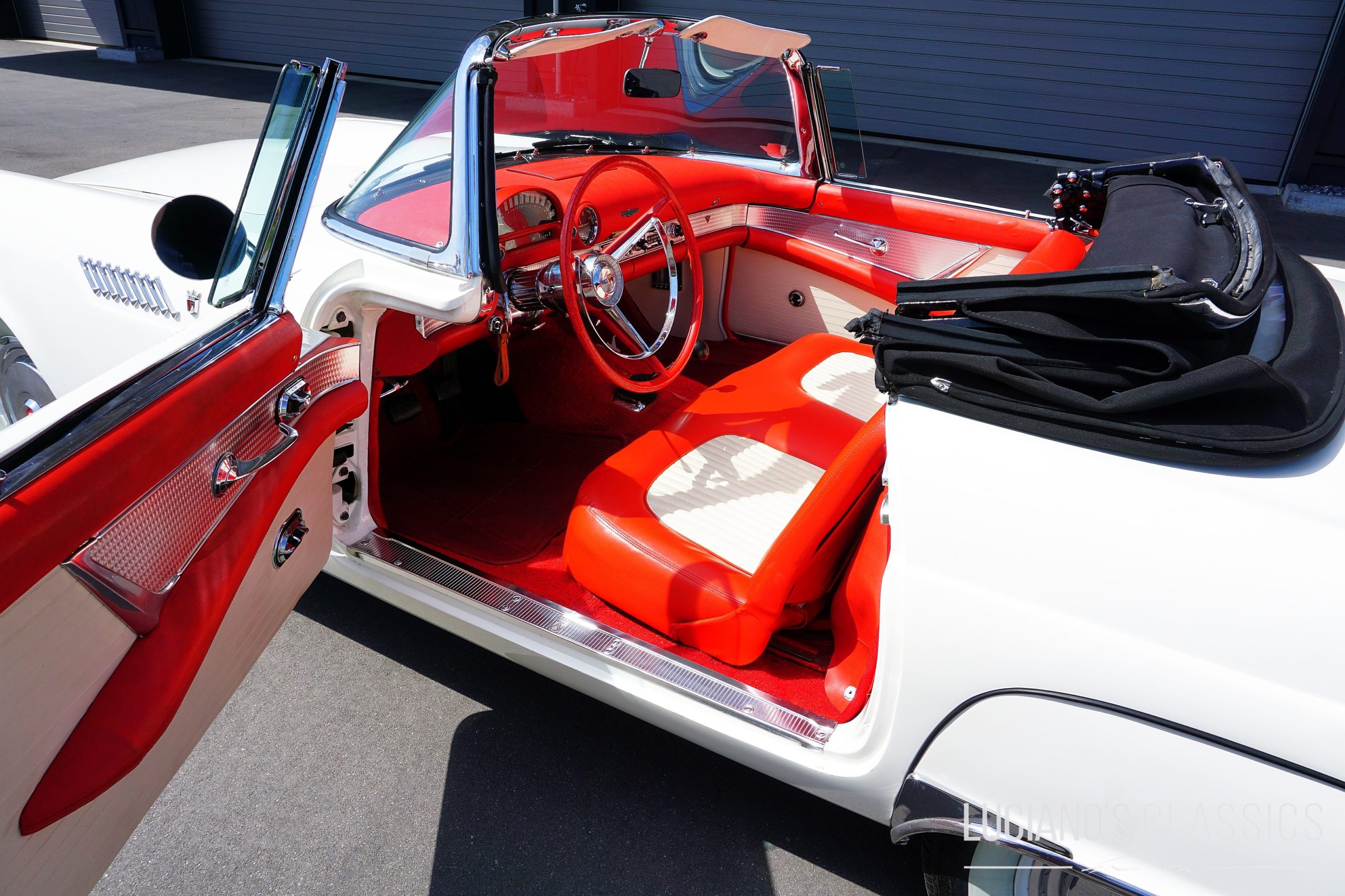
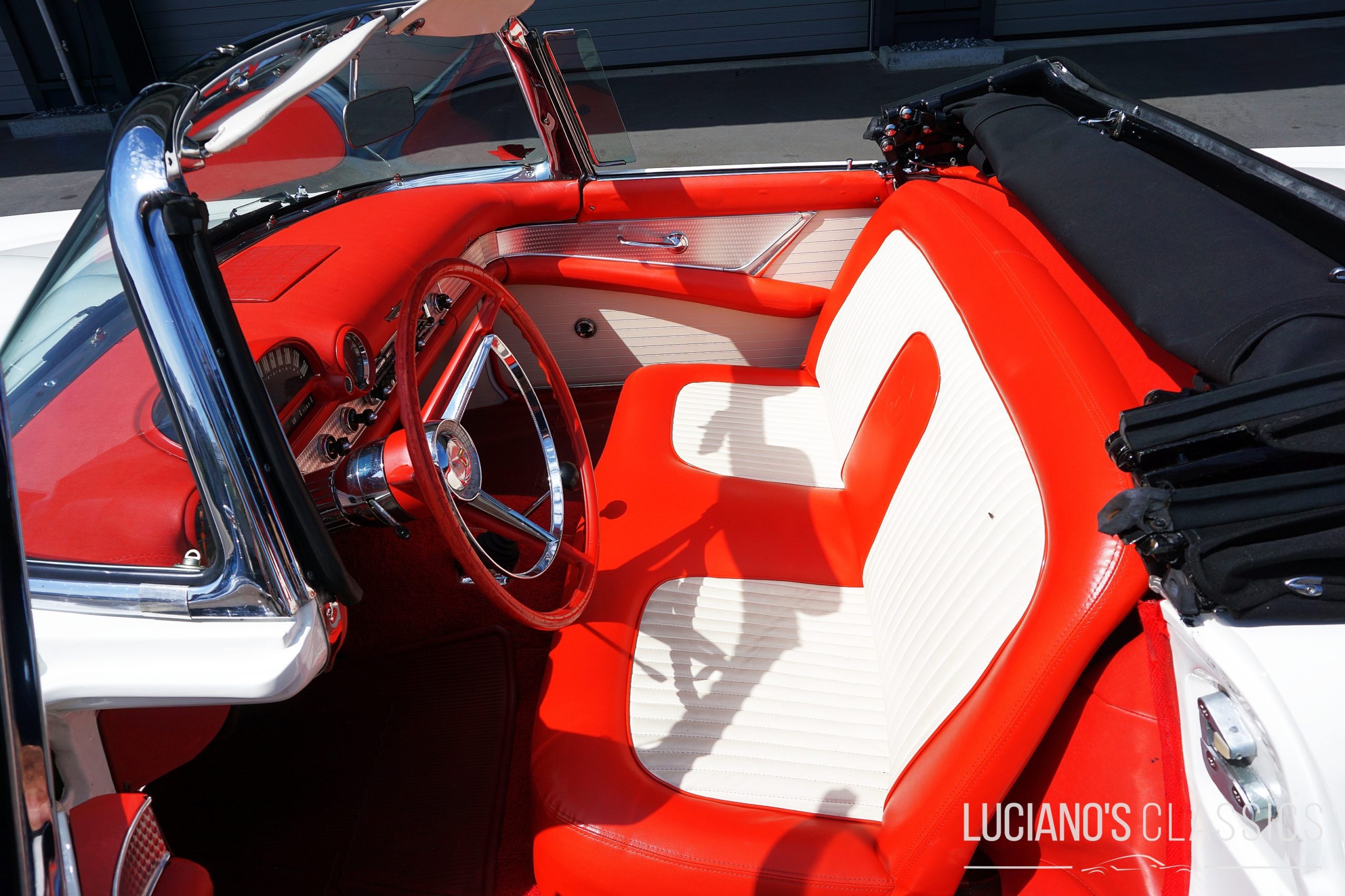
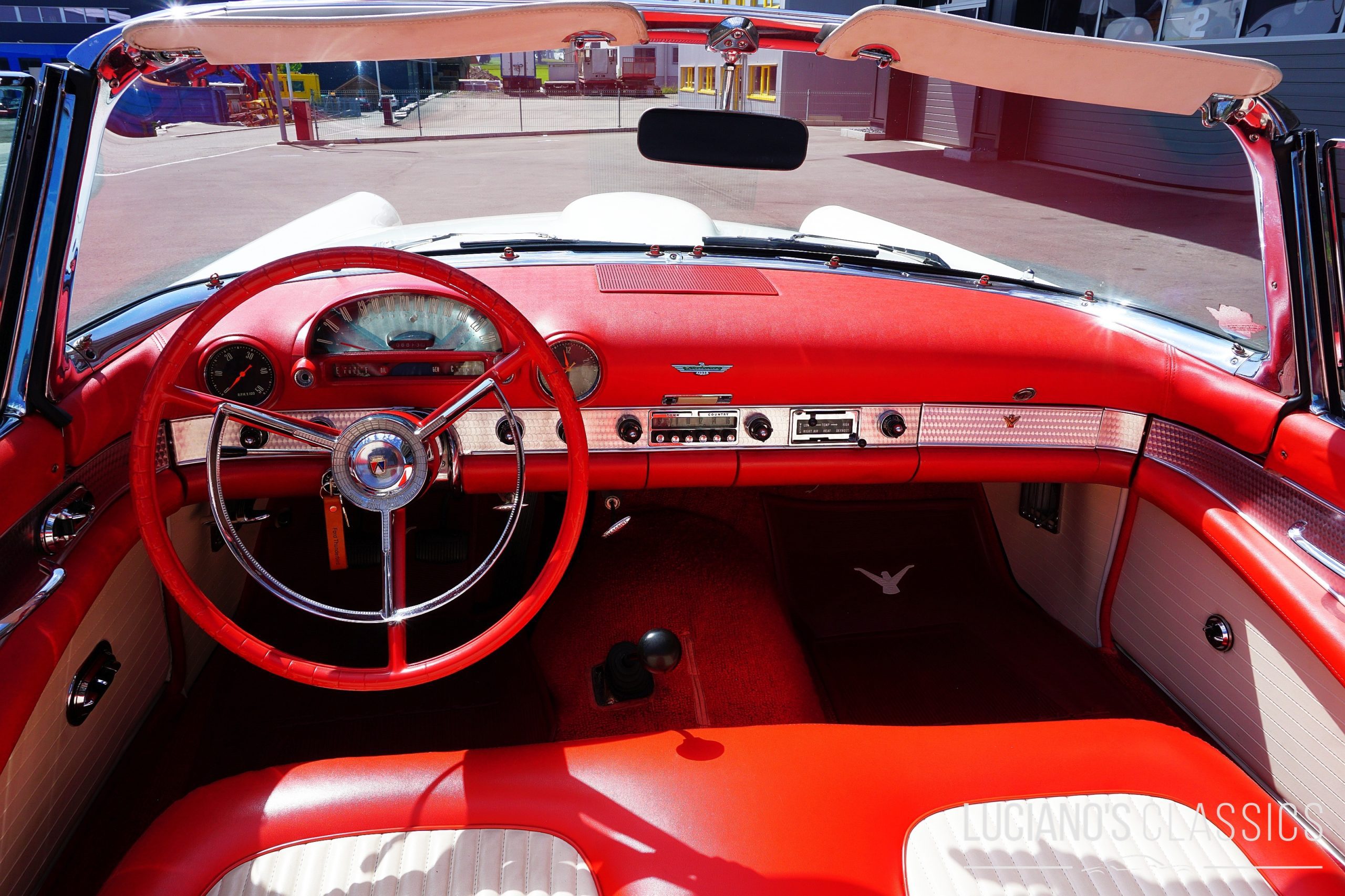
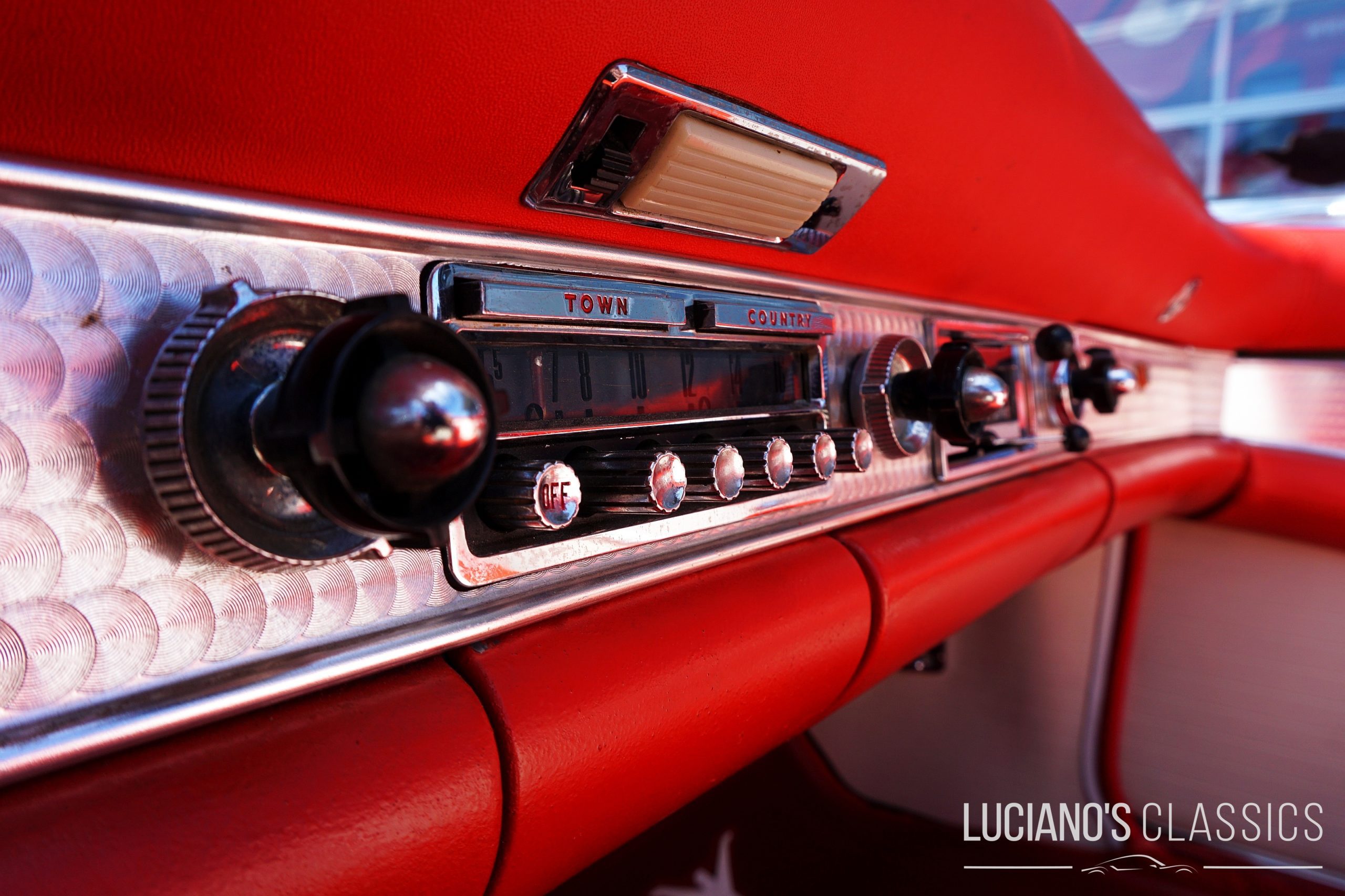
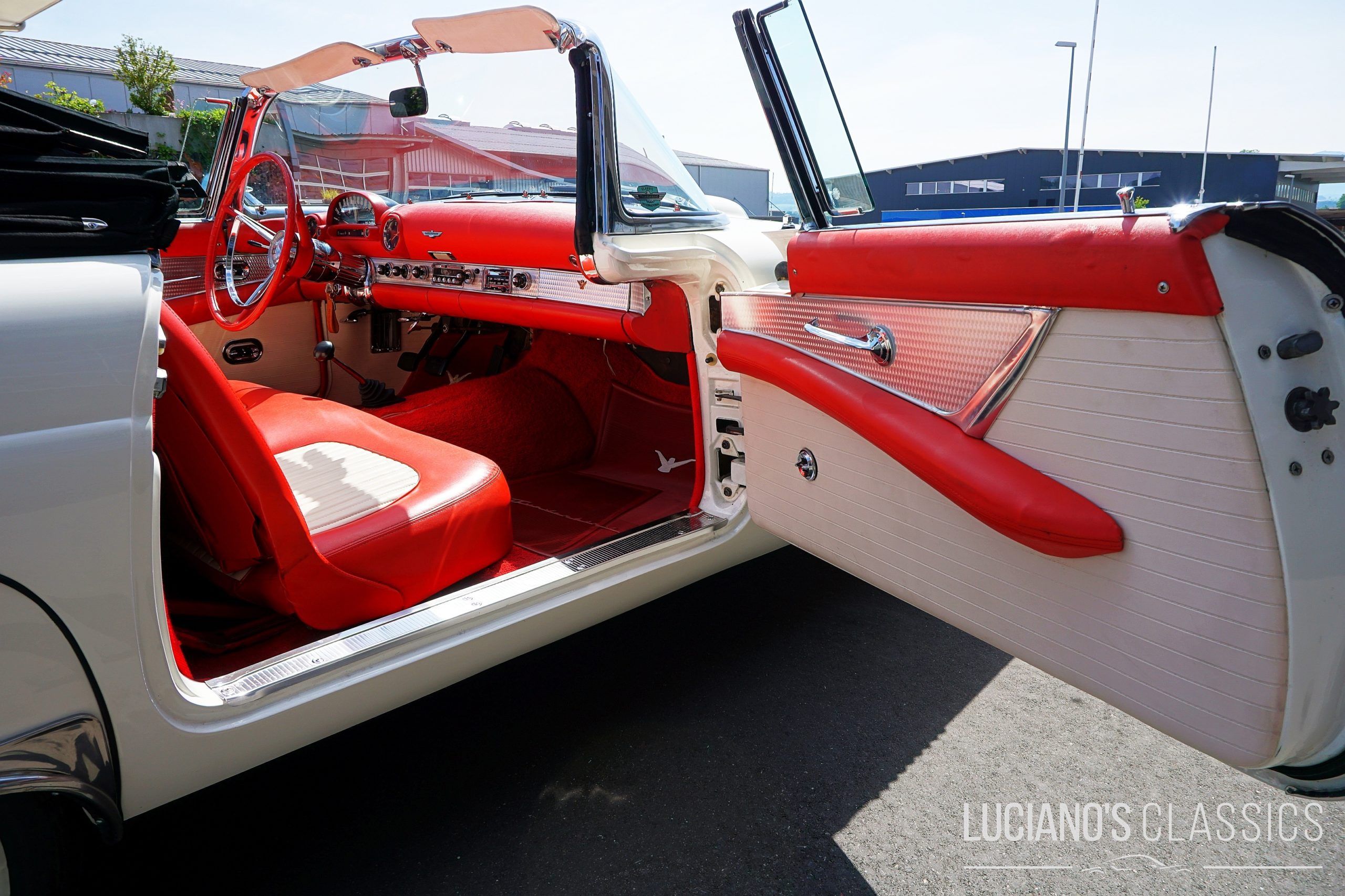
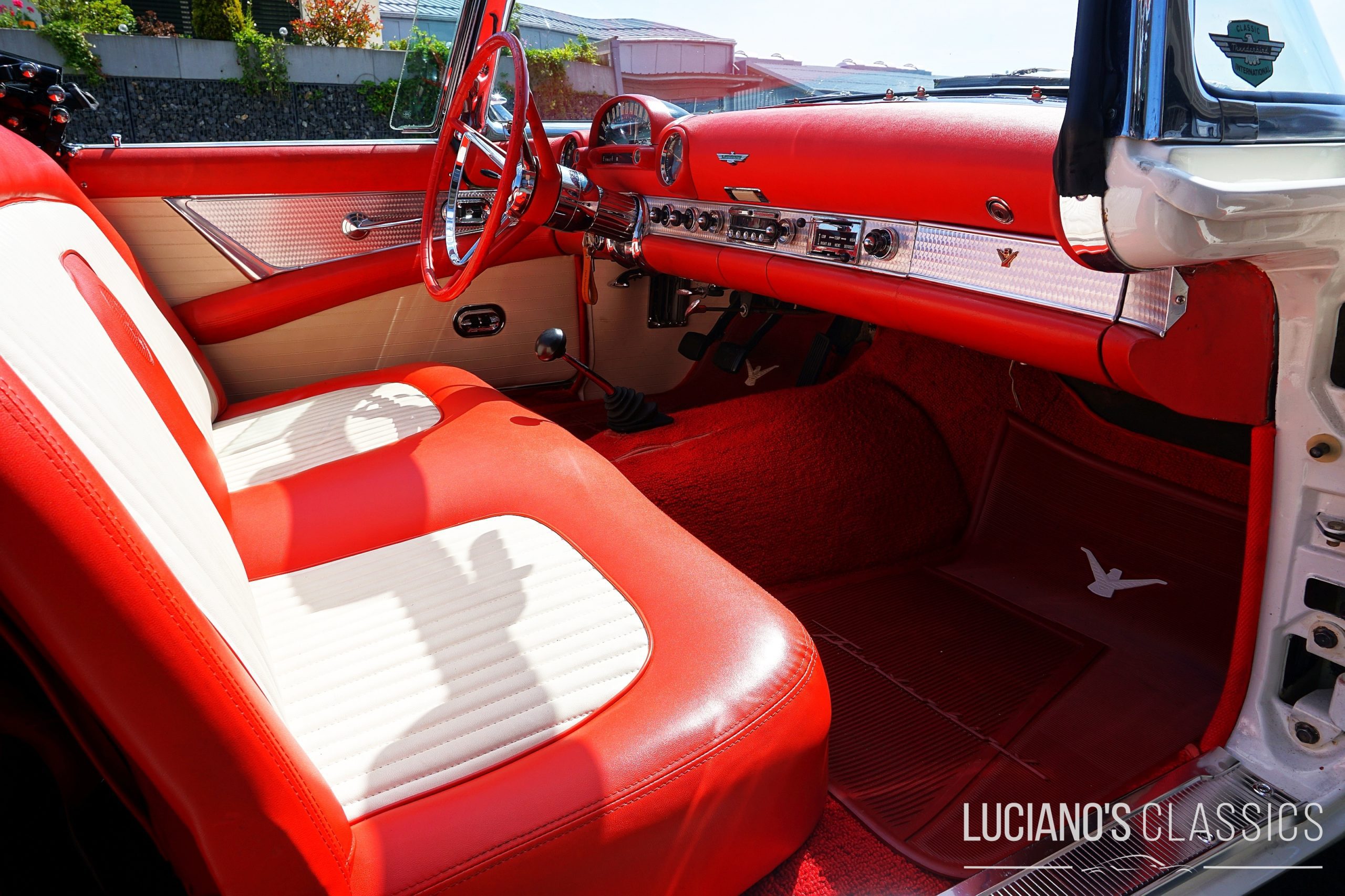
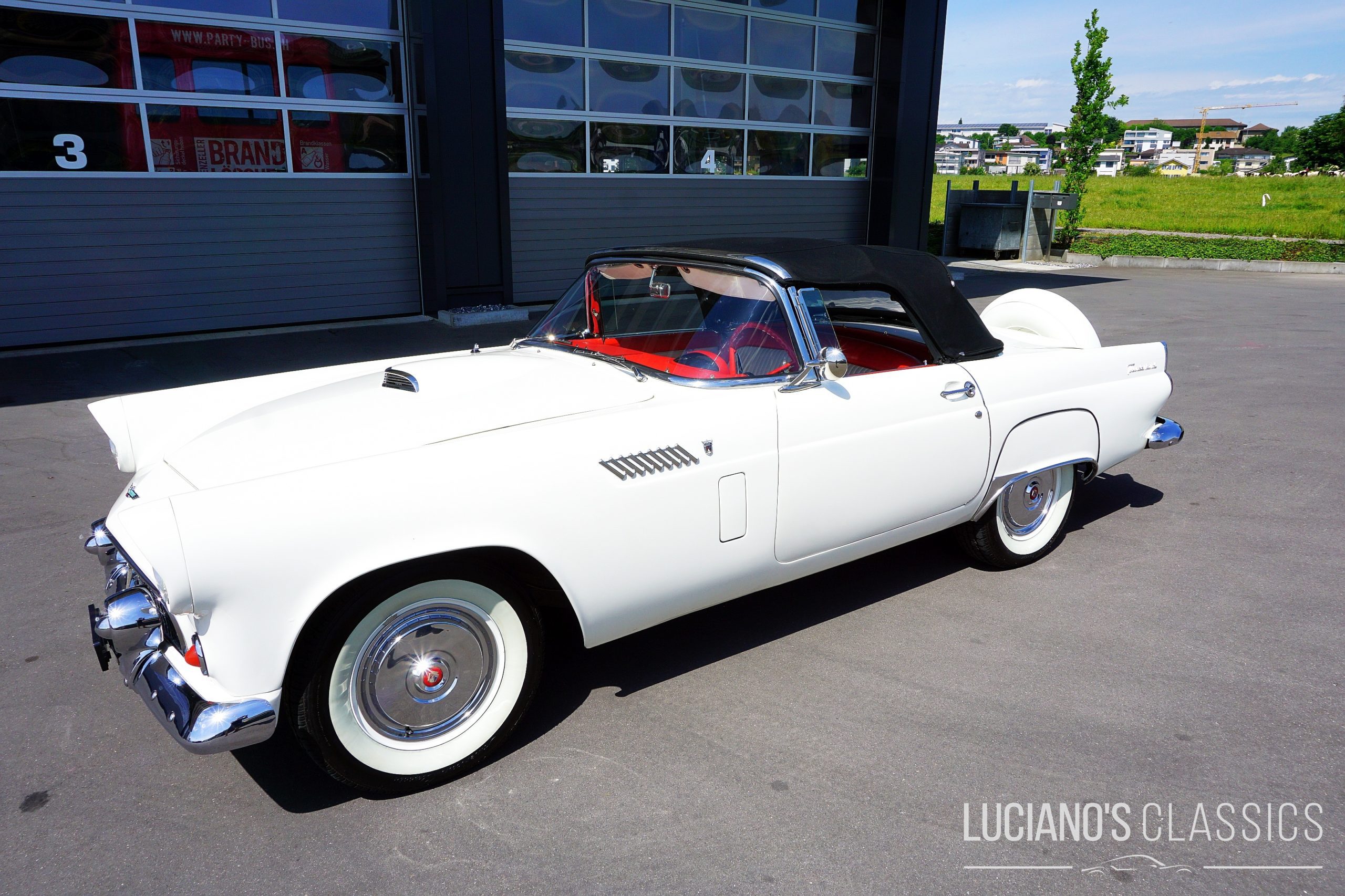
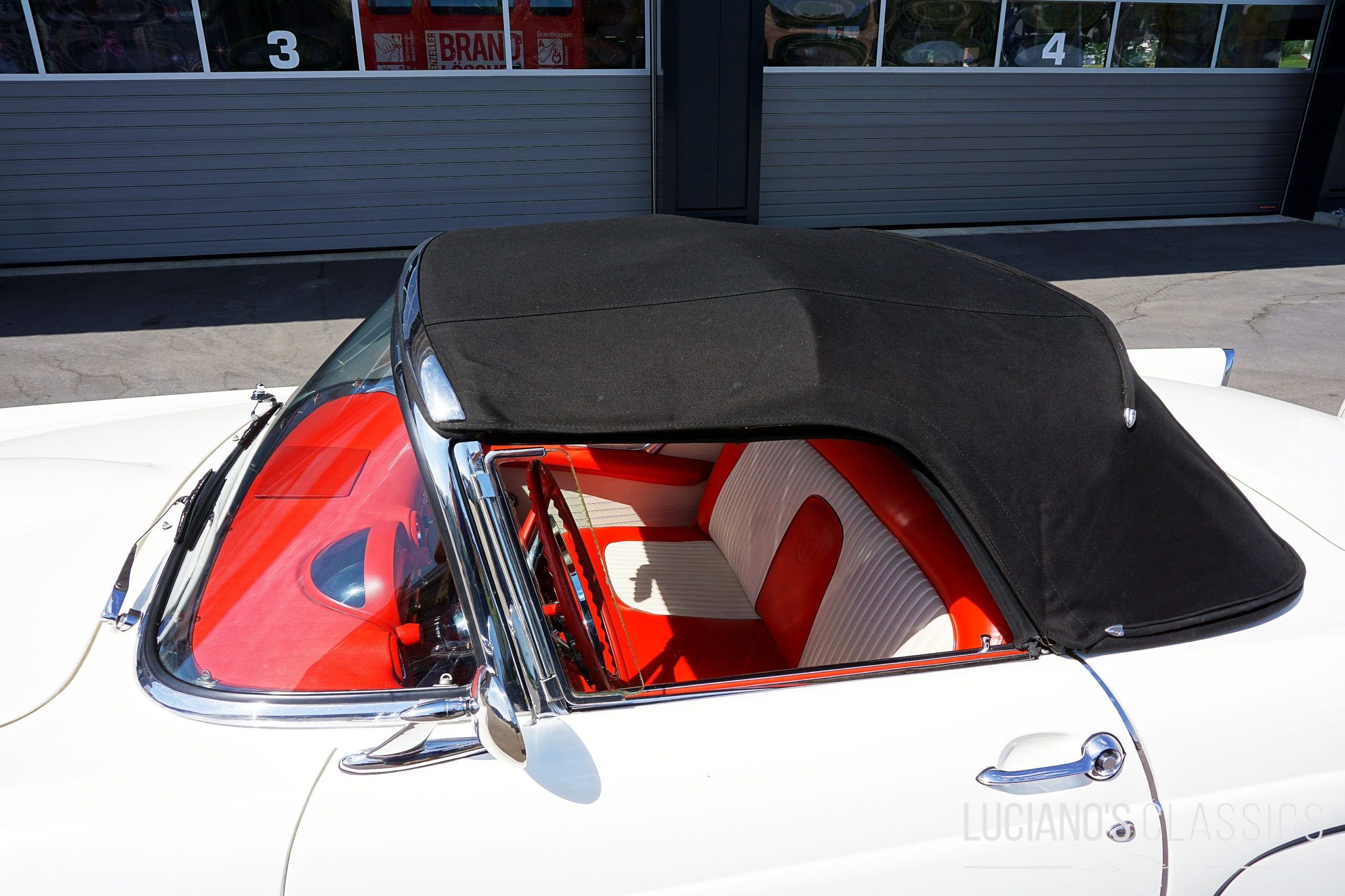
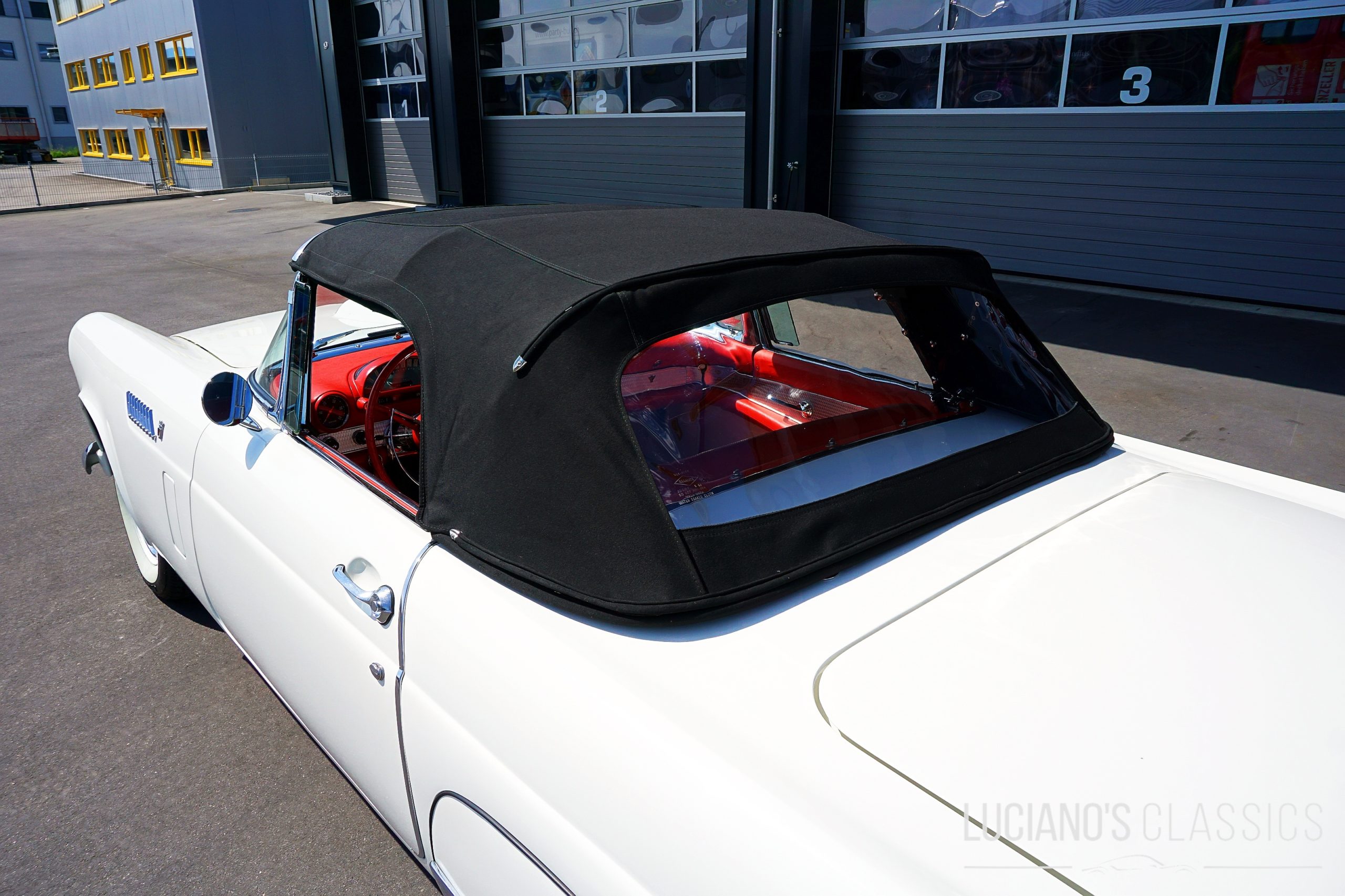
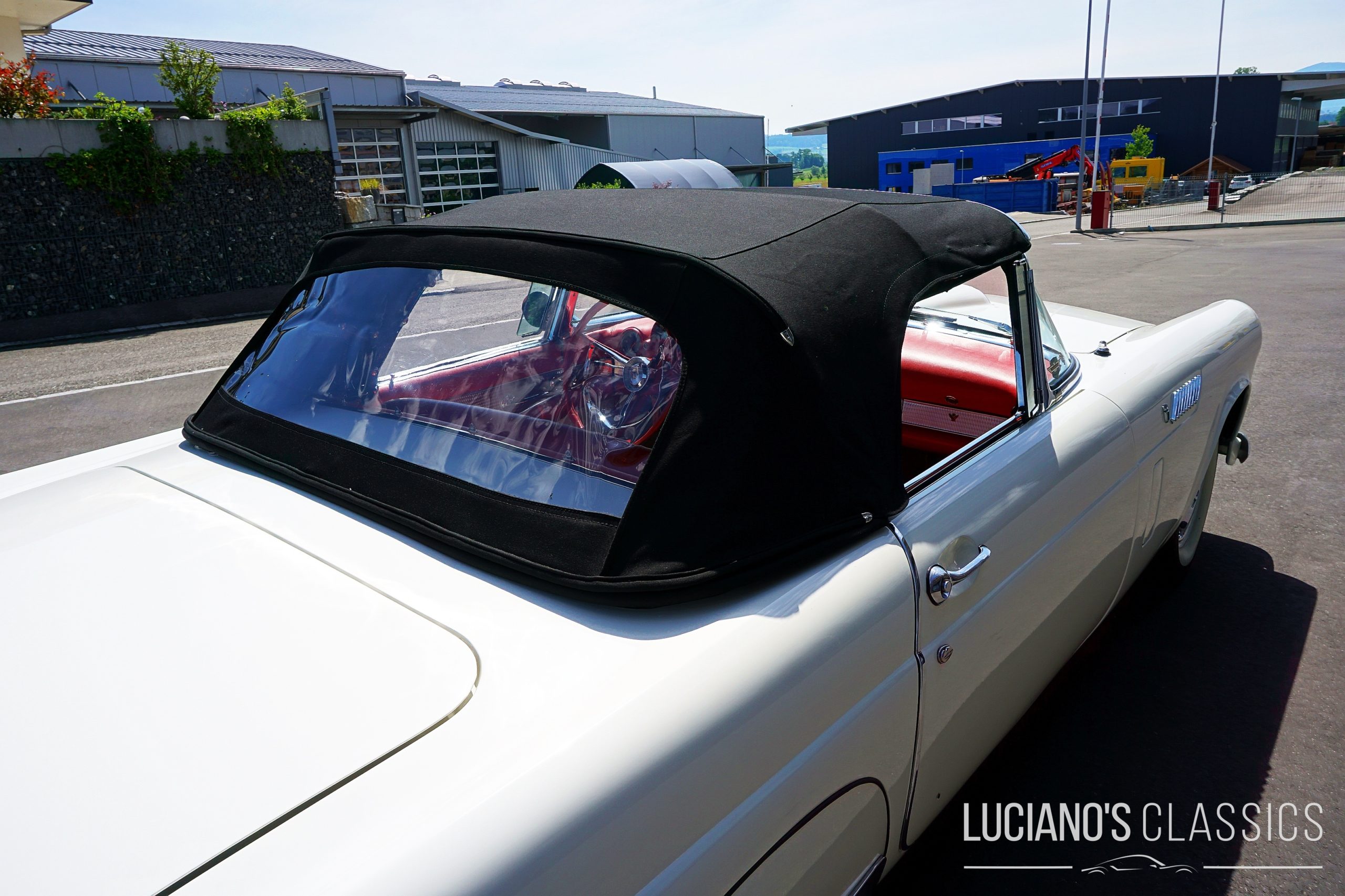
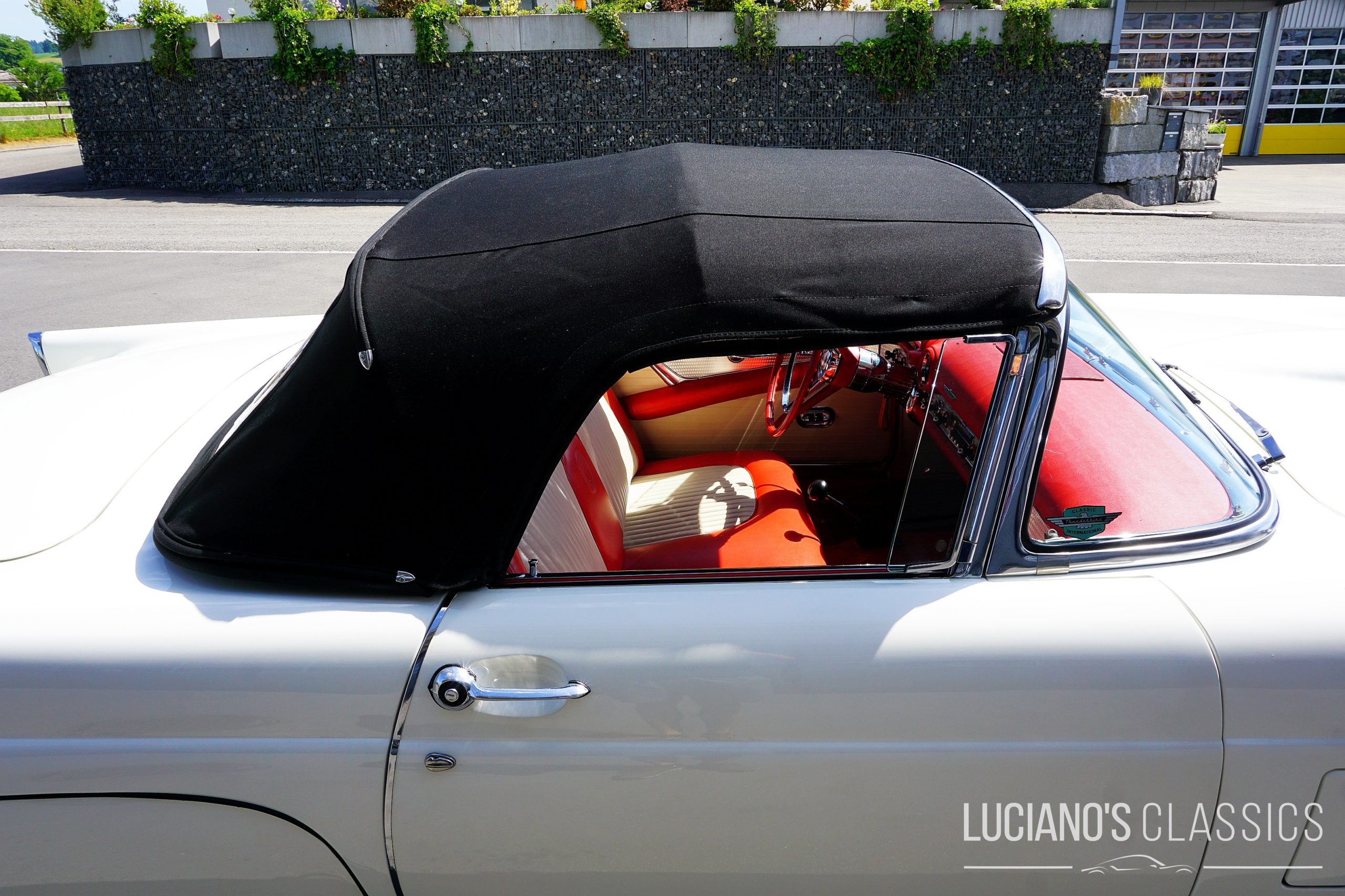
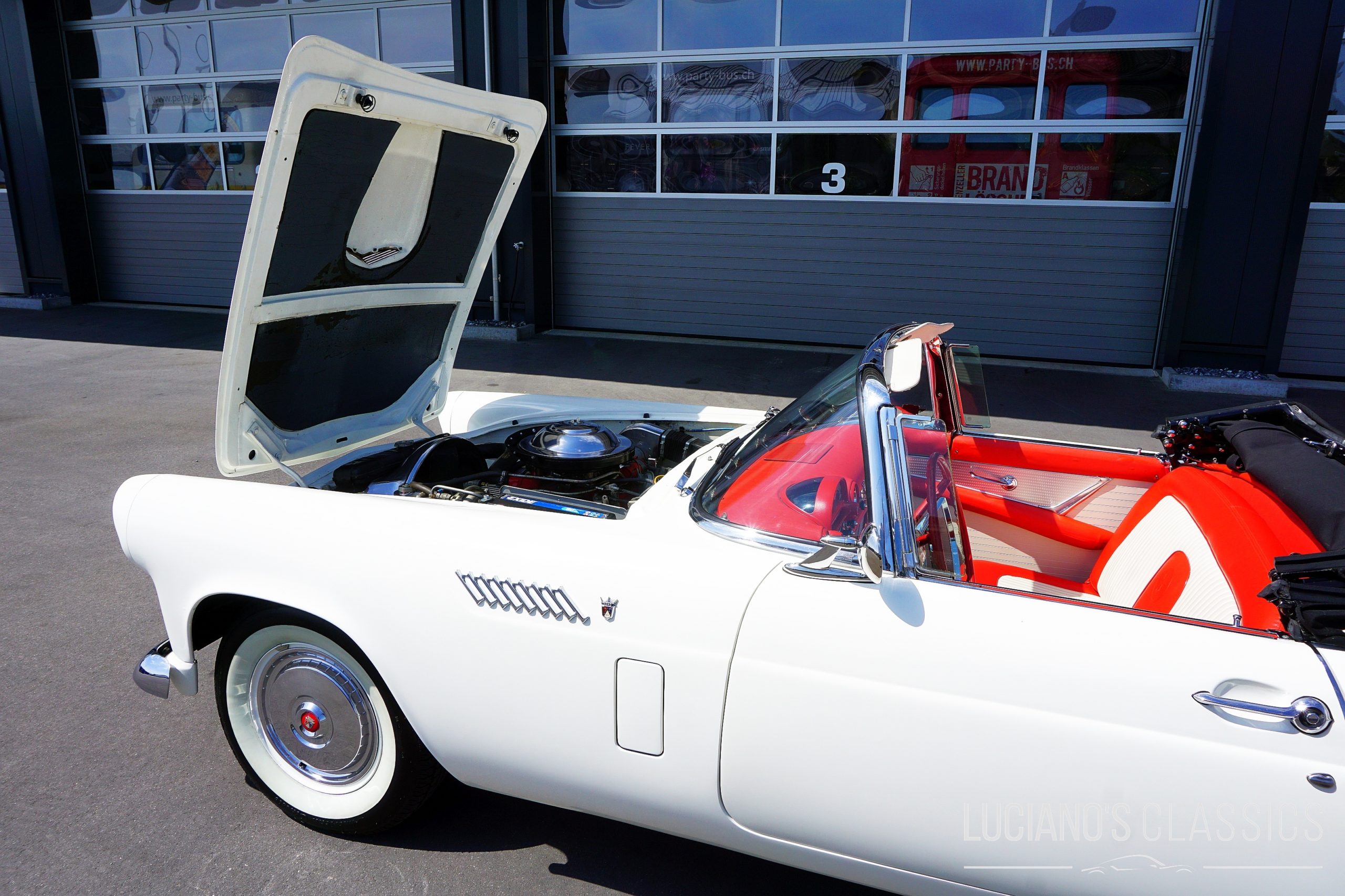
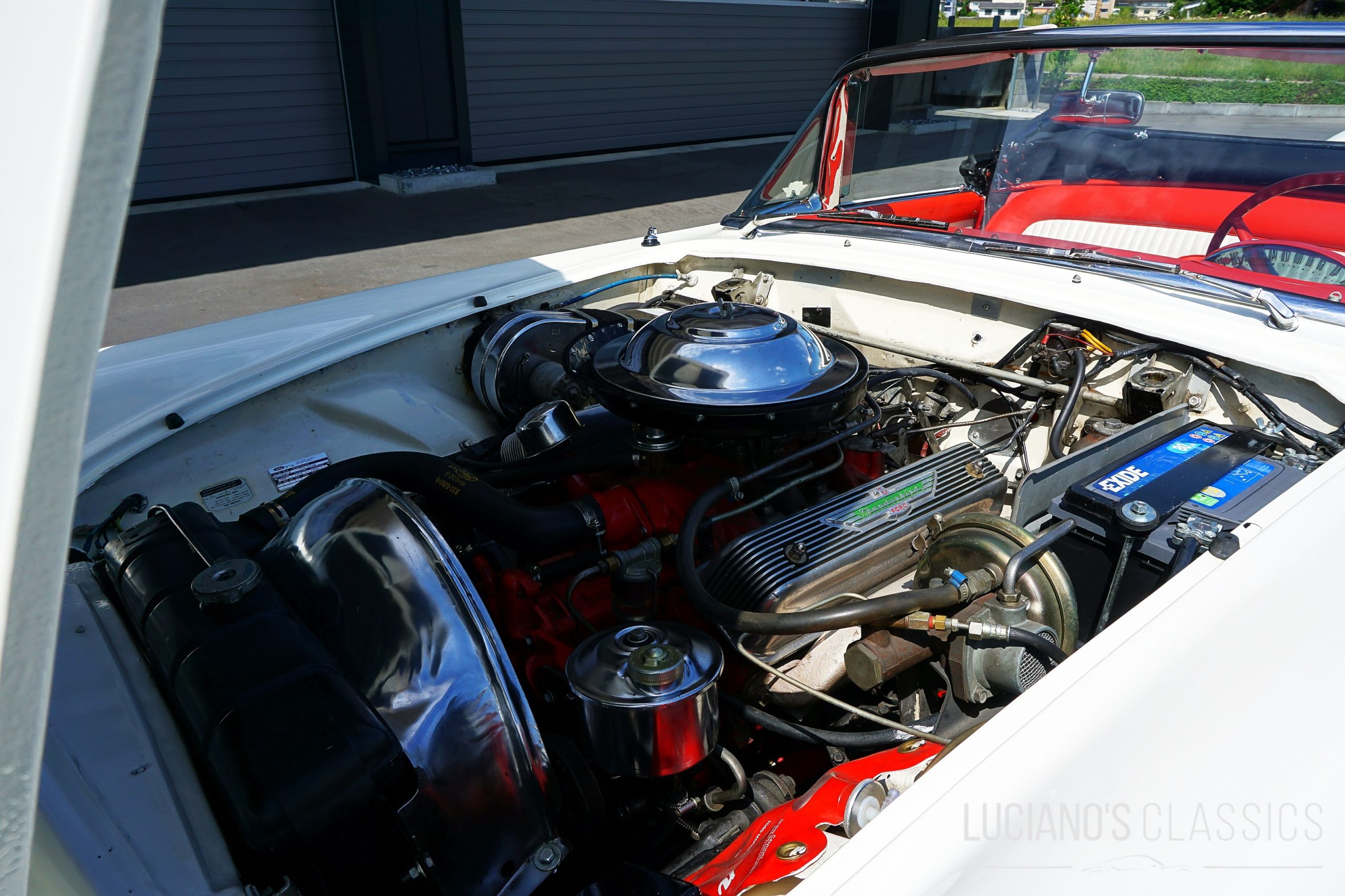
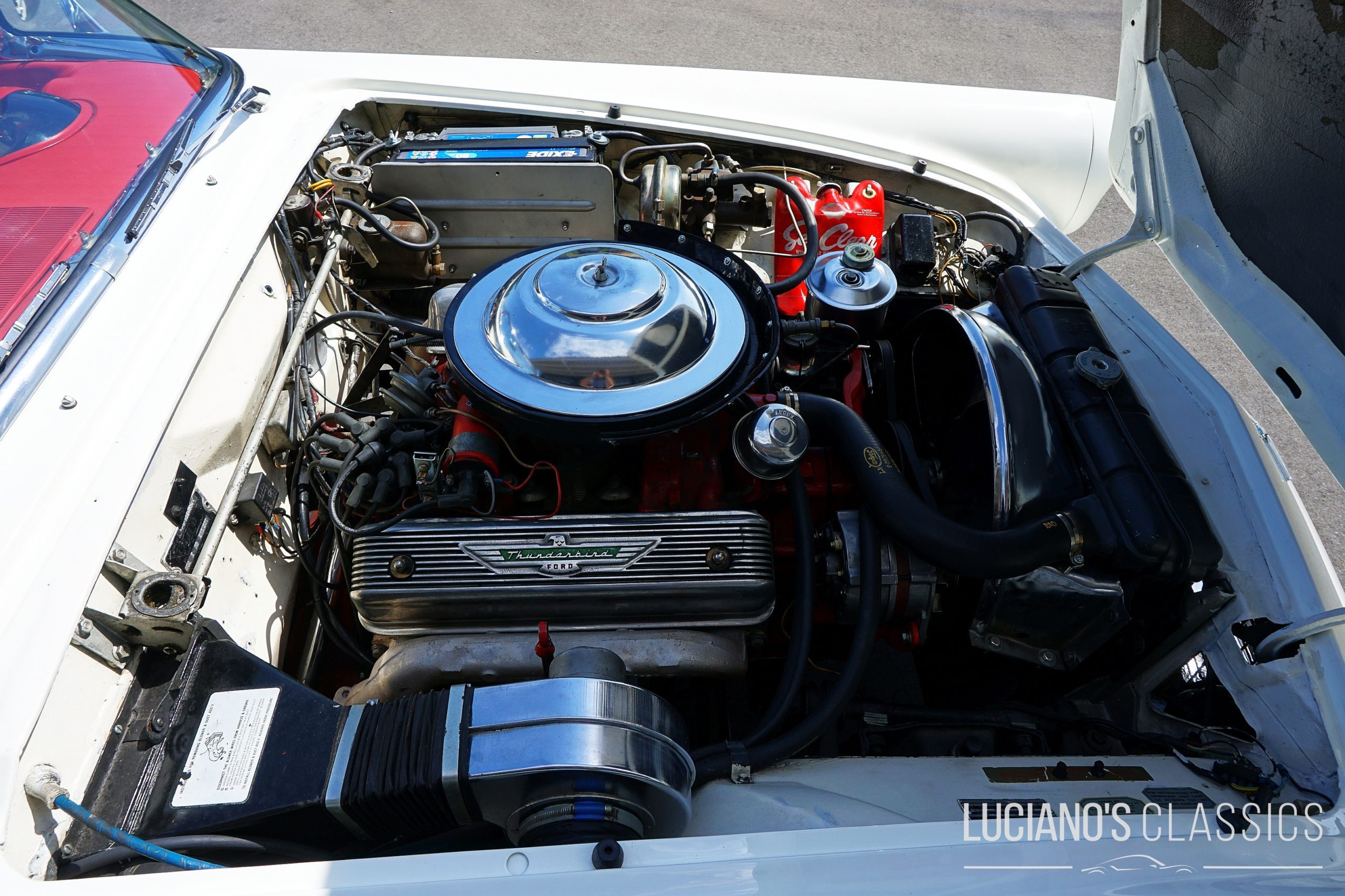
This Thunderbird has been beautifully restored and veteran-tested. The color combination is successful, the V8 purrs quietly and evenly and the crisp gearshift is very easy to operate. Technically, the car is absolutely flawless and the interior is as good as new. Apart from a few bubbles on the front left fender, the Thunderbird's white coat is in very good condition. The bubbles are only visible on closer inspection and have not grown in years.
The soft top is immaculate and can be stowed completely out of sight behind the seats. The car also comes with a matching cream-white hardtop, which has not been restored and would therefore have to be repainted to match the color of the car.
All the displays work perfectly and the overdrive gearbox also fulfills its purpose effortlessly.
You can find a video about the T-Bird at the bottom of this page.
This vehicle has already been sold.
Model history
Rumor has it that the first thoughts of the legendary Thunderbird were in the minds of Lewis D. Crusoe (former GM man and Ford Vice President), Henry Ford II and George Walker (Ford designer) during the Paris Motor Show in October 1951. Crusoe (former GM man and Ford vice-president), Henry Ford II and George Walker (Ford chief designer).
The reason for these sports car thoughts was that European sports car manufacturers sold up to 50% of their annual production to the USA. Sales were still too small for the US automotive giants, but this fact really scratched their egos.
Ford is said to have been working on a design at the time, but there is no evidence of this.
After the motor show, Walker immediately phoned Dearborn, told them about the conversation with Crusoe (who, as a former GM man, was probably also aware of GM's Corvette plans) and spoke to Frank Hershey, who, it is said, immediately went to the drawing board. The first sketches were created and by May 1953 a clay model was already available, which looked very similar to the later production model.
Parallel to the work of Crusoe, Walker and Hershey, Henry Ford II commissioned the former designer Vince Gardner to also draw a two-door sports car. The result was the Vega, a European-looking design based on an Anglia chassis, with an aluminum body and powered by a 2.2-liter V8 from Simca with a measly 60 hp.
Ford proudly presented the Vega at the 50th anniversary of the founding of Ford and showed it to celebrities such as Grucho Marx and Howard Hughes. Only one was built, which was sold to a private collector in 2006.
It is not known exactly why the Vega did not make it into production. One possible reason would be Harley Earl's Corvette, which was so well received at the 1953 New York Motorama show that it was considered for series production. Despite the V8, the Vega would probably not have been able to hold a candle to the Corvette.
Just one month after the launch of the Corvette, Ford presented its first sports car, the Thunderbird, at the Detroit Motor Show on February 20, 1954, which was subsequently developed to production readiness within a year. Under the name of the Indian magic bird, a breathtaking sports car was created which shared exactly the same wheelbase as the Corvette and the Jaguar XK 120, but otherwise had a completely different design. The T-Bird was created by a whole team consisting of George Walker and his draughtsmen Damon Woods and Bob Maguire, Frank Hershey, Bill Boyer and Bill Burnett, who was responsible for the engineering.
On September 9, the first production model rolled off the assembly line in Dearborn and from October 22, 1954, the 1955 Thunderbird was in the showrooms of Ford dealers.
GM played into Ford's hands with the Corvette by learning from its competitor's mistakes. The Corvette was a flop in the beginning. The term „fiberglass“ had almost become a dirty word due to the Corvette's processing deficiencies, which is why Ford naturally opted for a sturdy sheet steel body, whose spacious interior could be closed with a solid fabric top rather than a fluttering tarpaulin. A plastic hardtop was also considered from the outset. In contrast to the spartan Corvette with its plug-in windows, the Thunderbird had side windows, even electric ones on request.
A modified Mercury V8 with a displacement of 4.8 liters and almost 200 hp gave the thunderbird with the 3-speed manual transmission with overdrive remarkable performance. The «Ford-O-Matic» version with slightly more power also had enough power under the hood for the time. Here too, the T-Bird was superior to the Corvette, which was powered by the Blue Flame straight-six with 150 hp. With a price of 2695 dollars, the Thunderbird was also somewhat cheaper than the Corvette, which was priced at 2774 dollars.
The Thunderbird was a complete success. While 300 Corvettes left the factory in 1953, 3640 in 1954 and only 674 in 1955, the sales figures for Ford's Thunderbird were 16,155 in 1955, 15,631 in 1956 and even 21,380 in 1957.
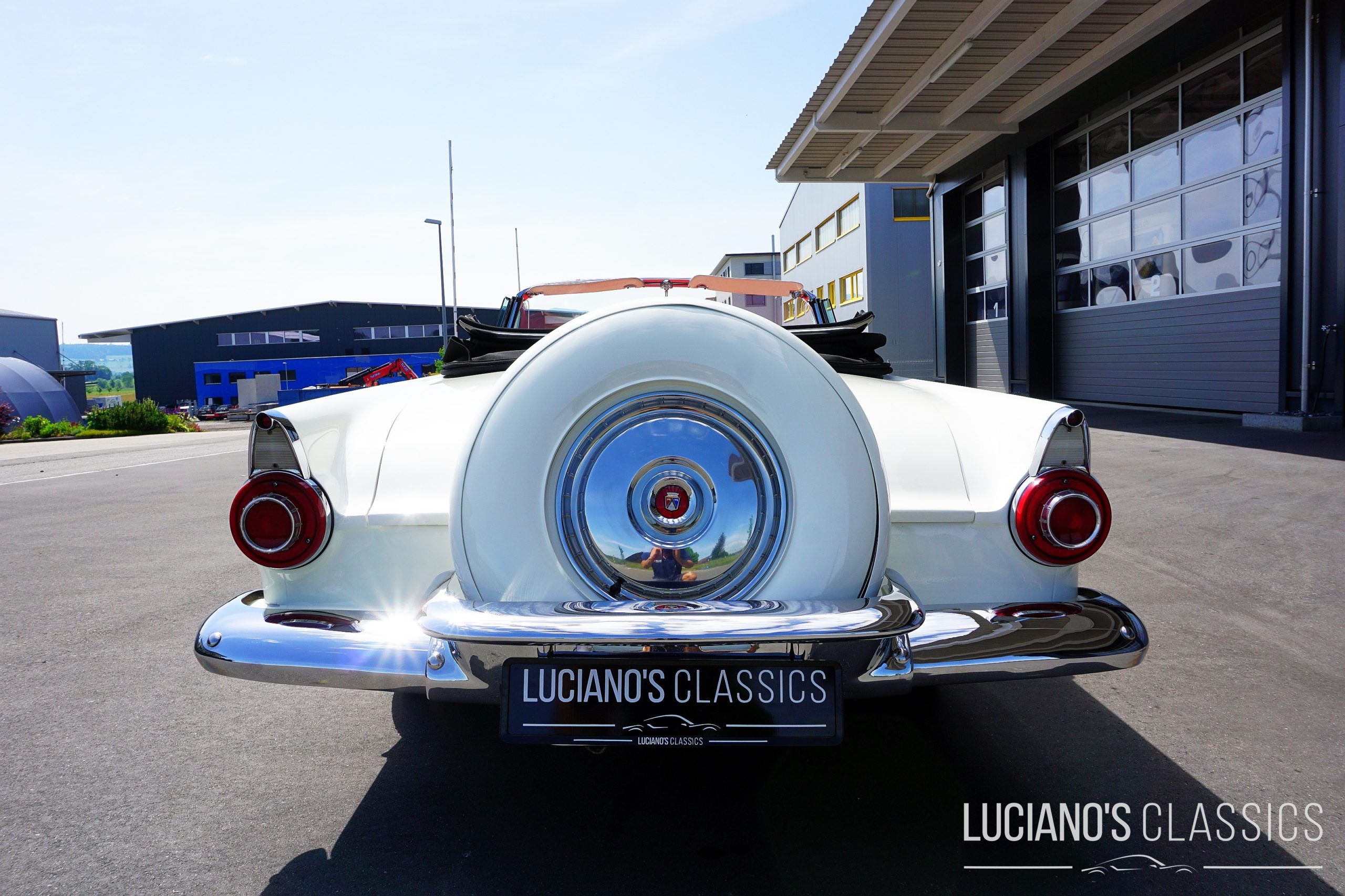
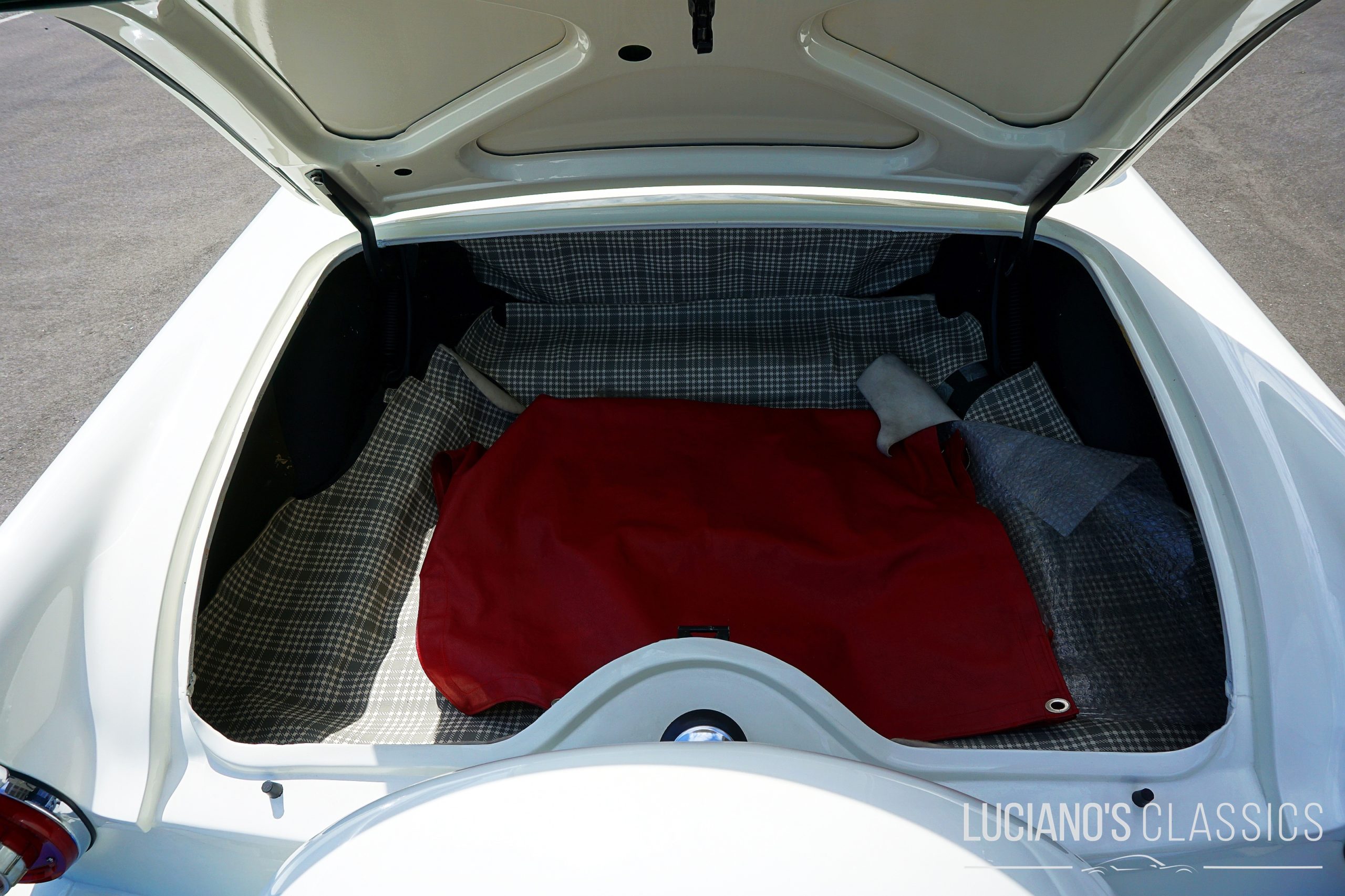
A few improvements were made for the second year of production. The ventilation was improved with side flaps, the electrics were converted to 12 volts, the suspension was softened to meet customer requirements, the engine power was increased slightly and the trunk was freed from the annoying horizontal spare wheel. This change was conspicuous by the fact that the legendary Continental kit, the spare wheel standing upright in a sheet metal casing on the rear bumper, was now standard and was much more delicate than the optional version from the 55 model.
New rear lights, a revised steering wheel and the openings for the exhaust pipes, which were moved to the corners of the bumper due to the Continental kit, continued to distinguish the new 56 model from the original T-Bird.
The Continental kit was only fitted in this form for one year, as the 57 model had a modified snout and an extended rear end, which allowed the spare wheel to be stowed upright on the side instead of laying it down as in the 55 T-Bird and thus occupying half the trunk.
Details
- Veterans MFK 07.04.2017
- 6,813 km (read off)
- CH vehicle
- Very good condition
- All displays intact
- 4785 cc V8
- 202 PS
- 56 model
- Placing on the market 01.06.1957
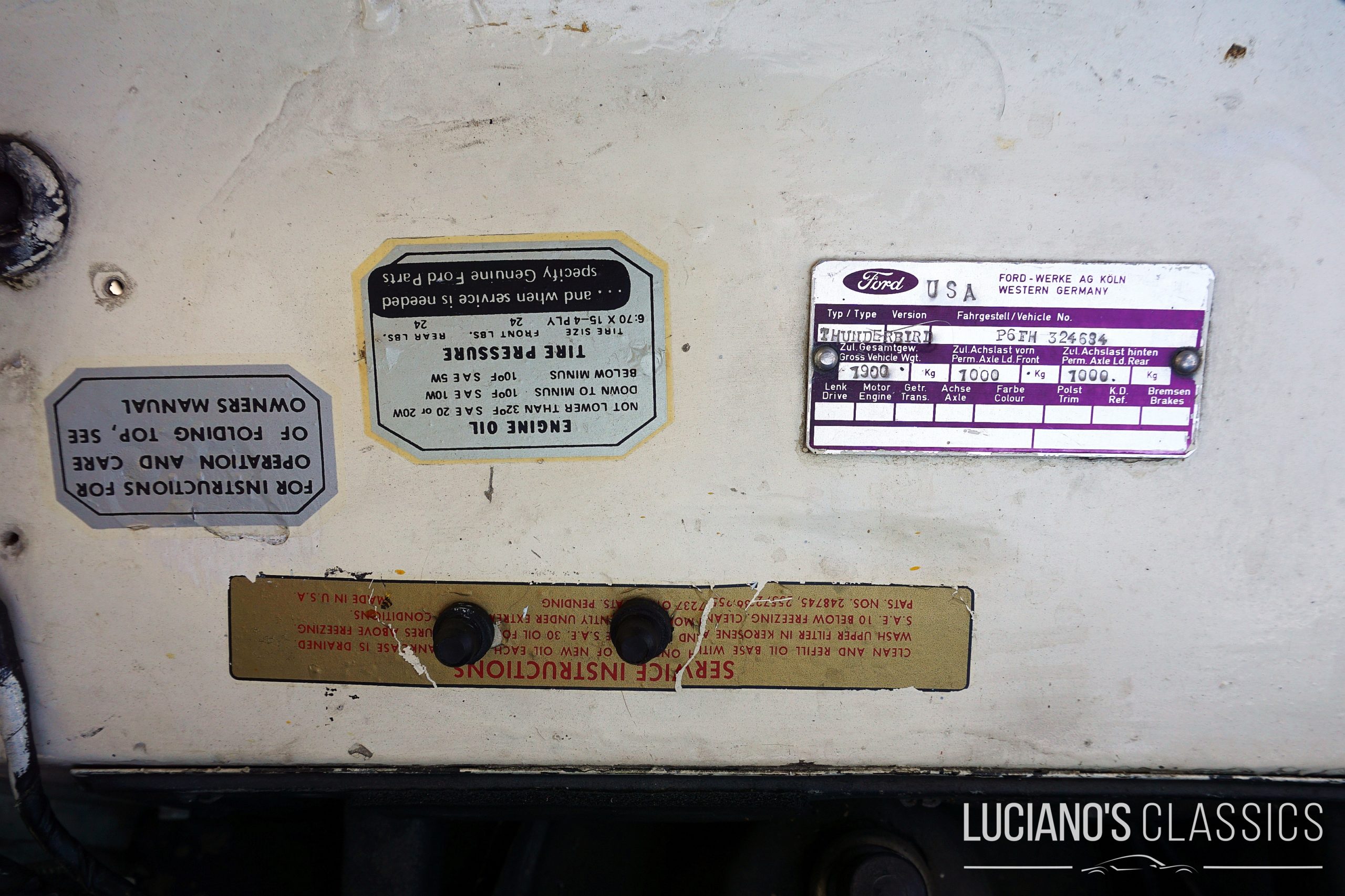
- Chassis P6FH324684
- Type certificate 1736
- Master number 006.931.145
- Unladen weight 1610 kg
- Payload 290 kg
not what you are looking for?
We will be happy to find your individual dream vehicle.
Simply make a non-binding inquiry and benefit from our network.