
Dodge Challenger R/T
Description
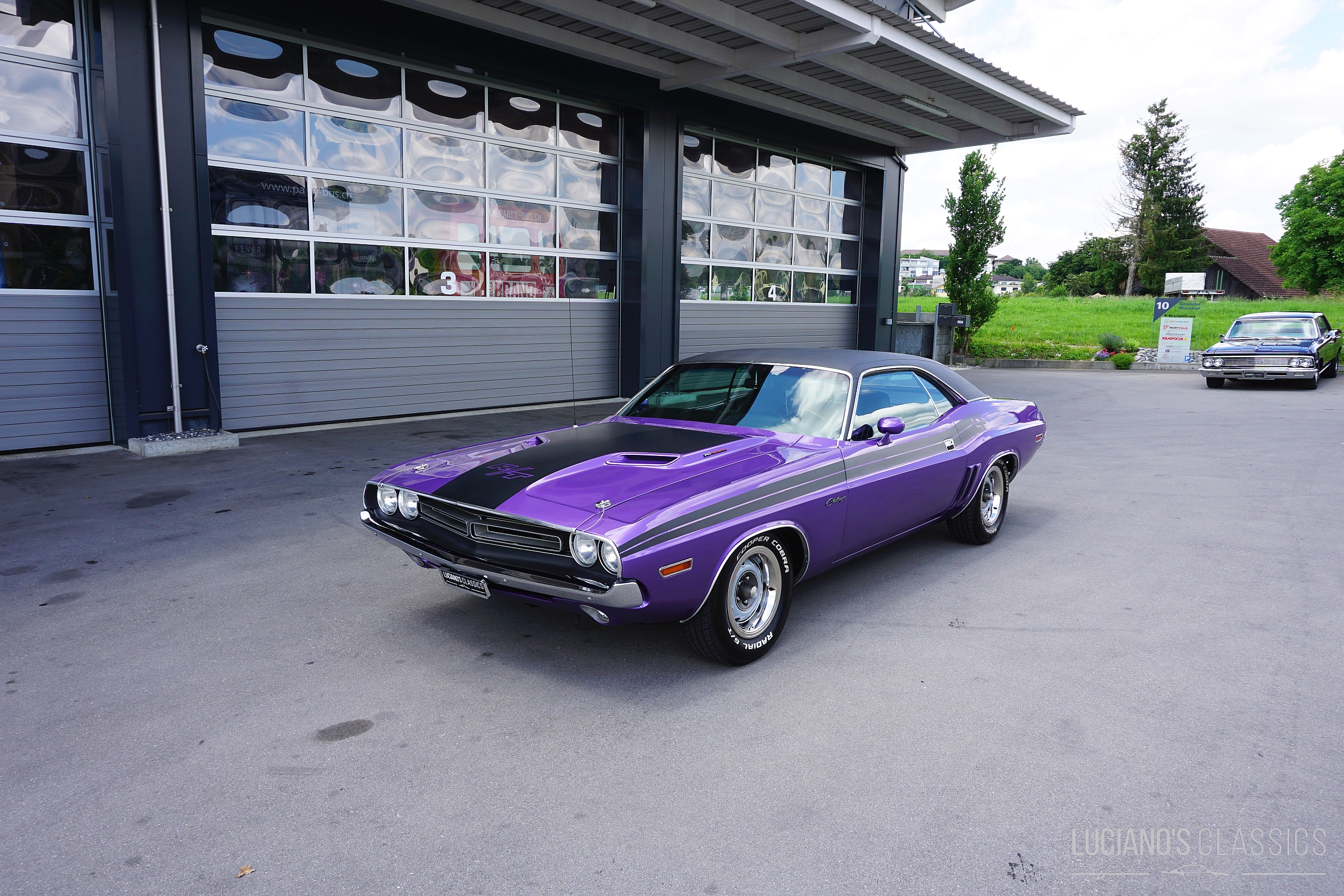
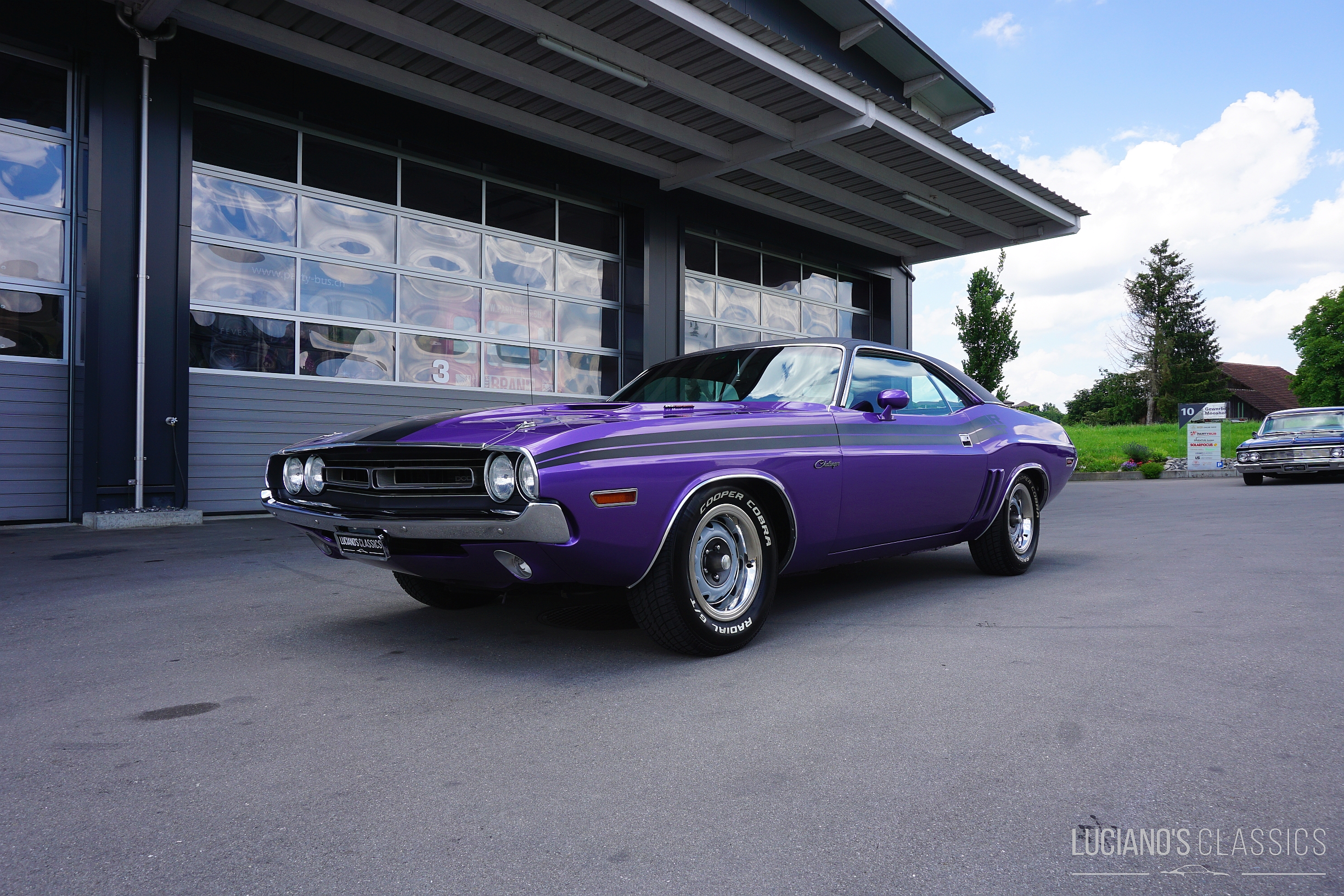
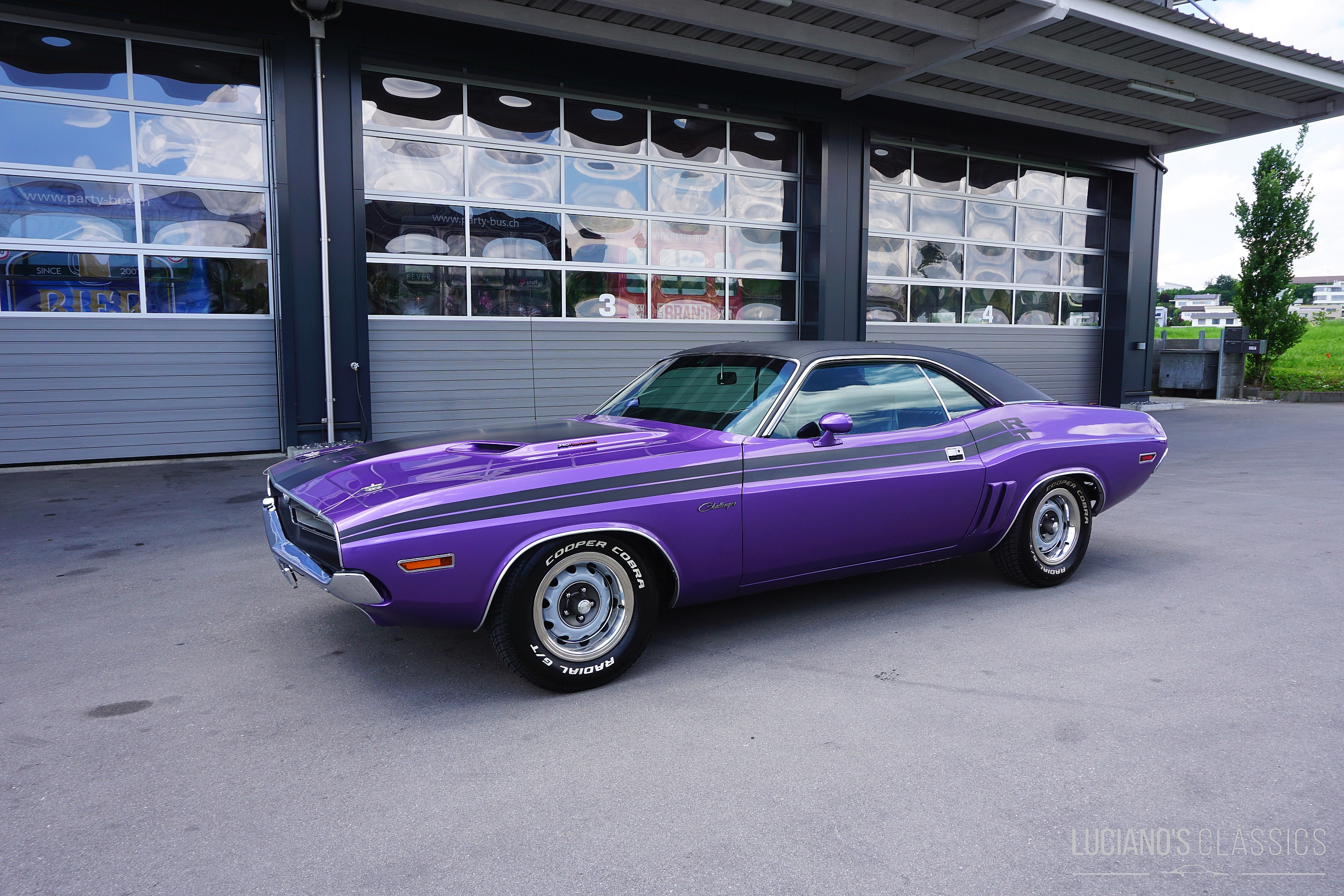
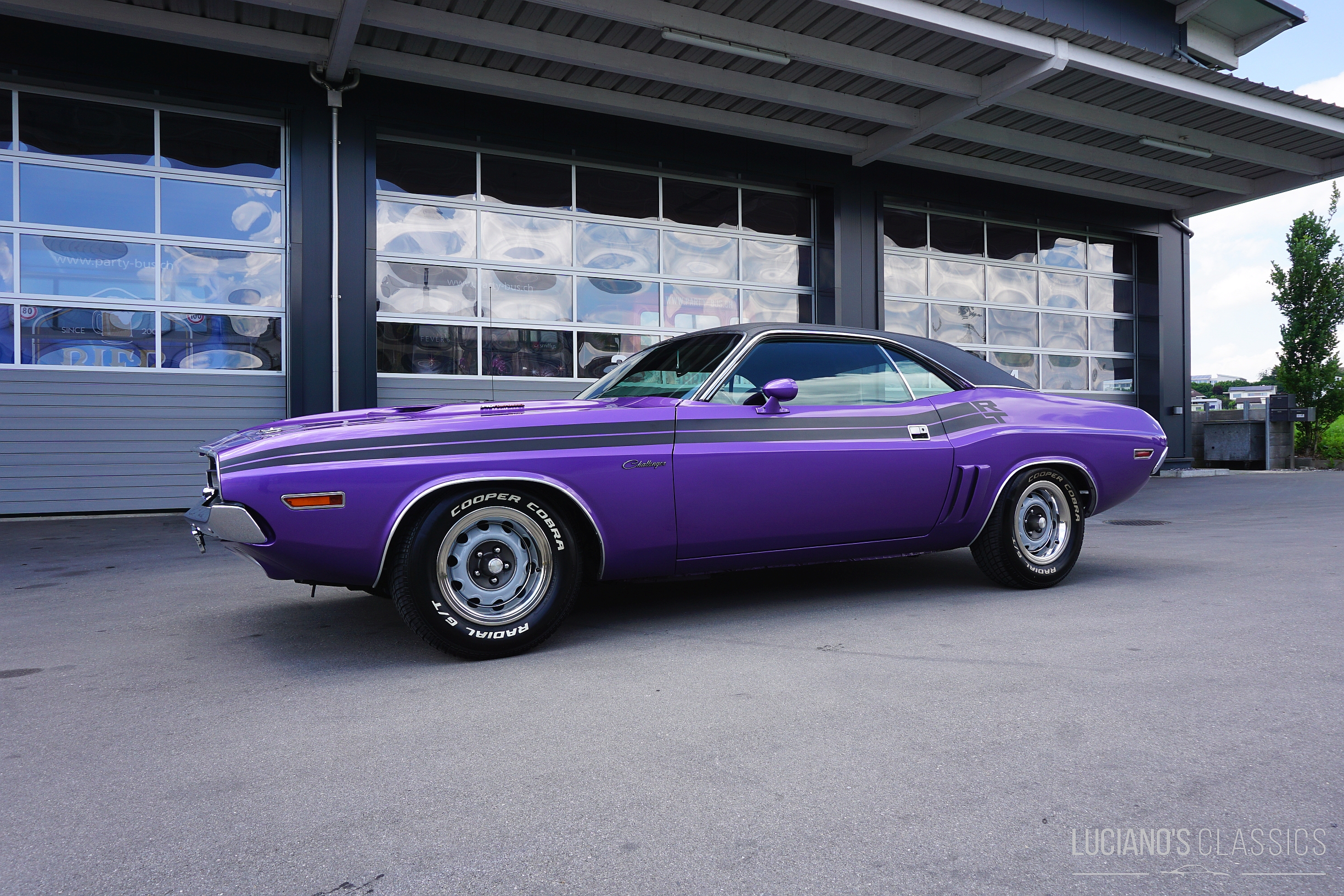
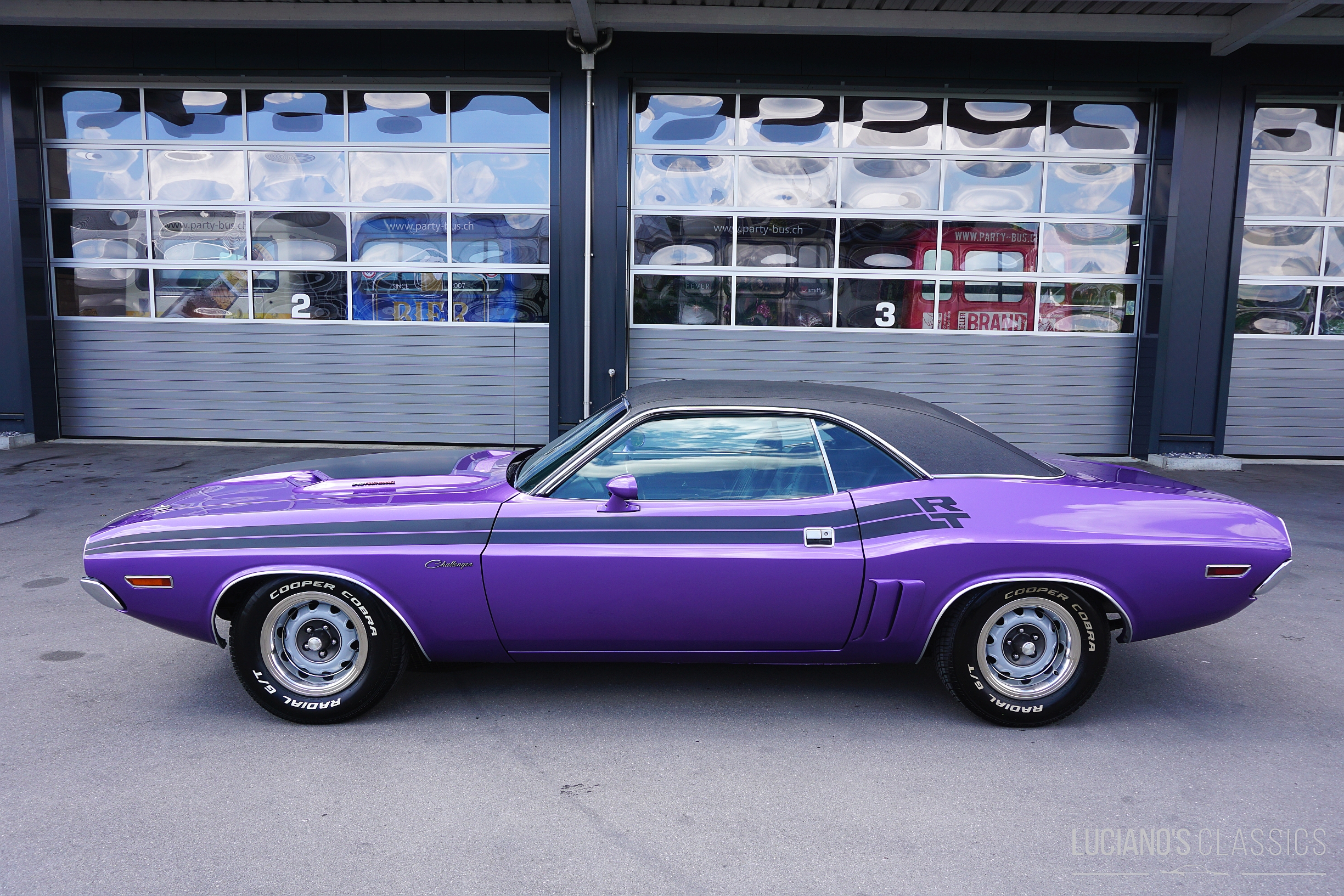
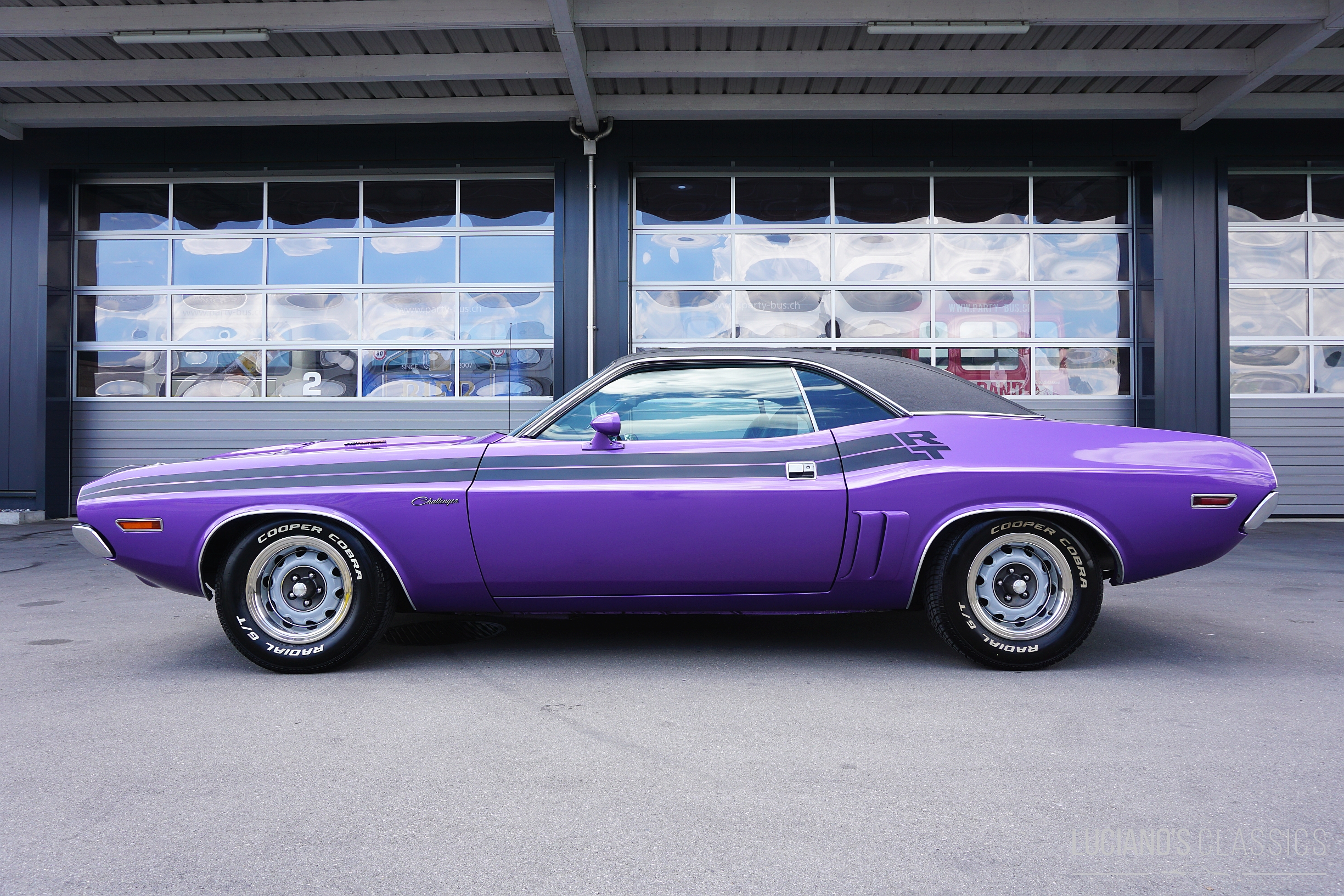
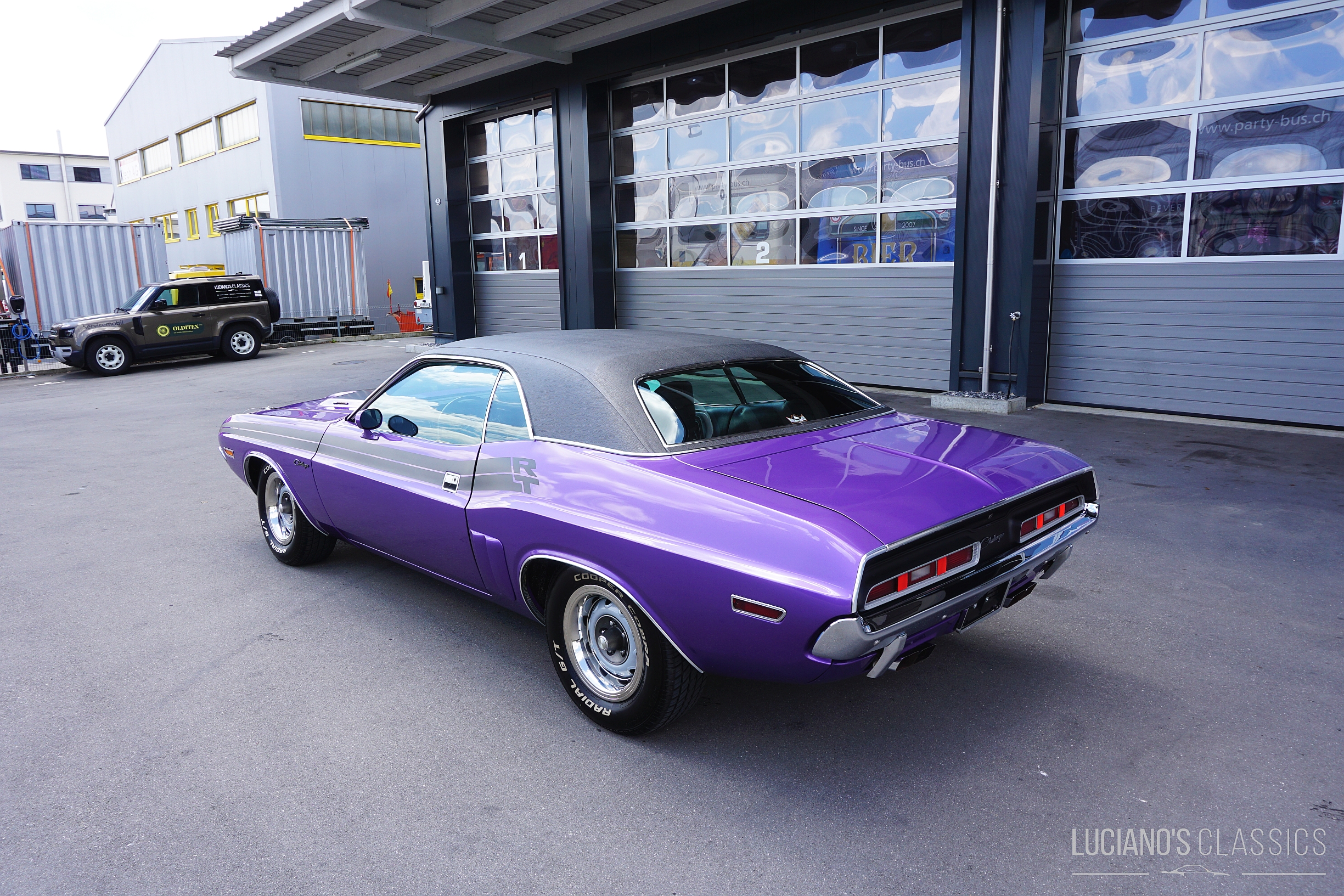
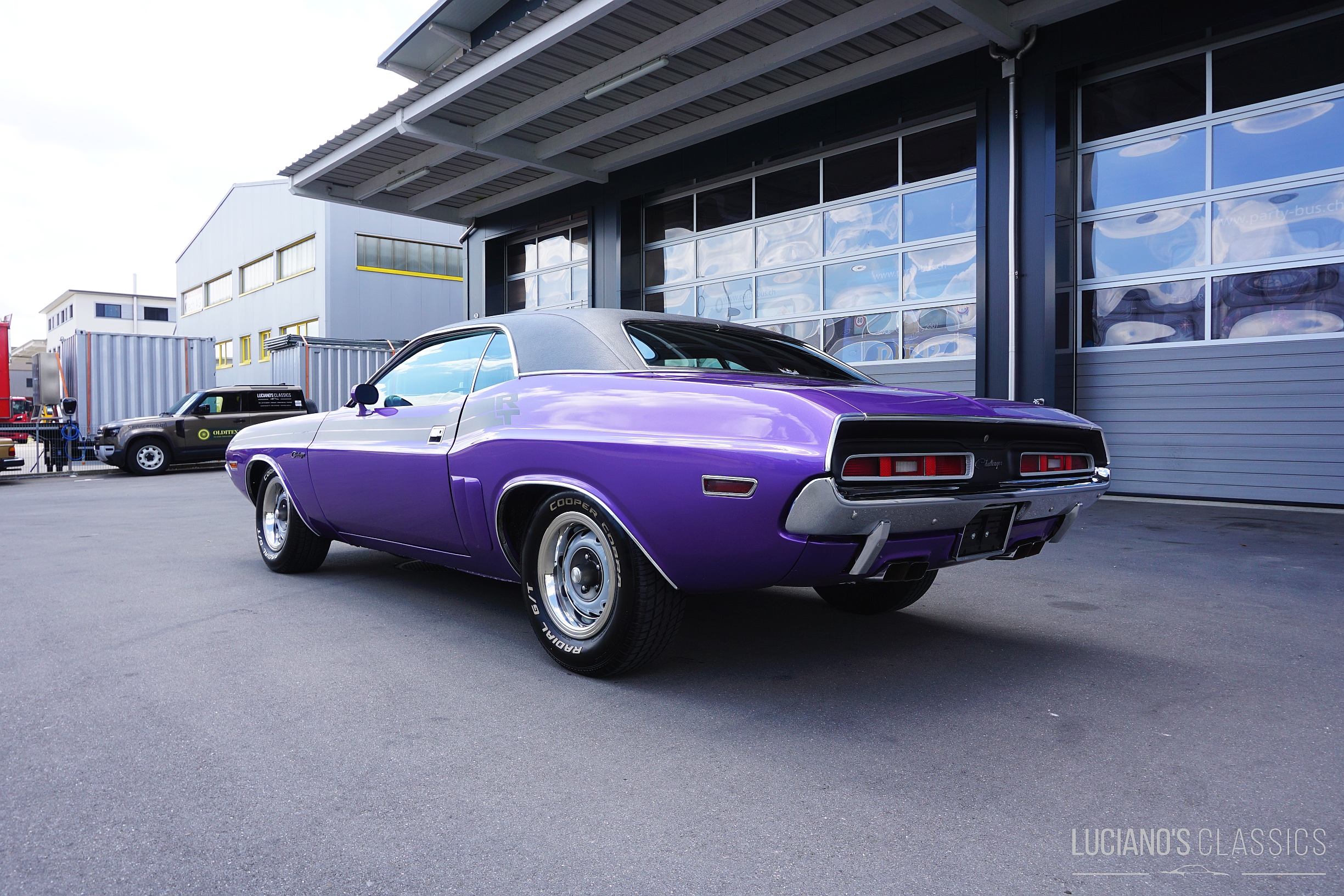
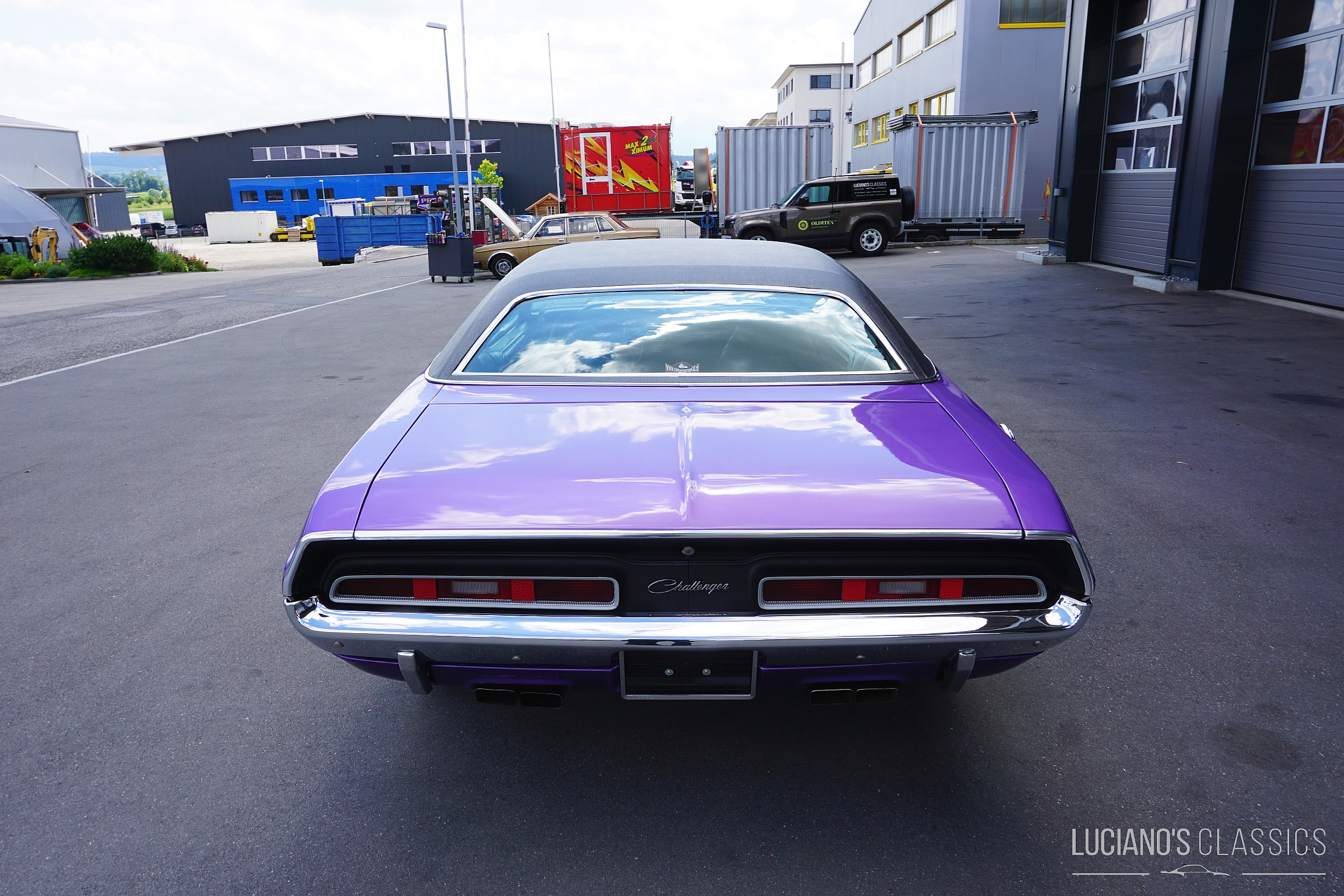
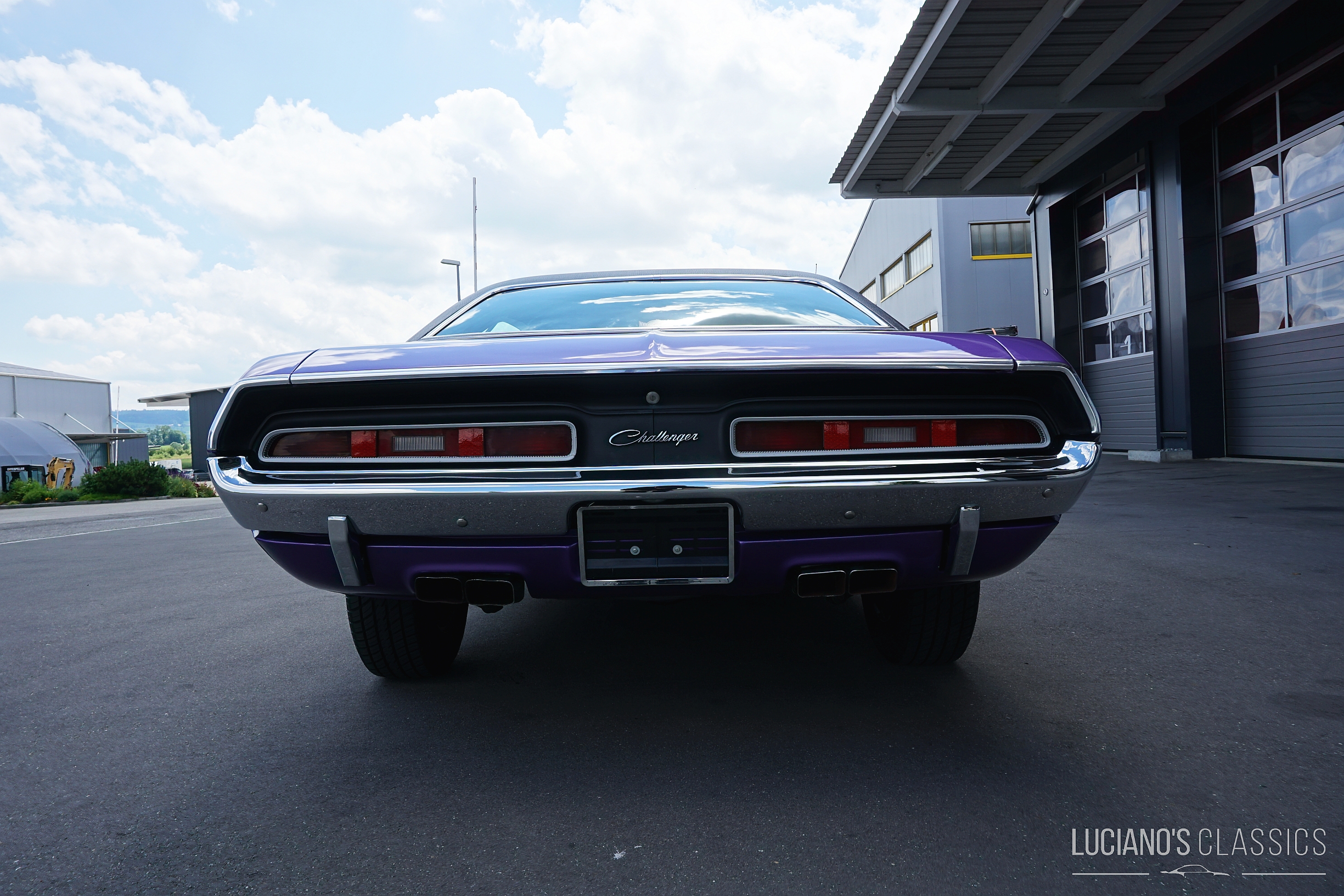
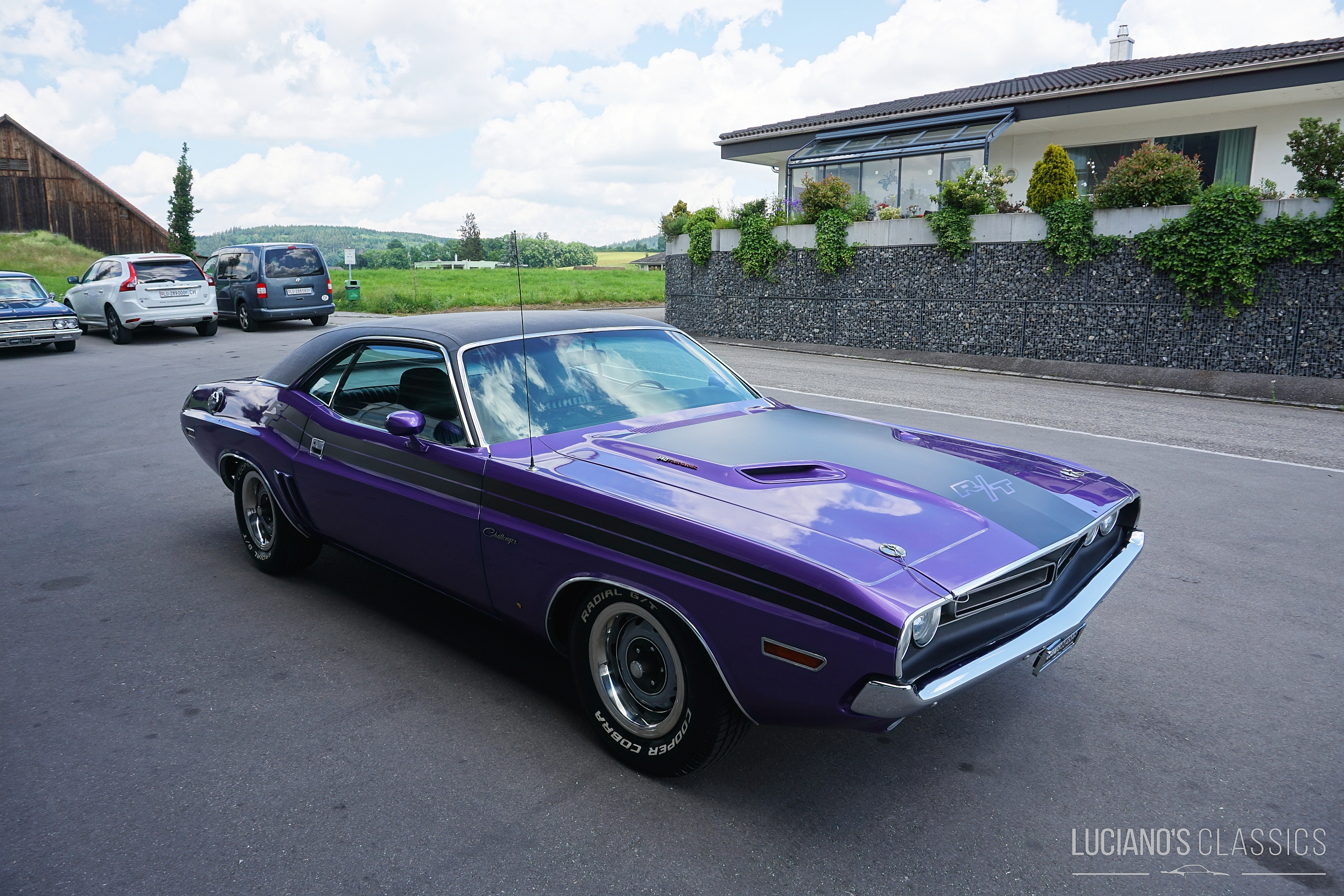
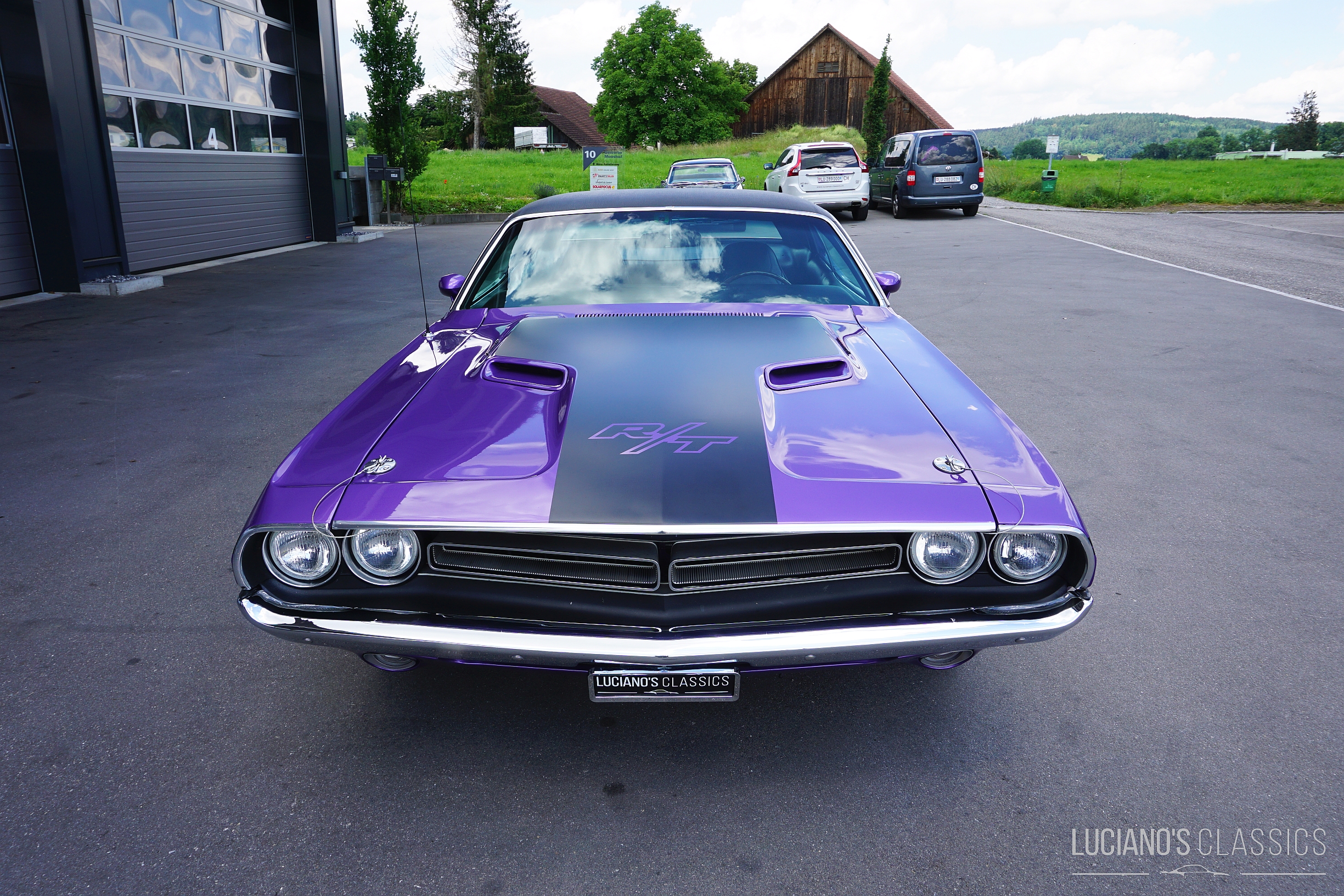
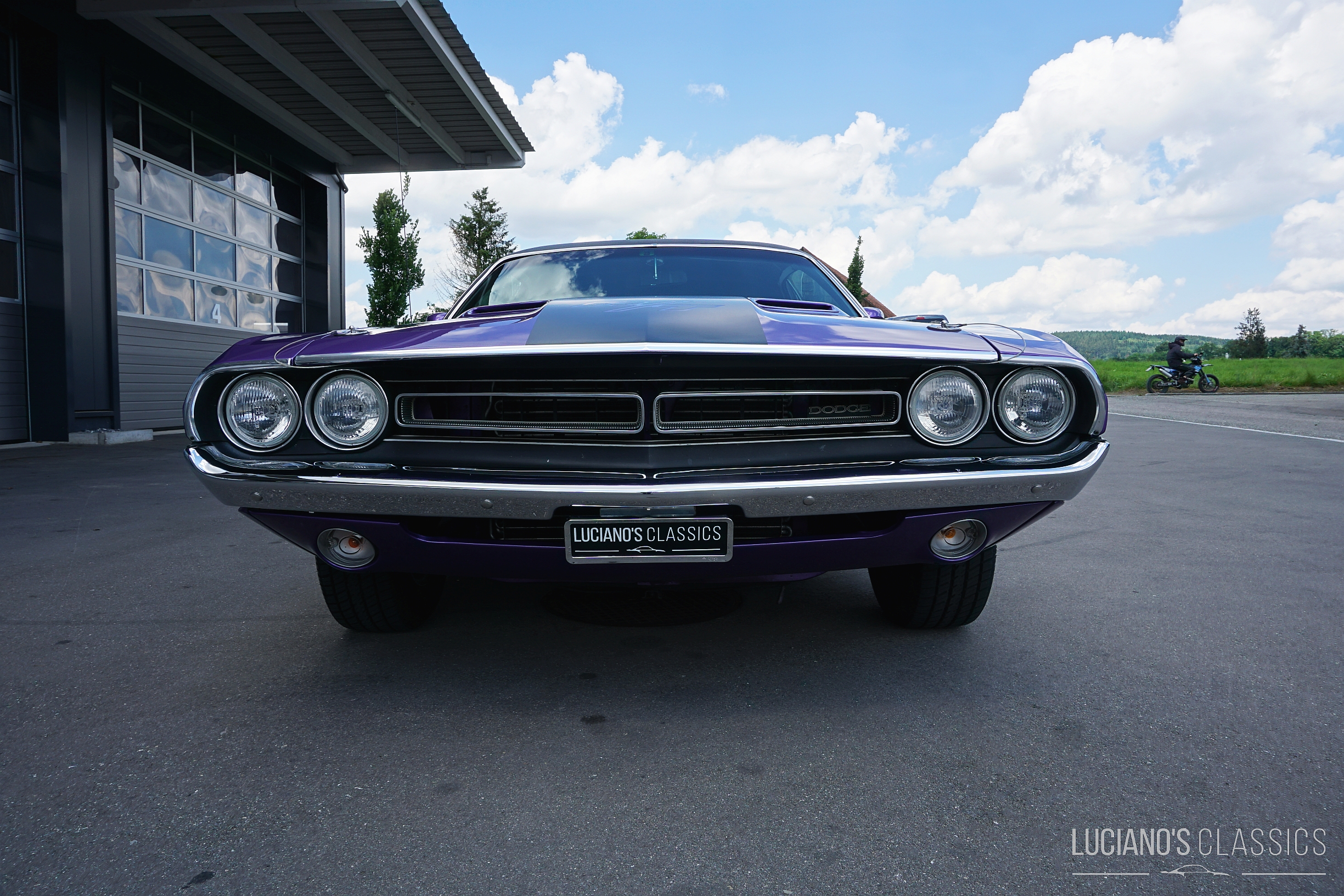
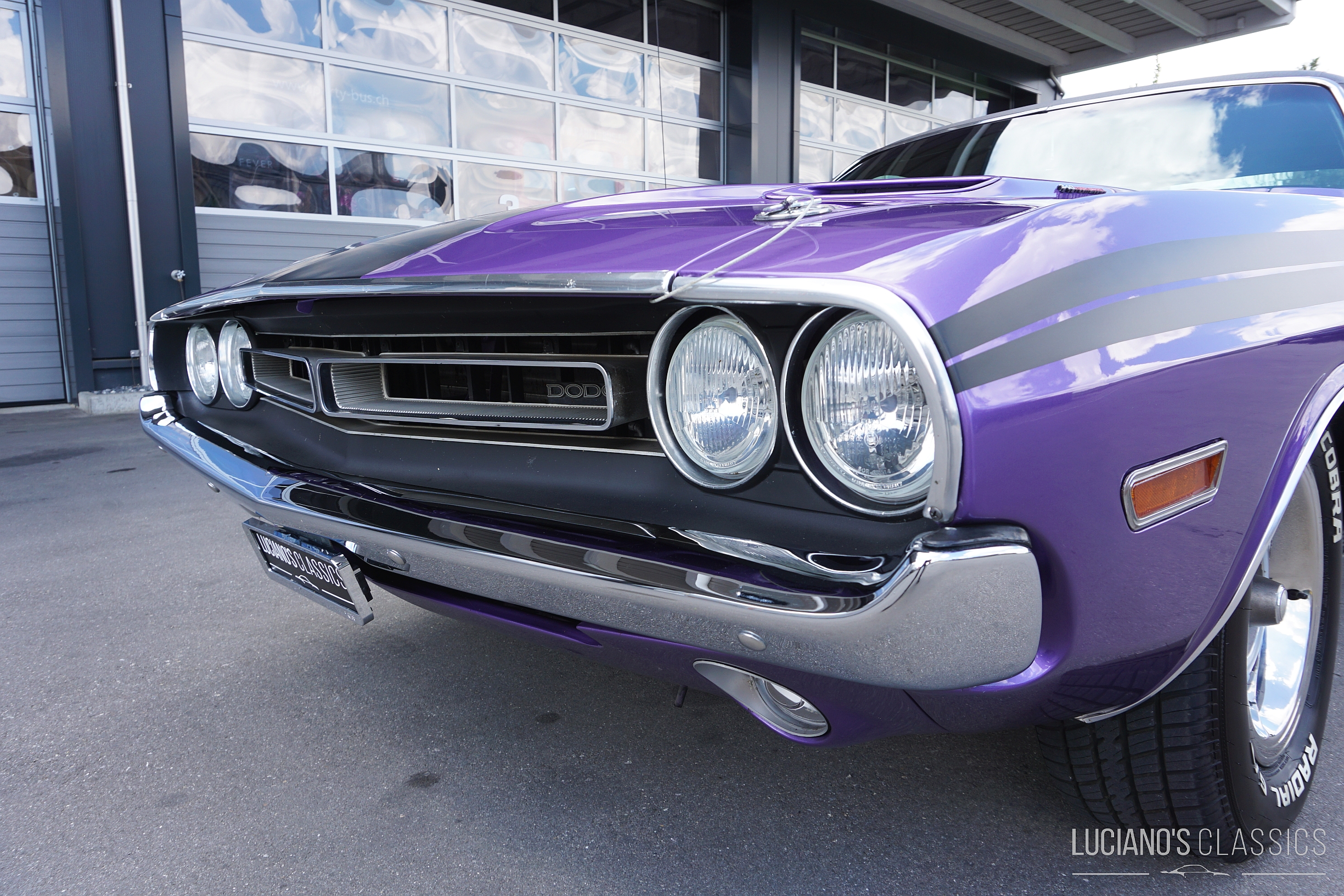
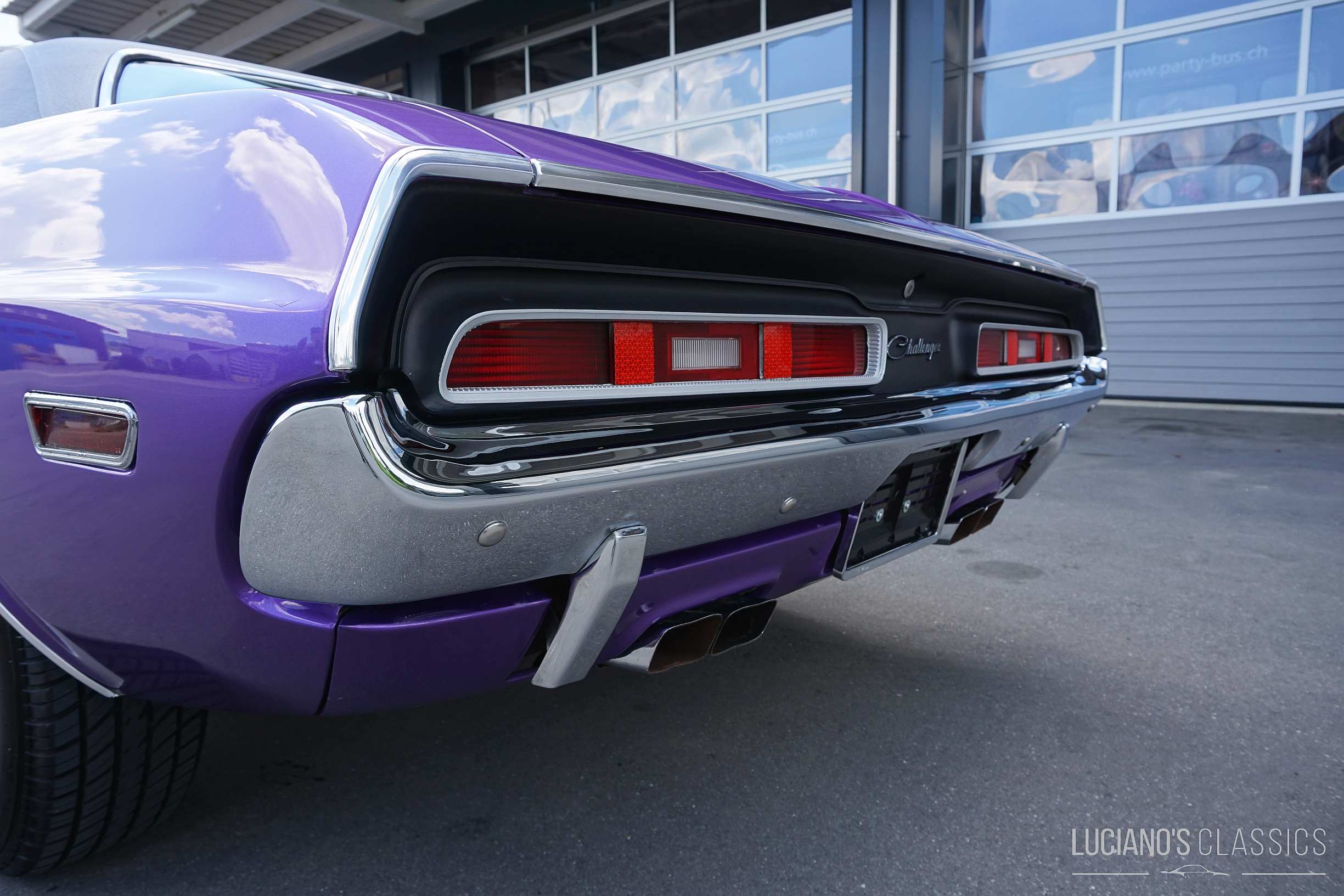
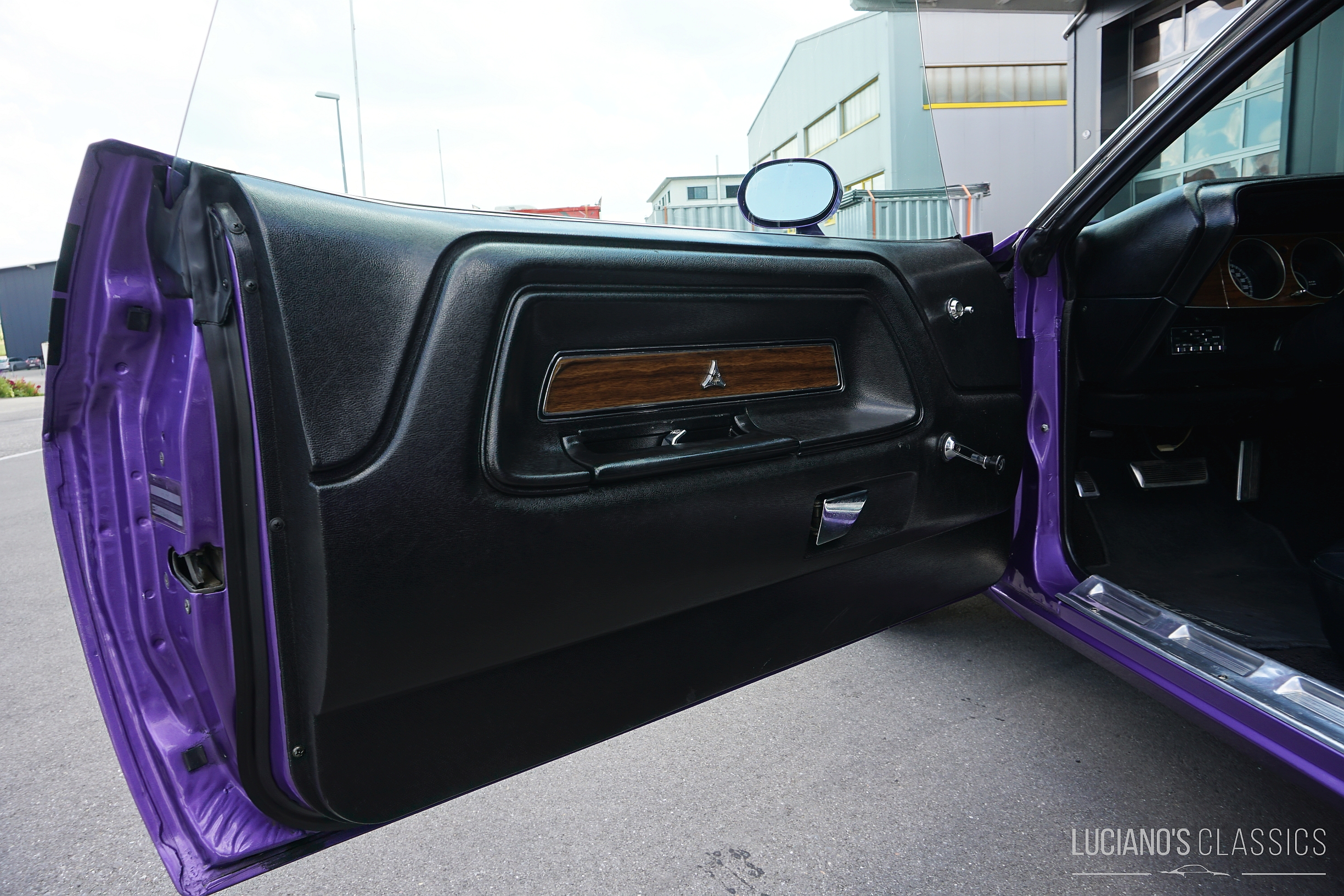
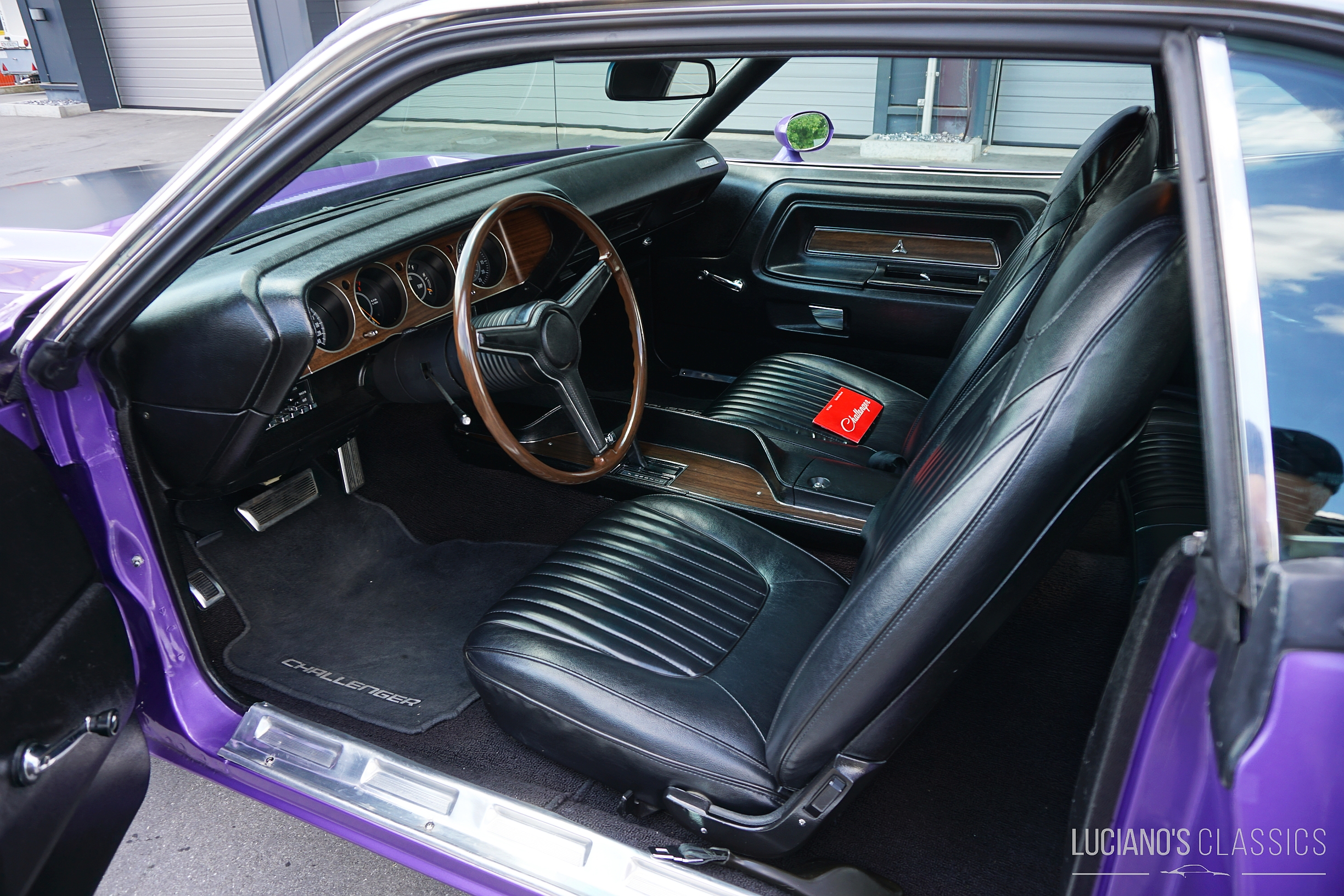
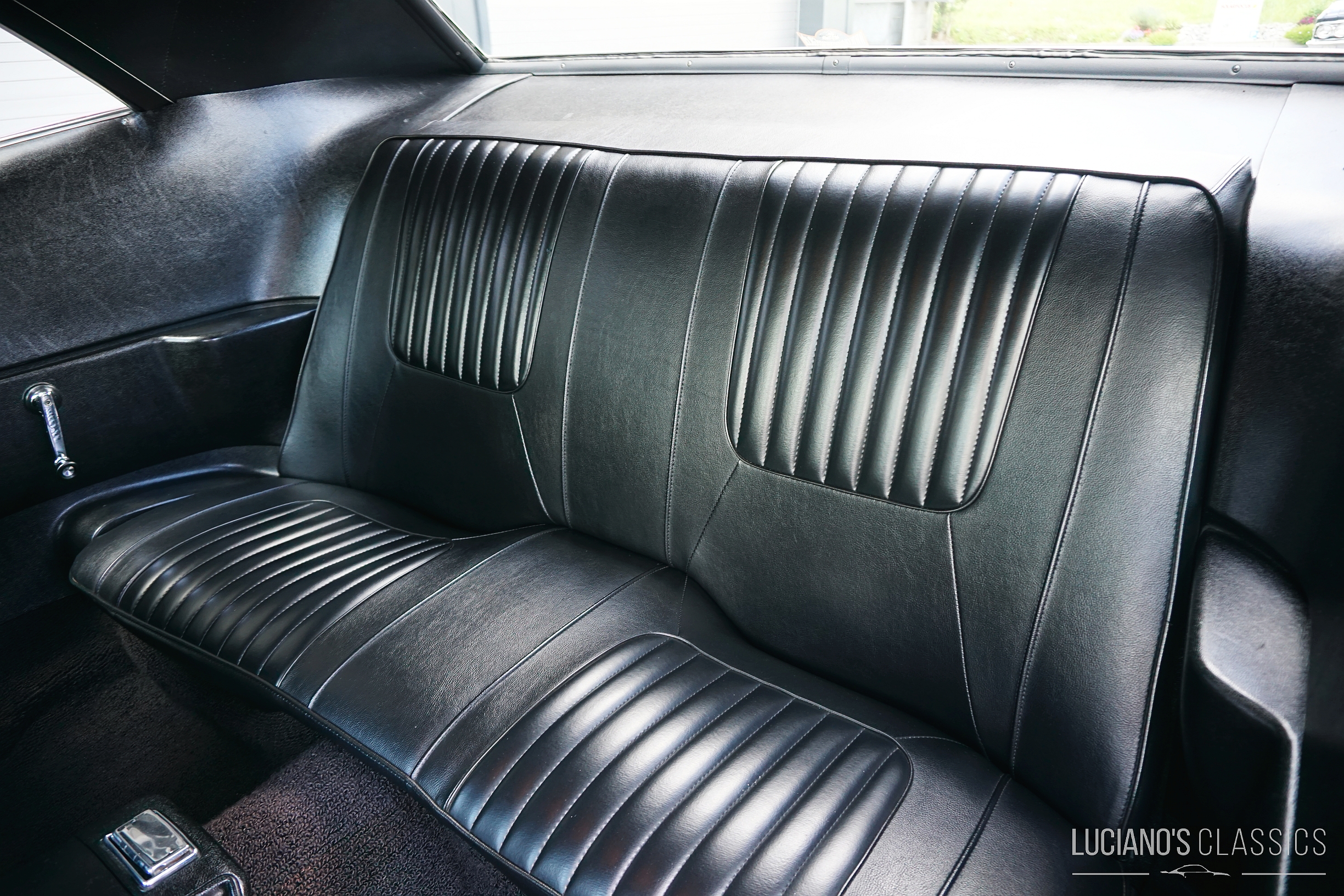
You have to see this car to believe the following description. It is a near perfect, superbly restored Challenger R/T with matching numbers all round and a lavish selection of factory options.
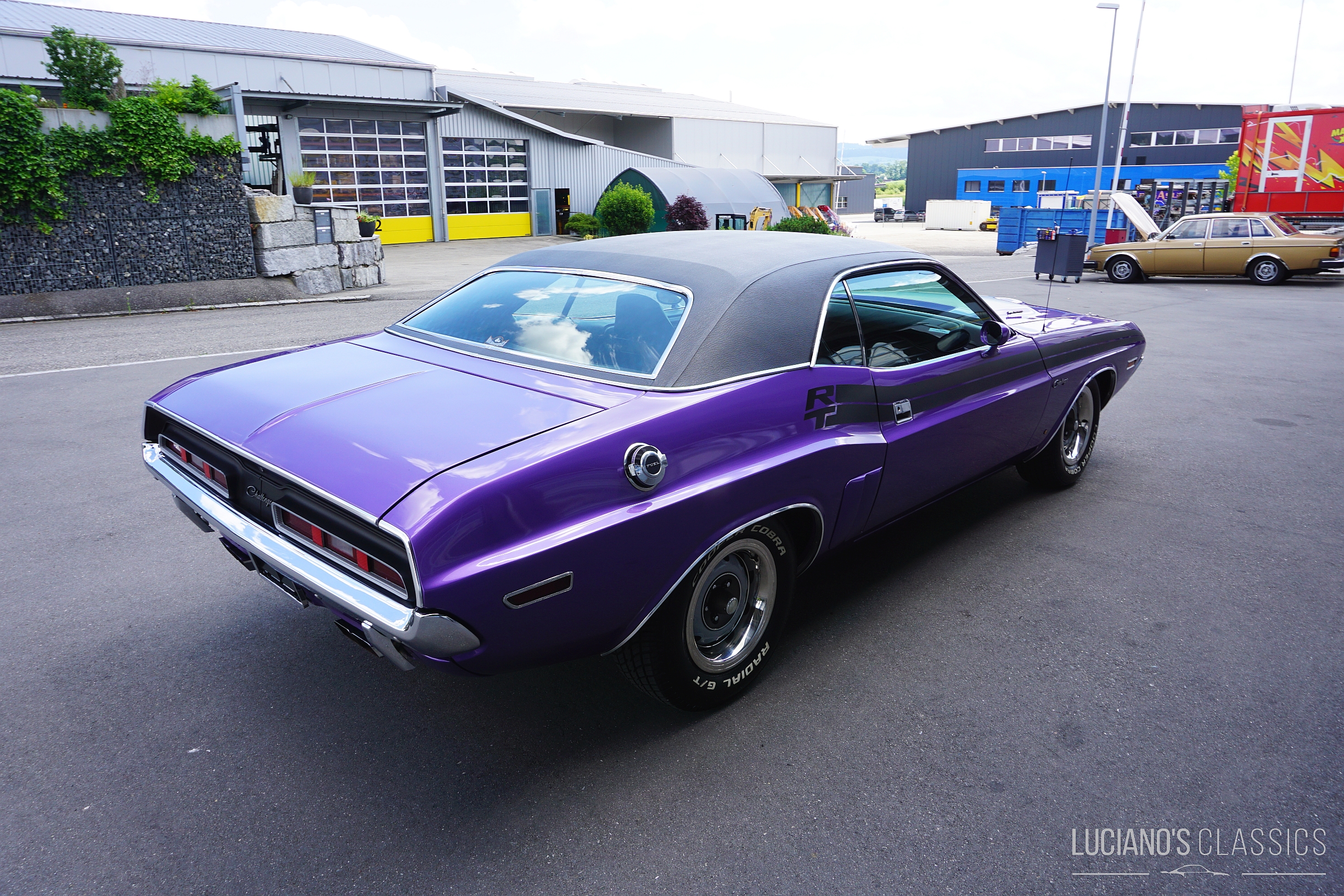
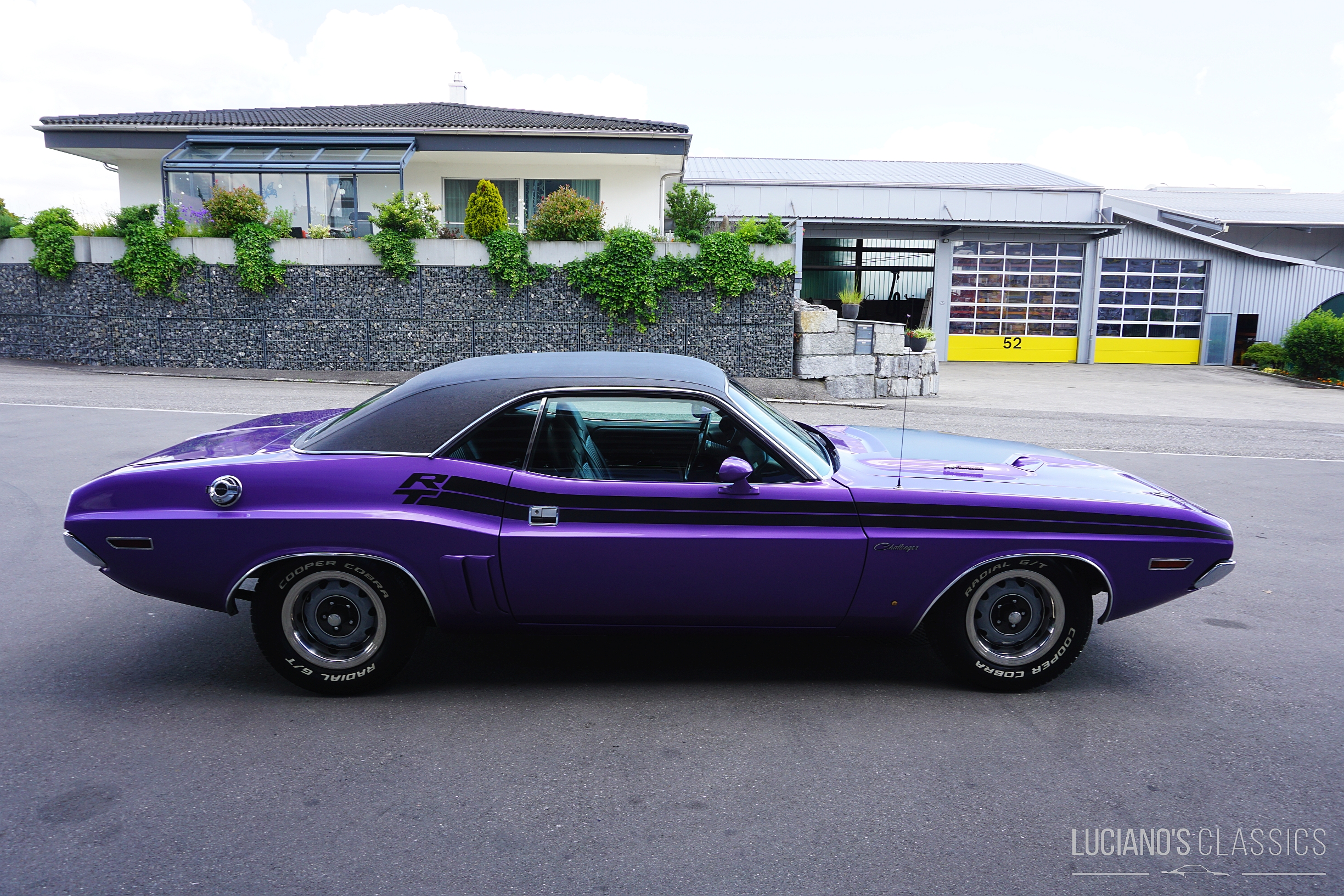
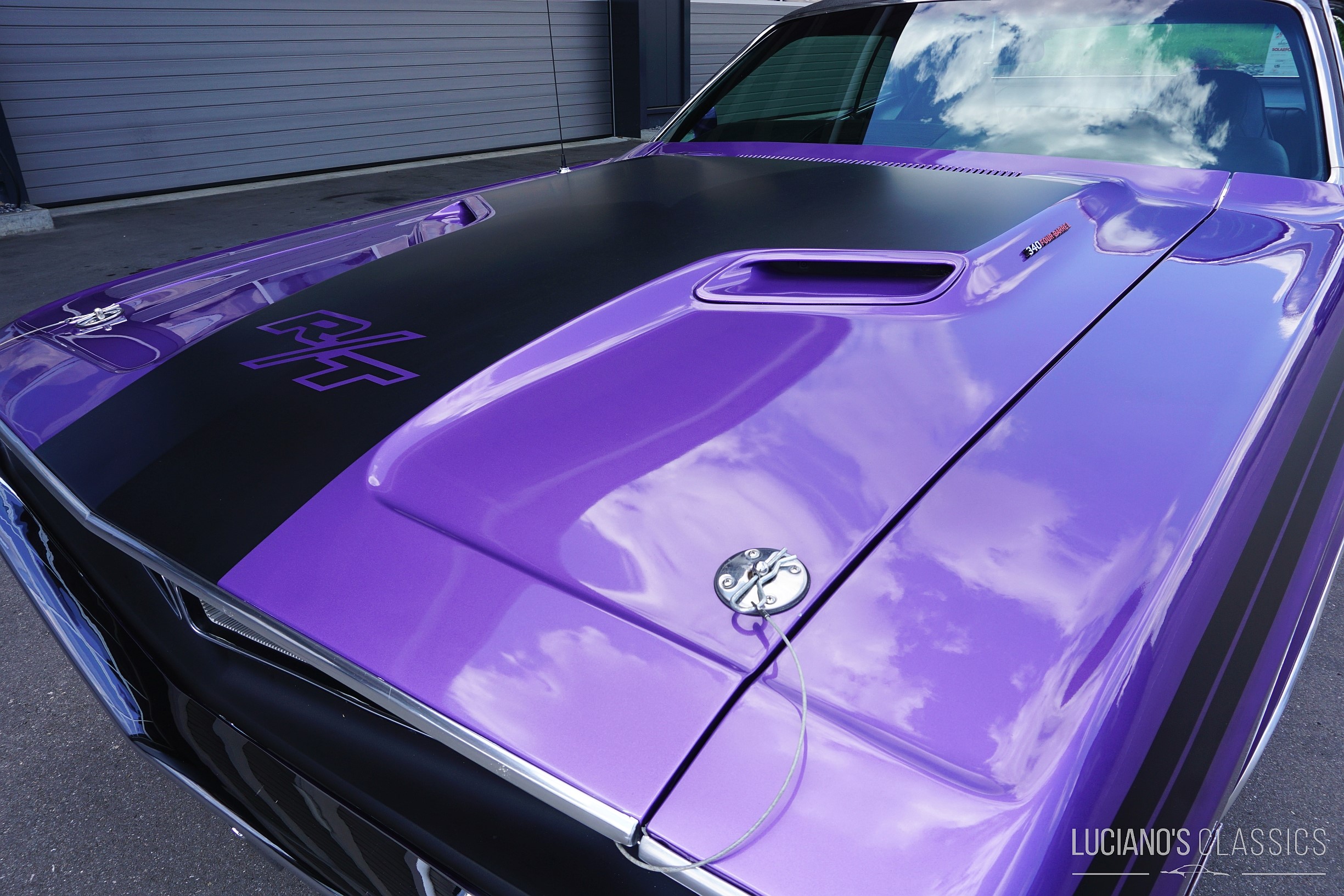
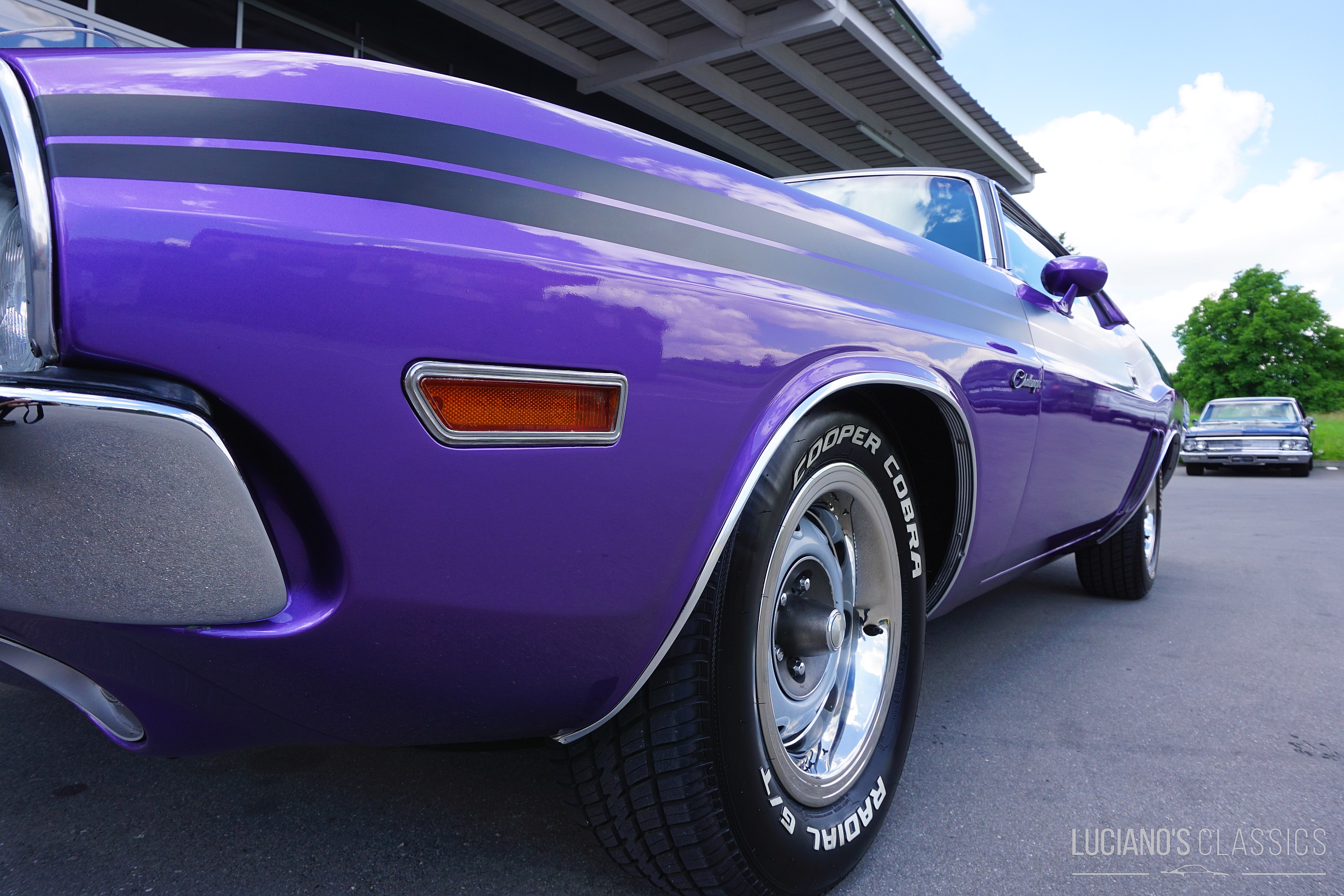
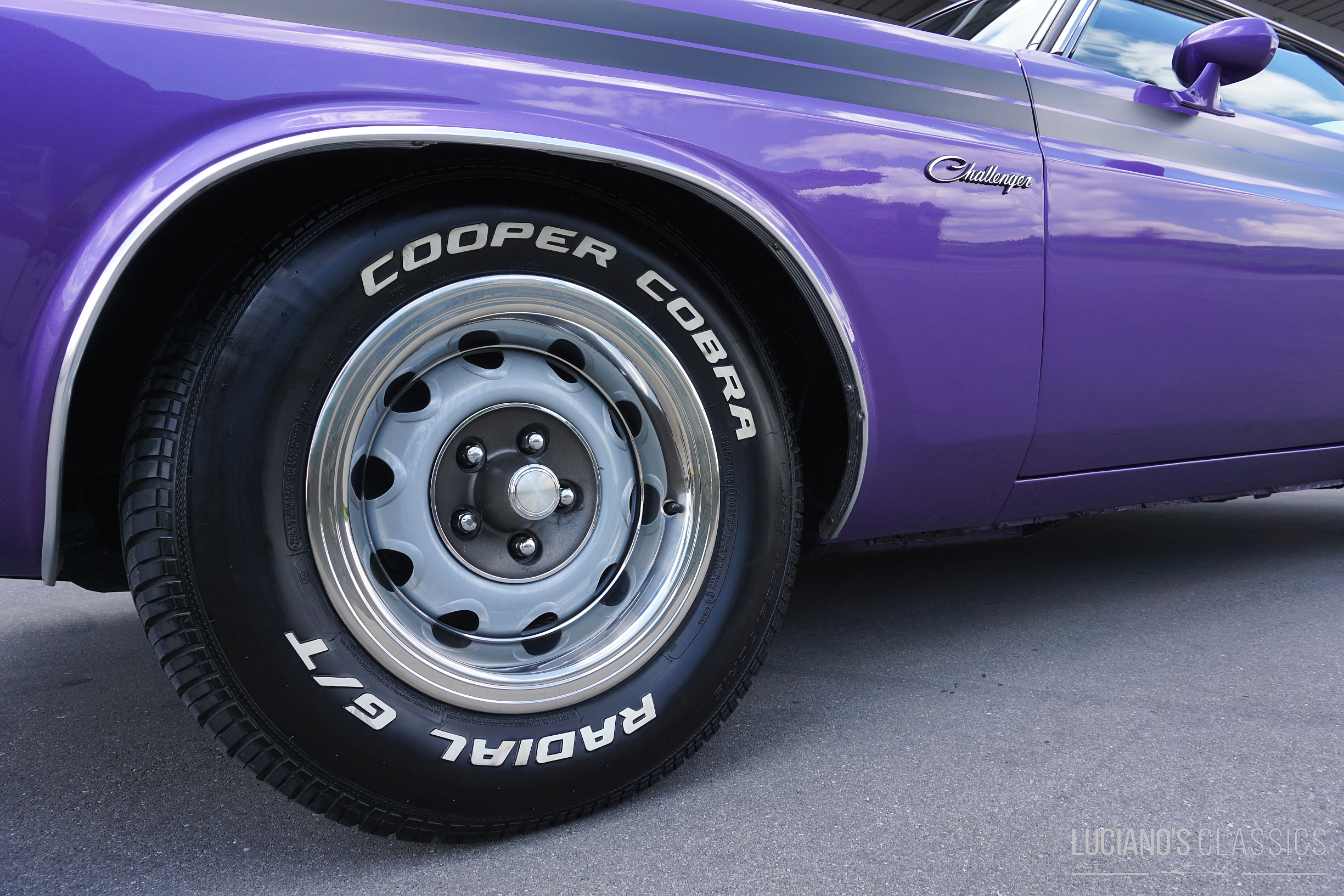
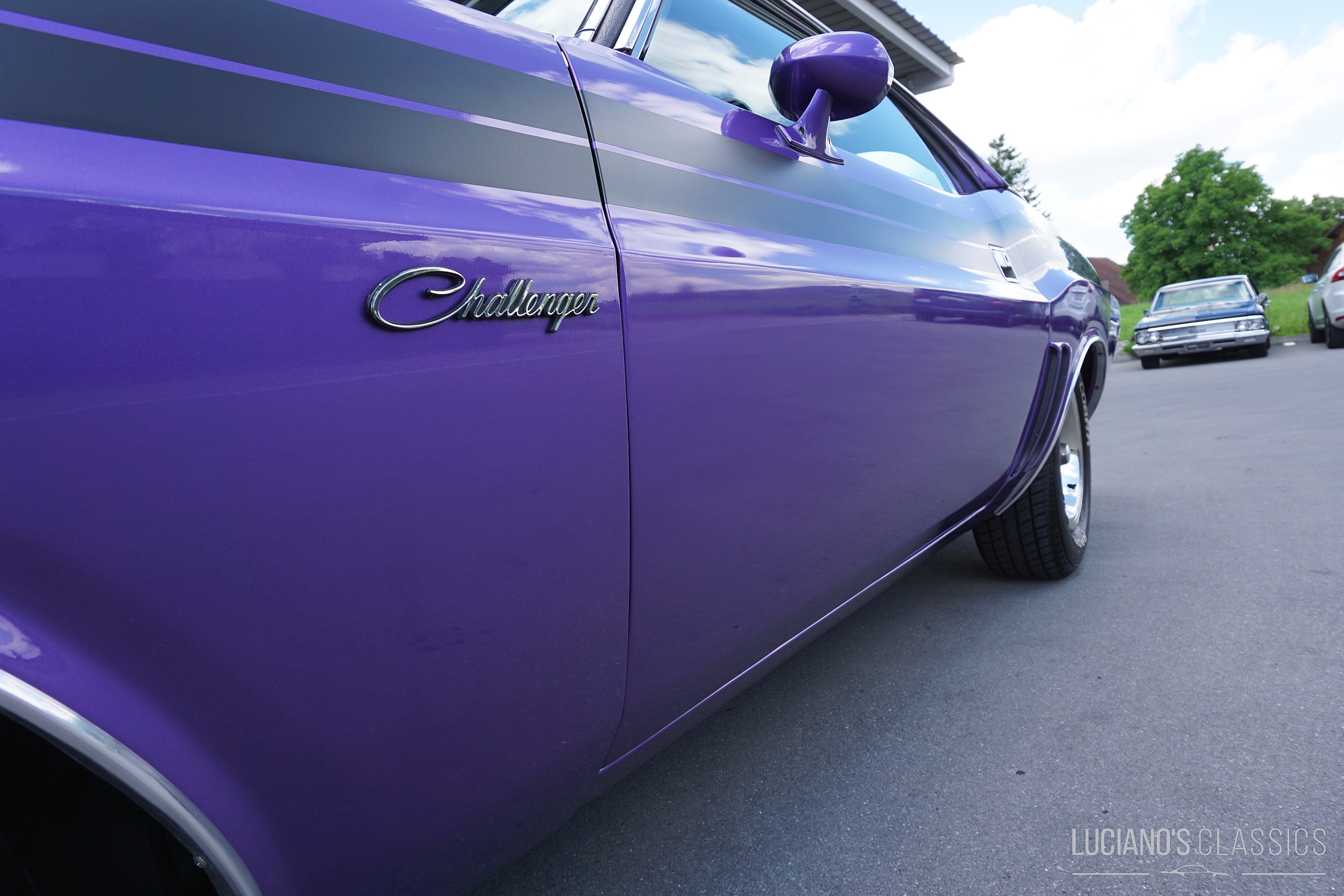
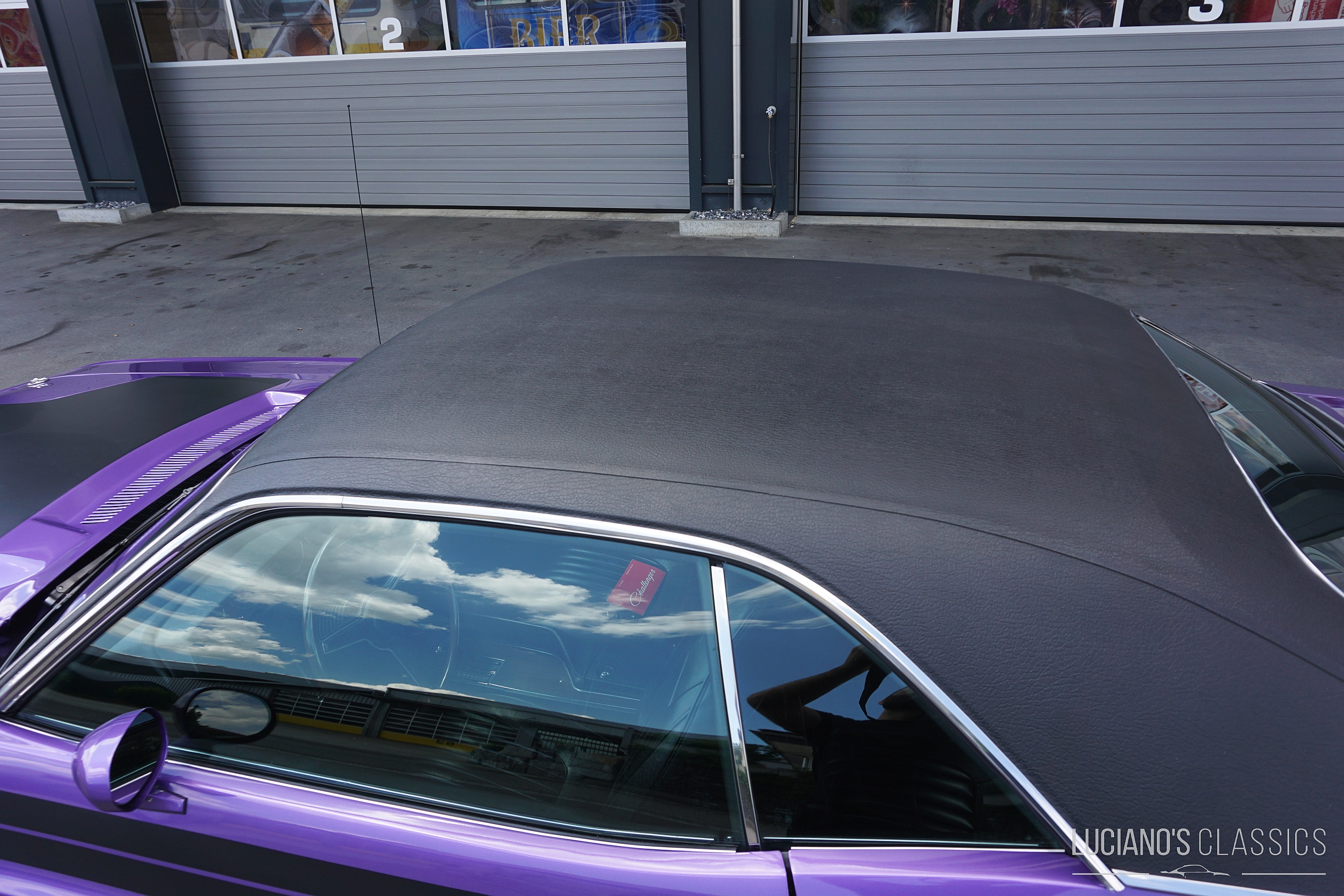
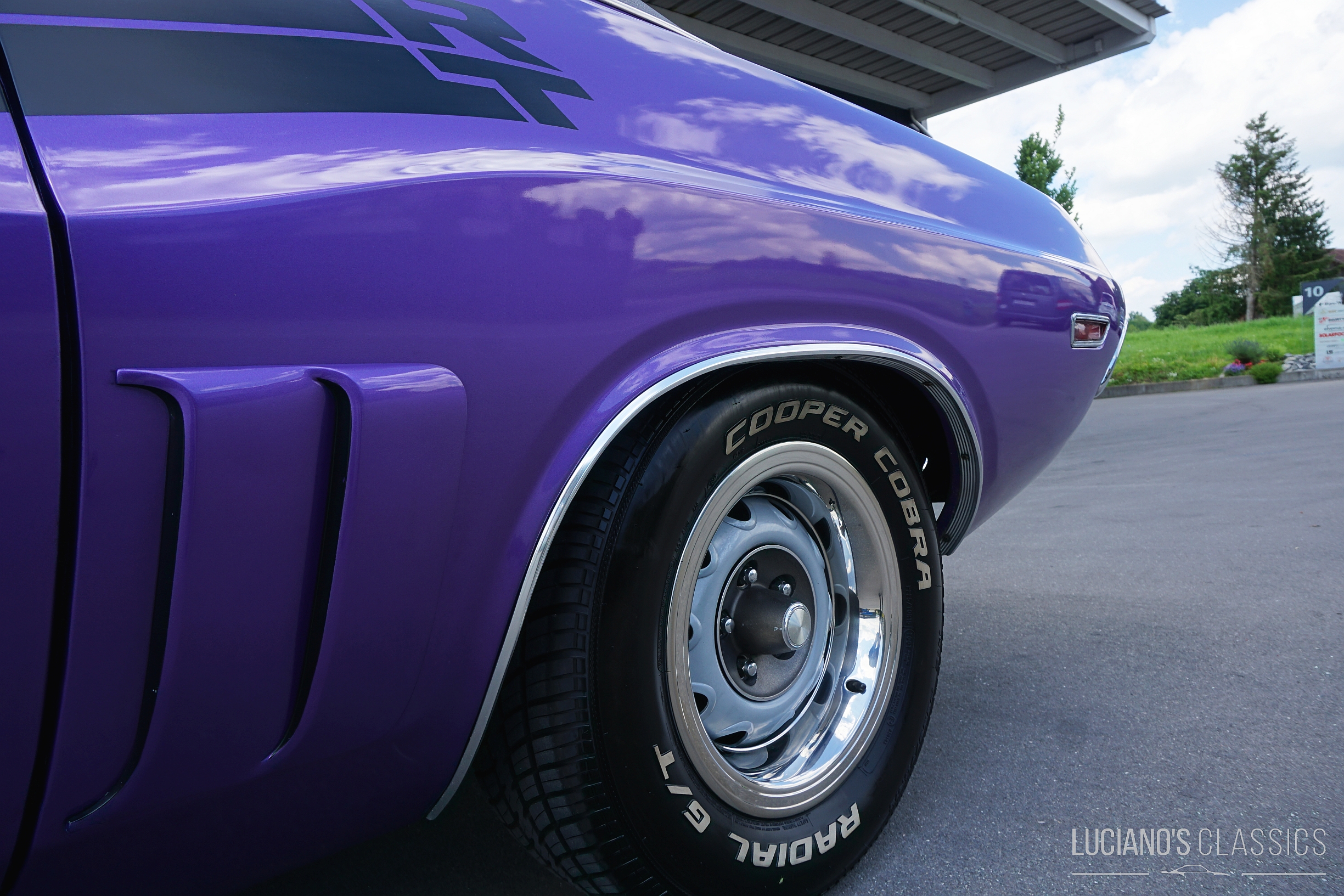
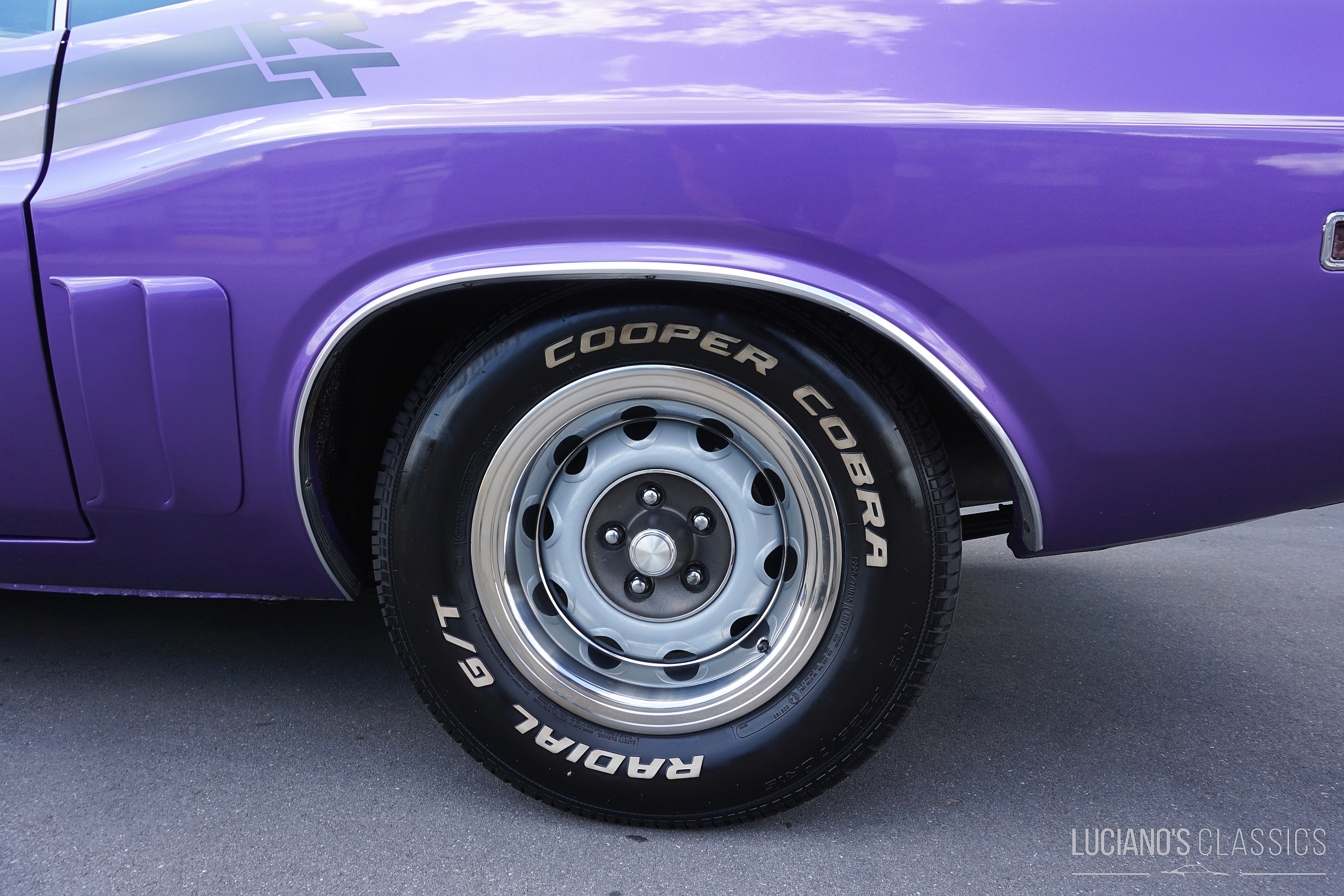
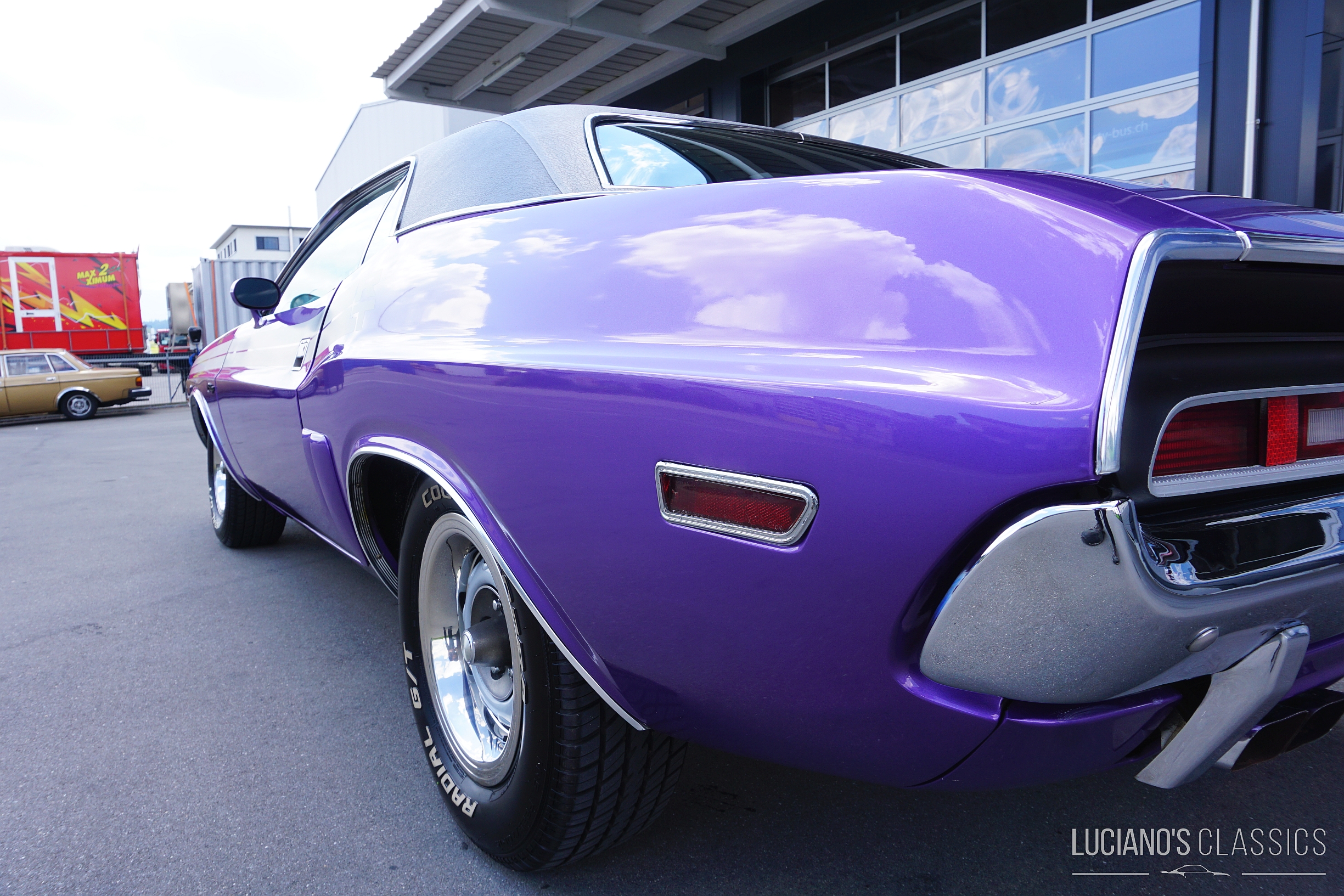
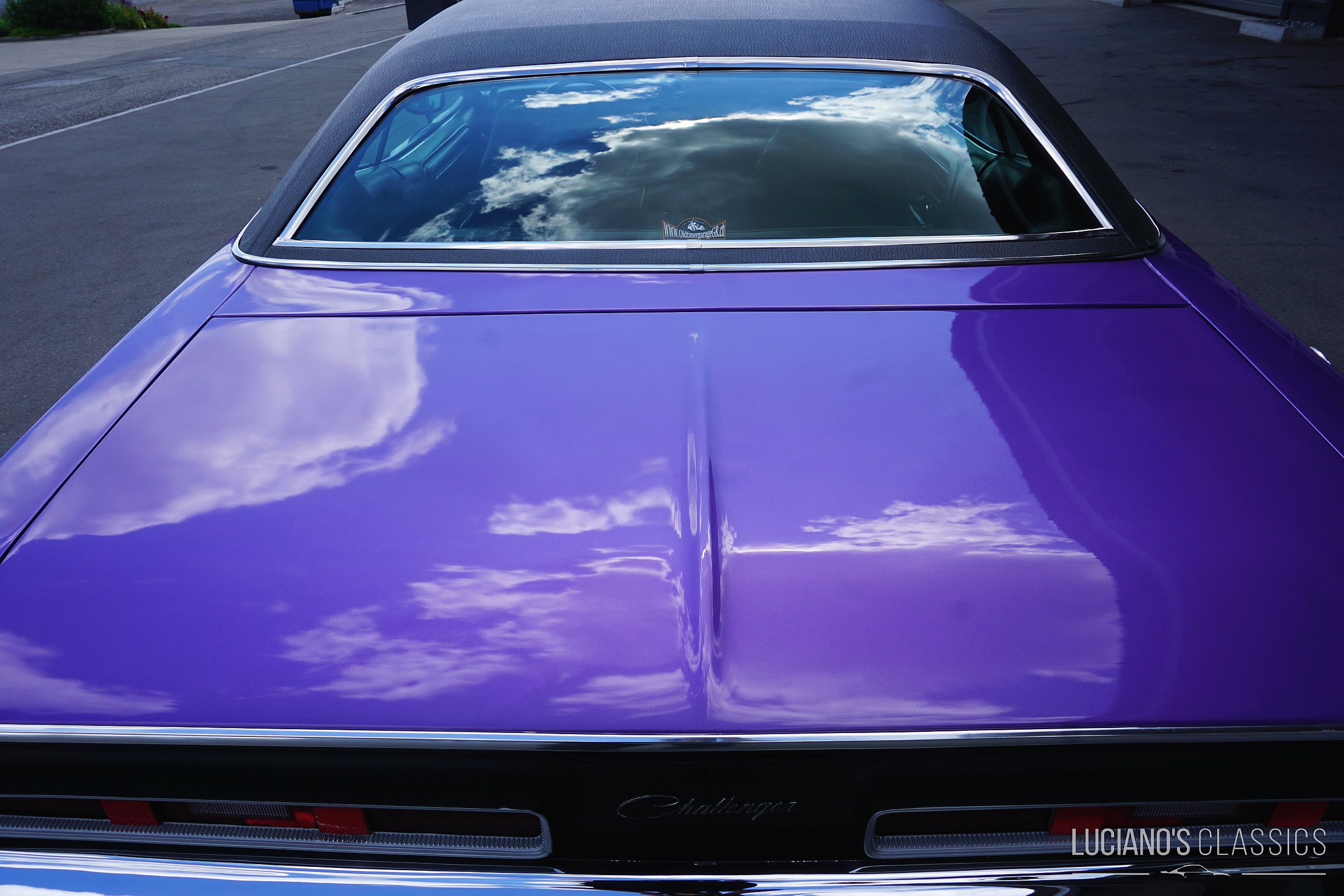
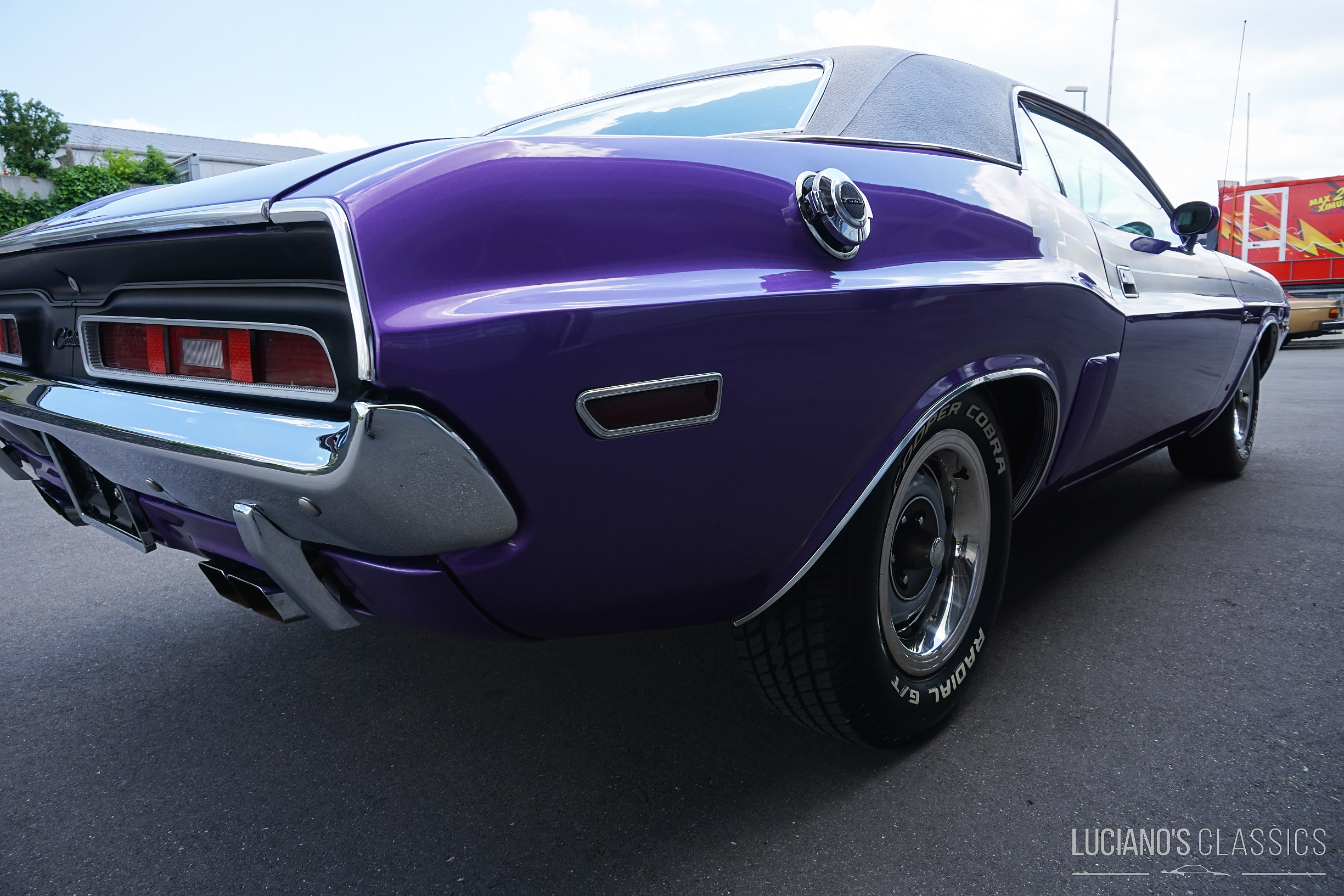
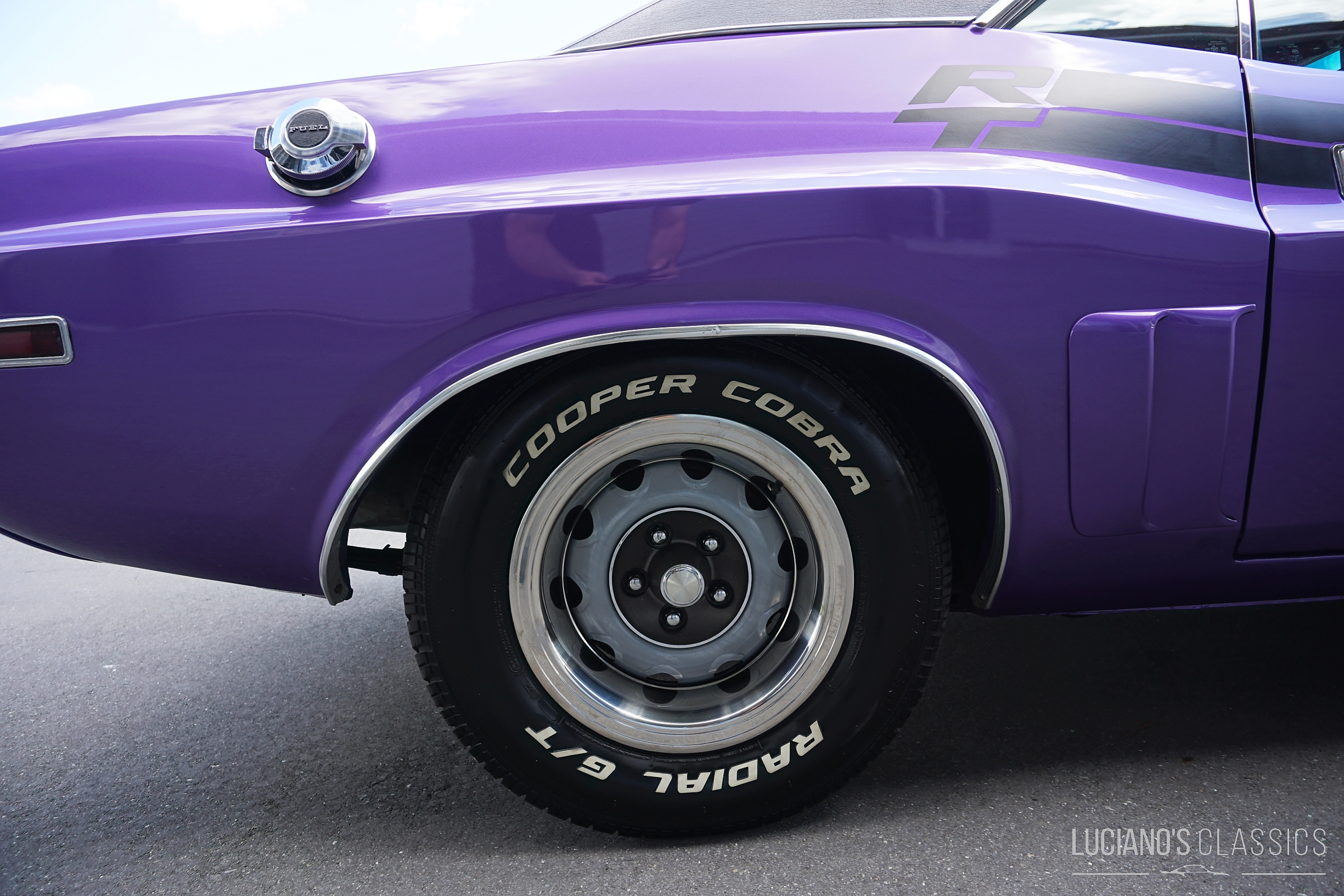
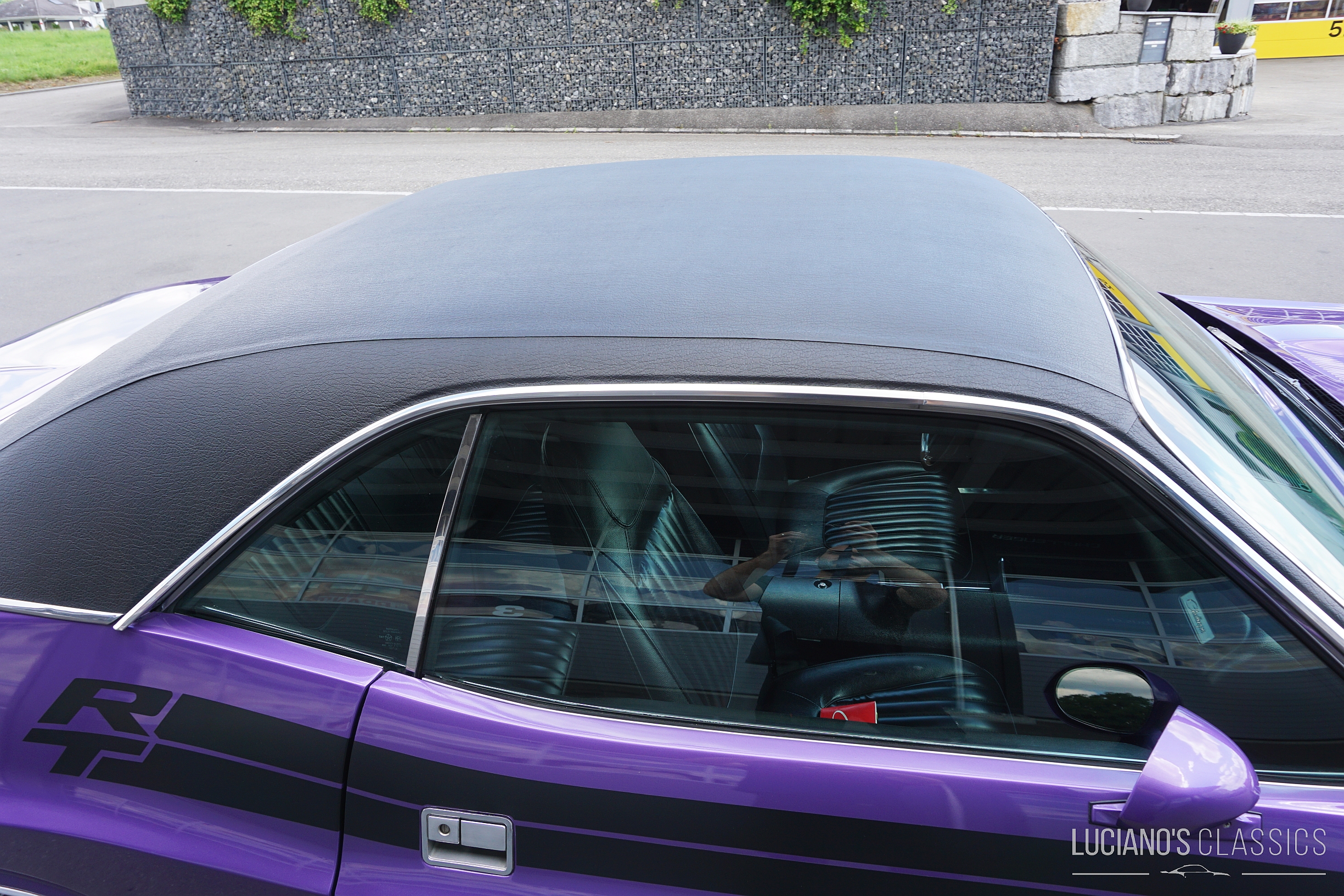
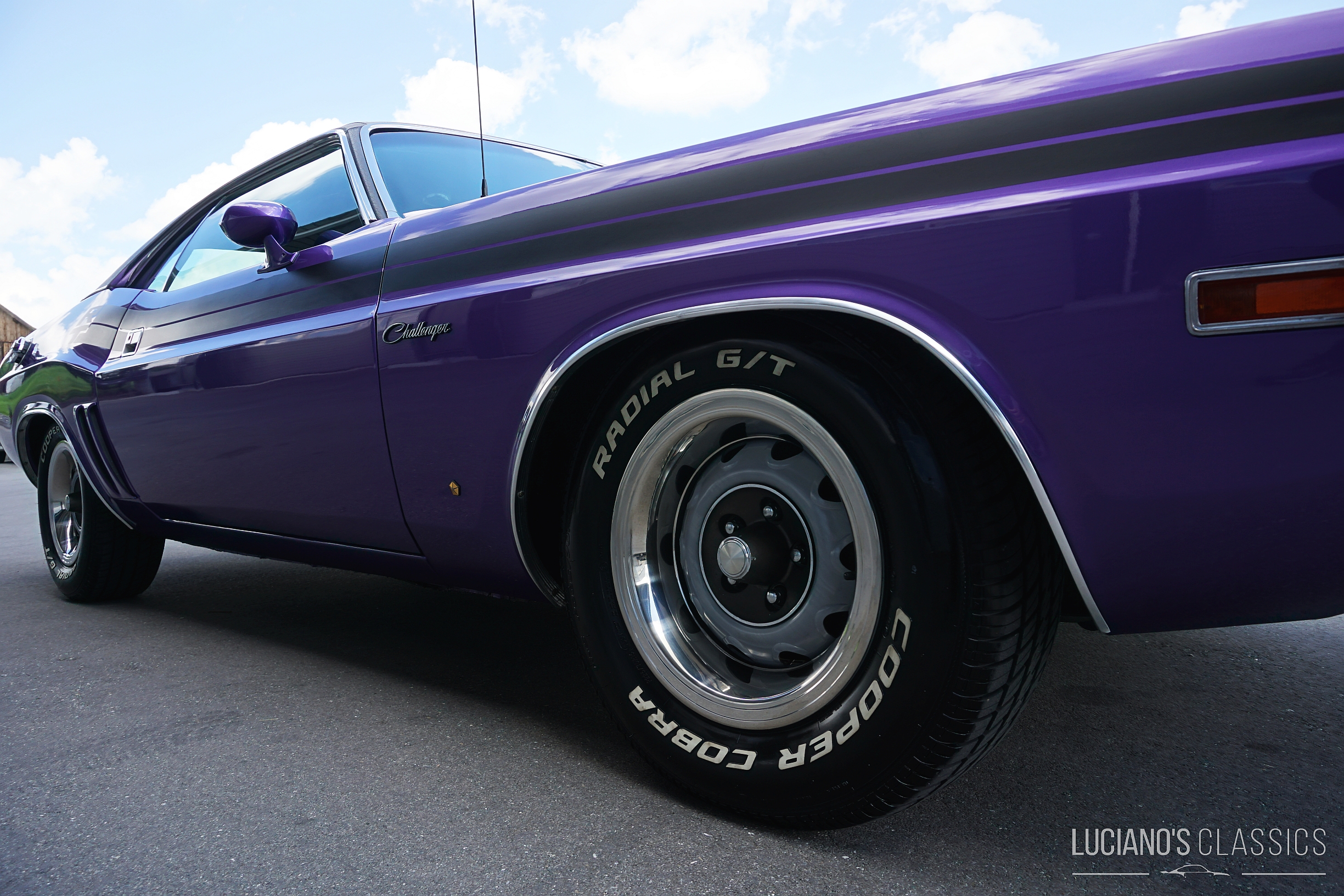
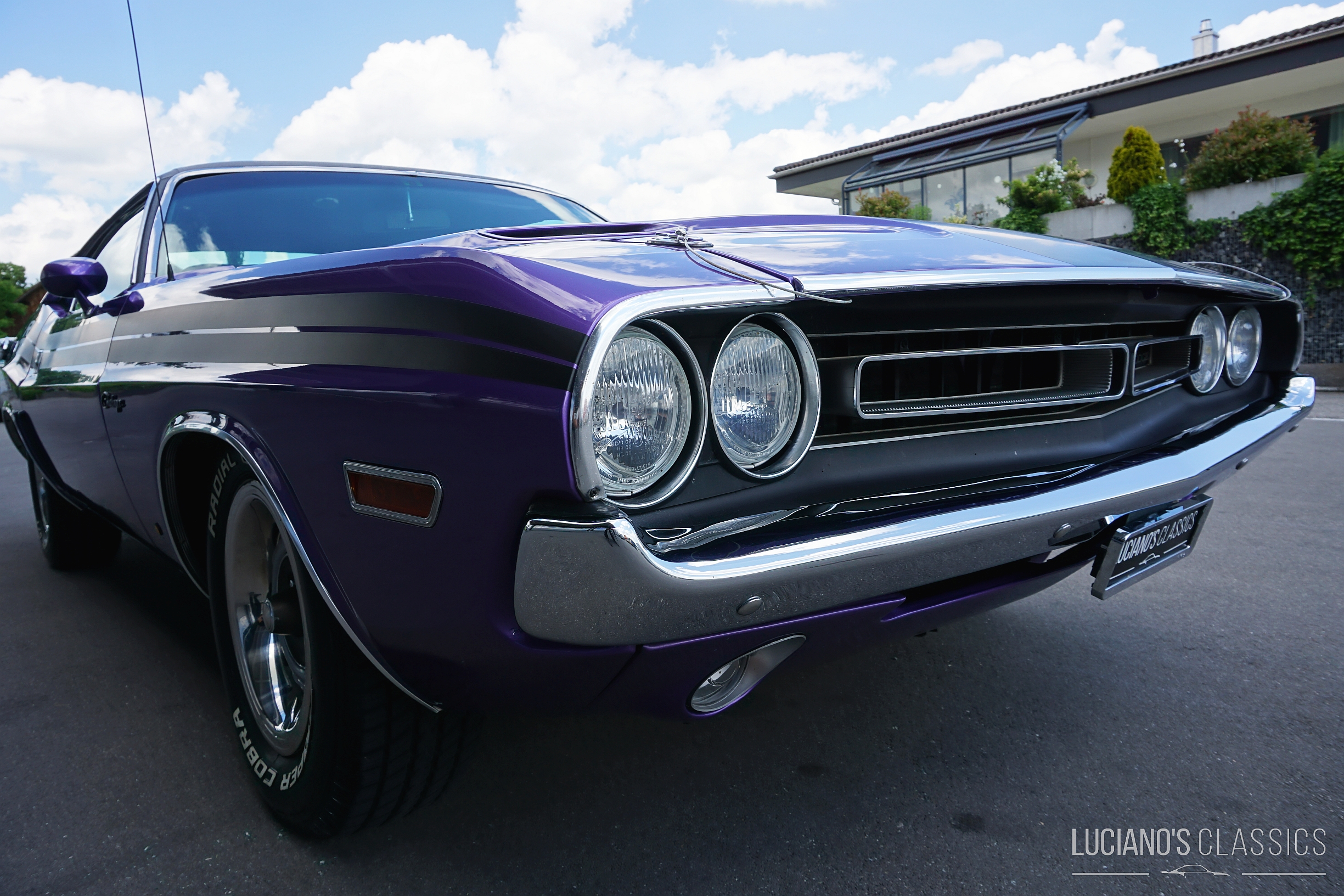
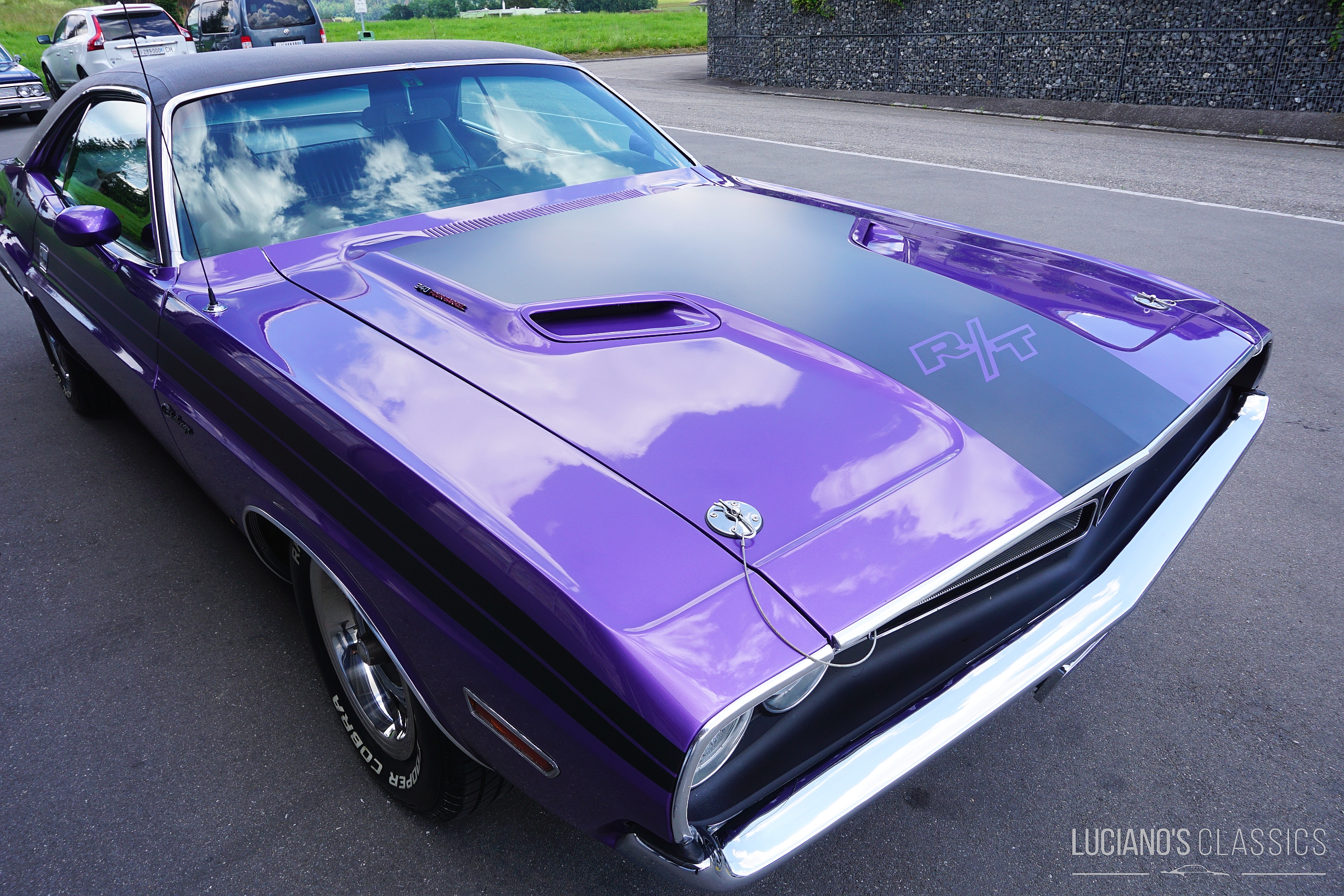
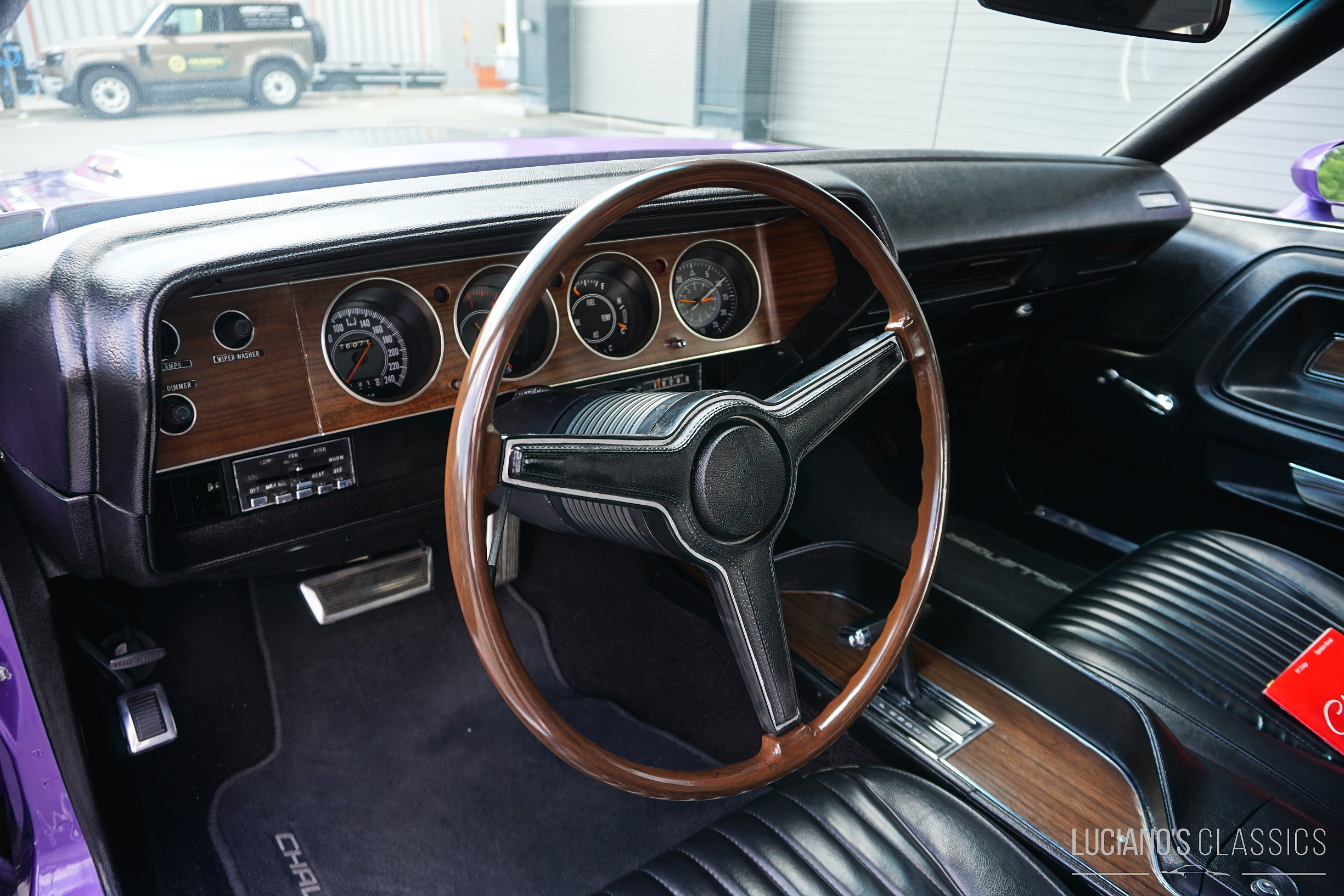
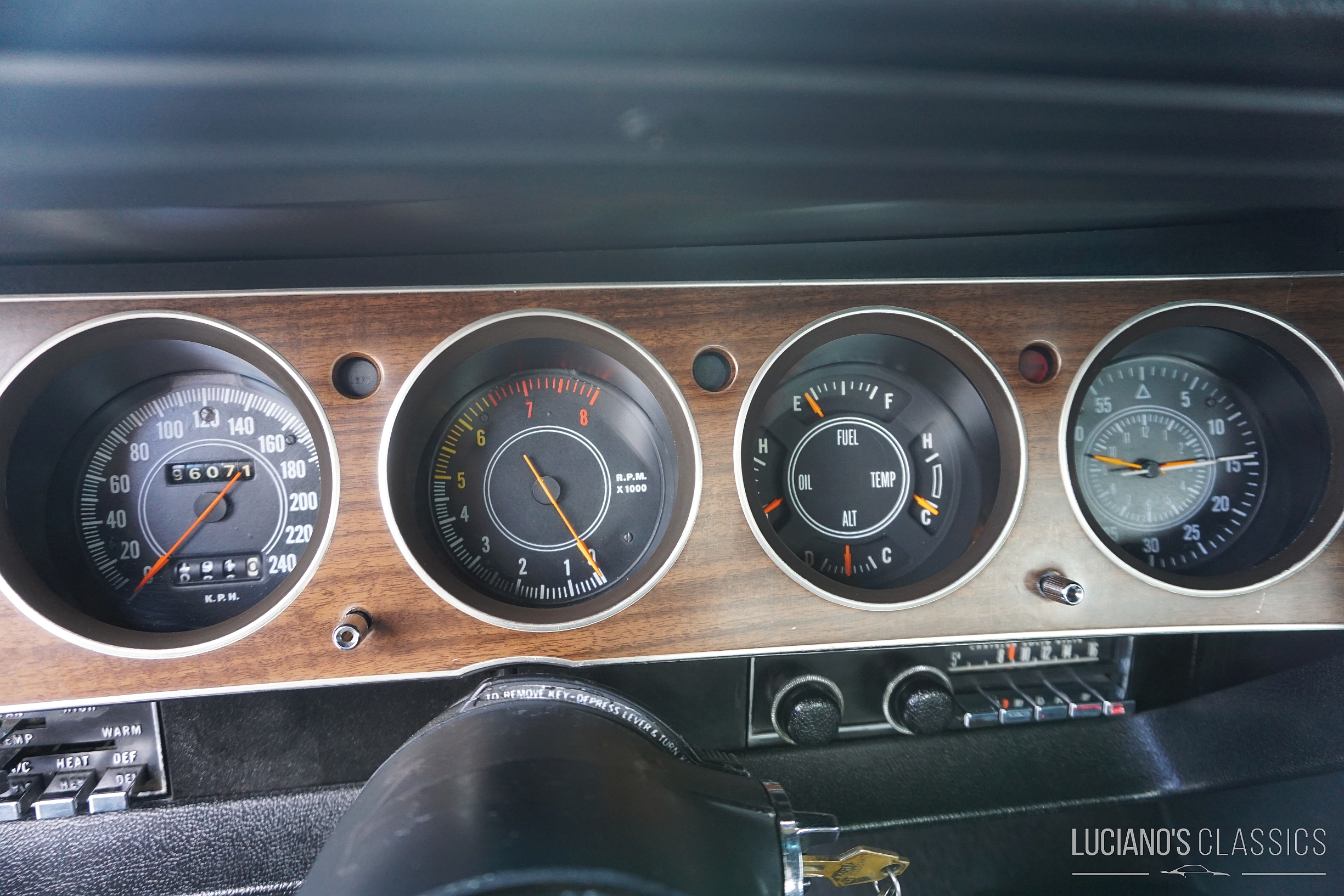
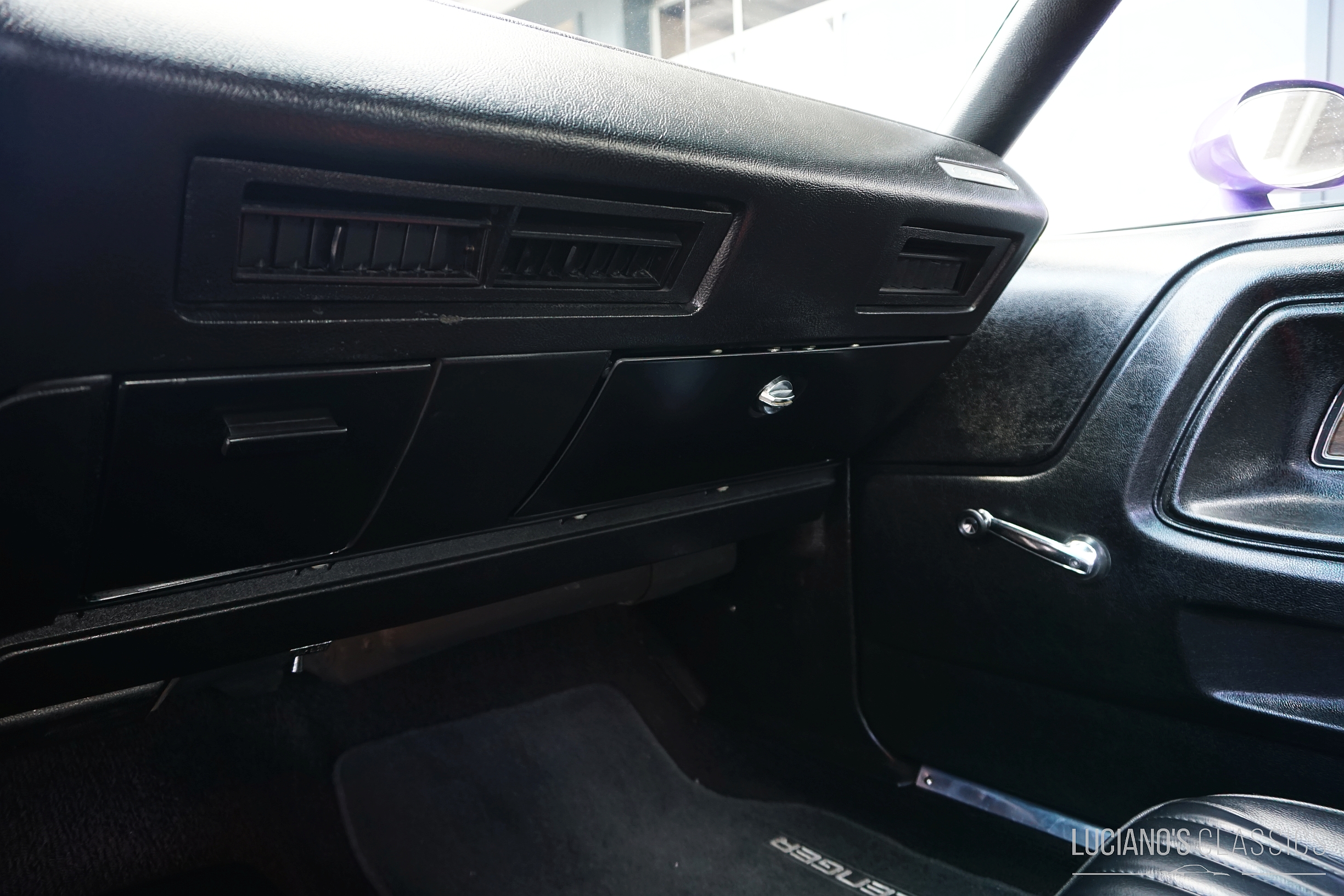
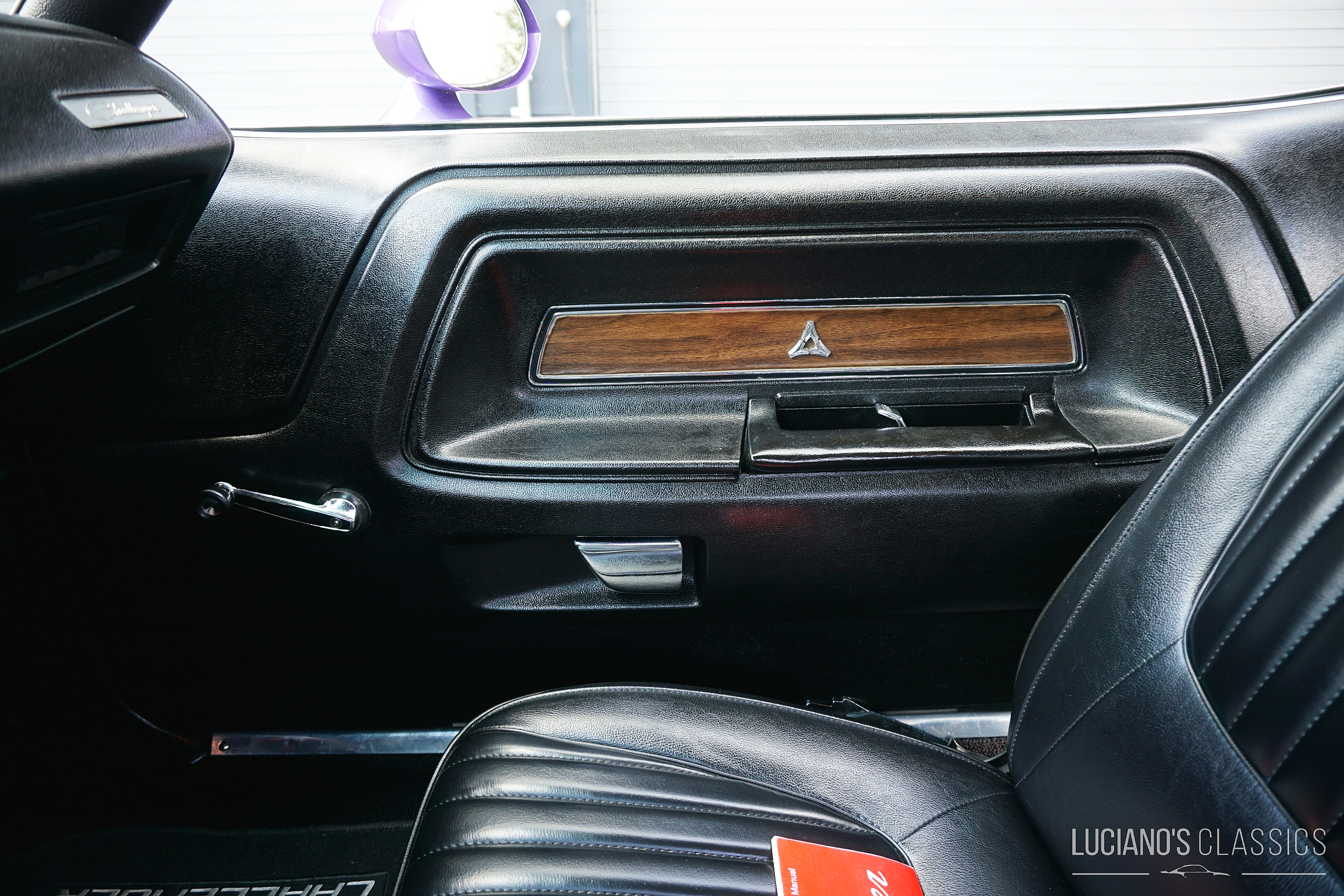
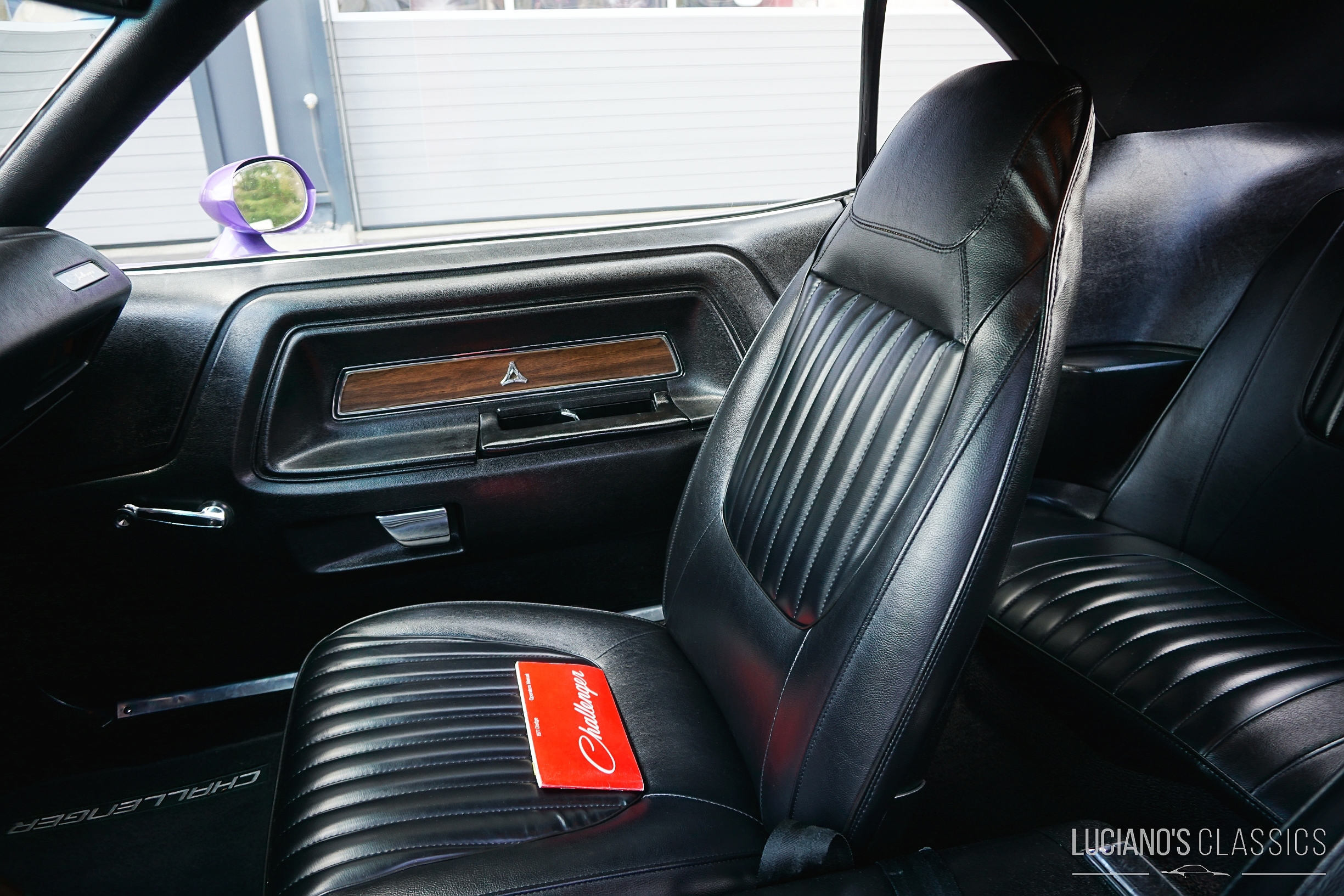
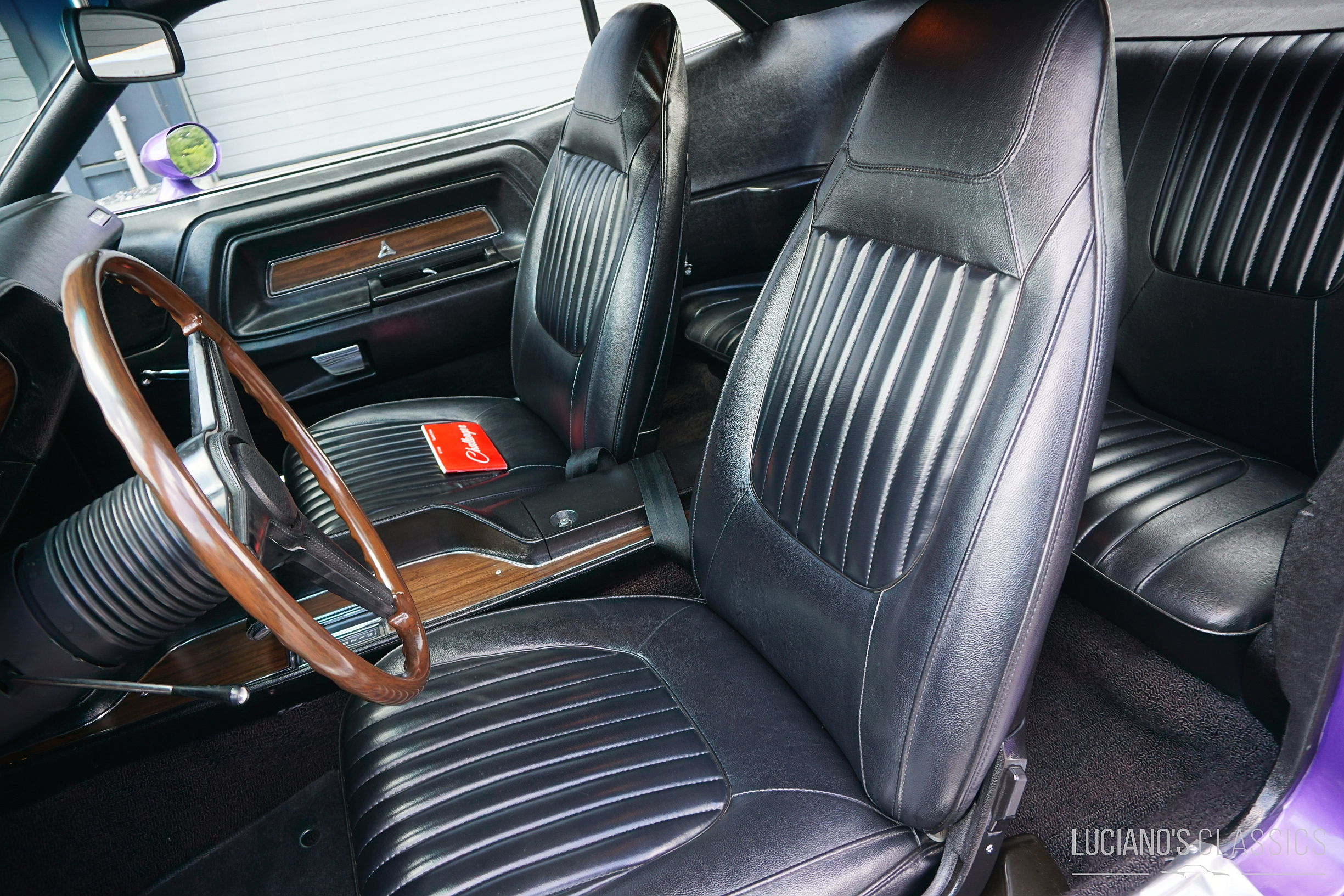
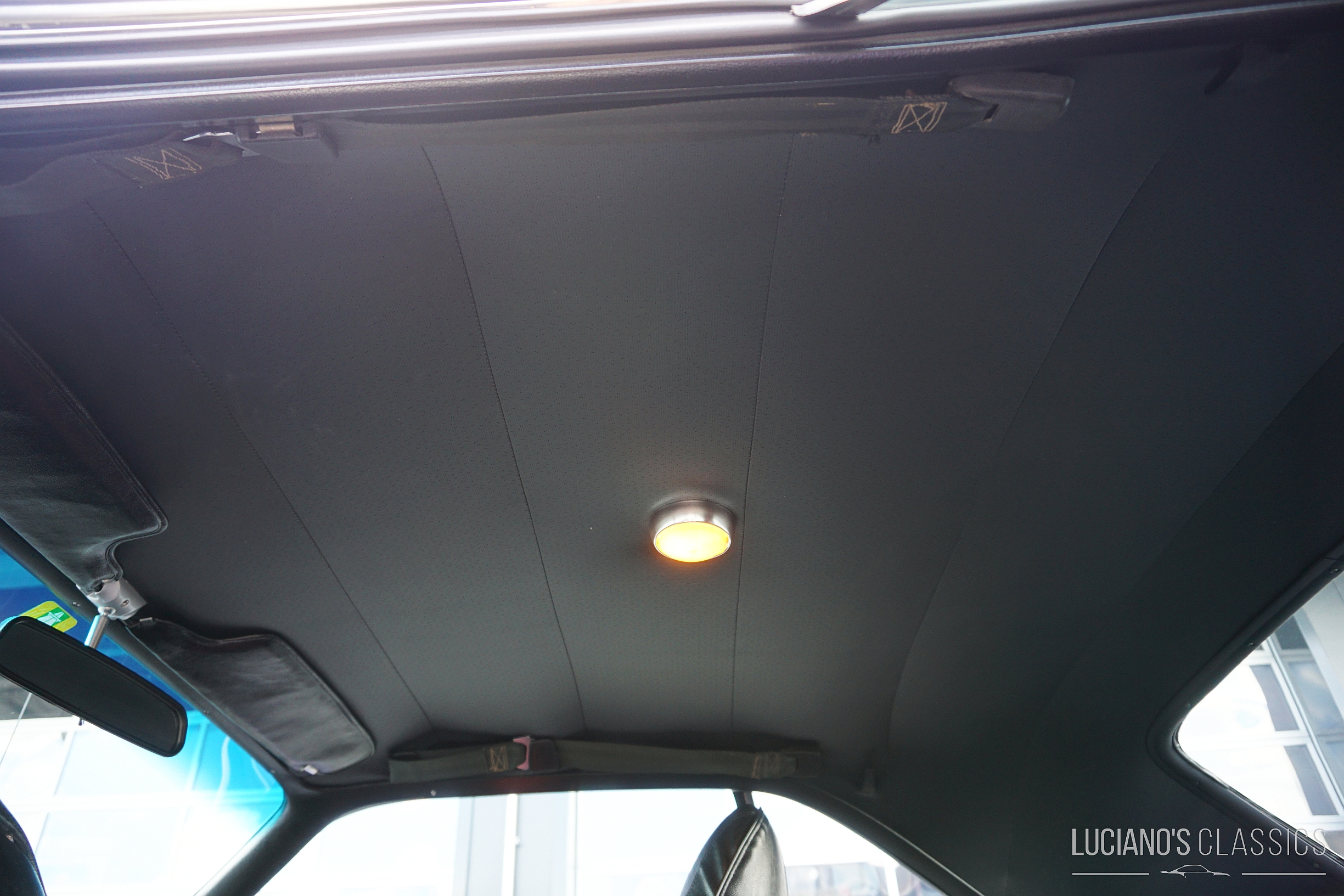
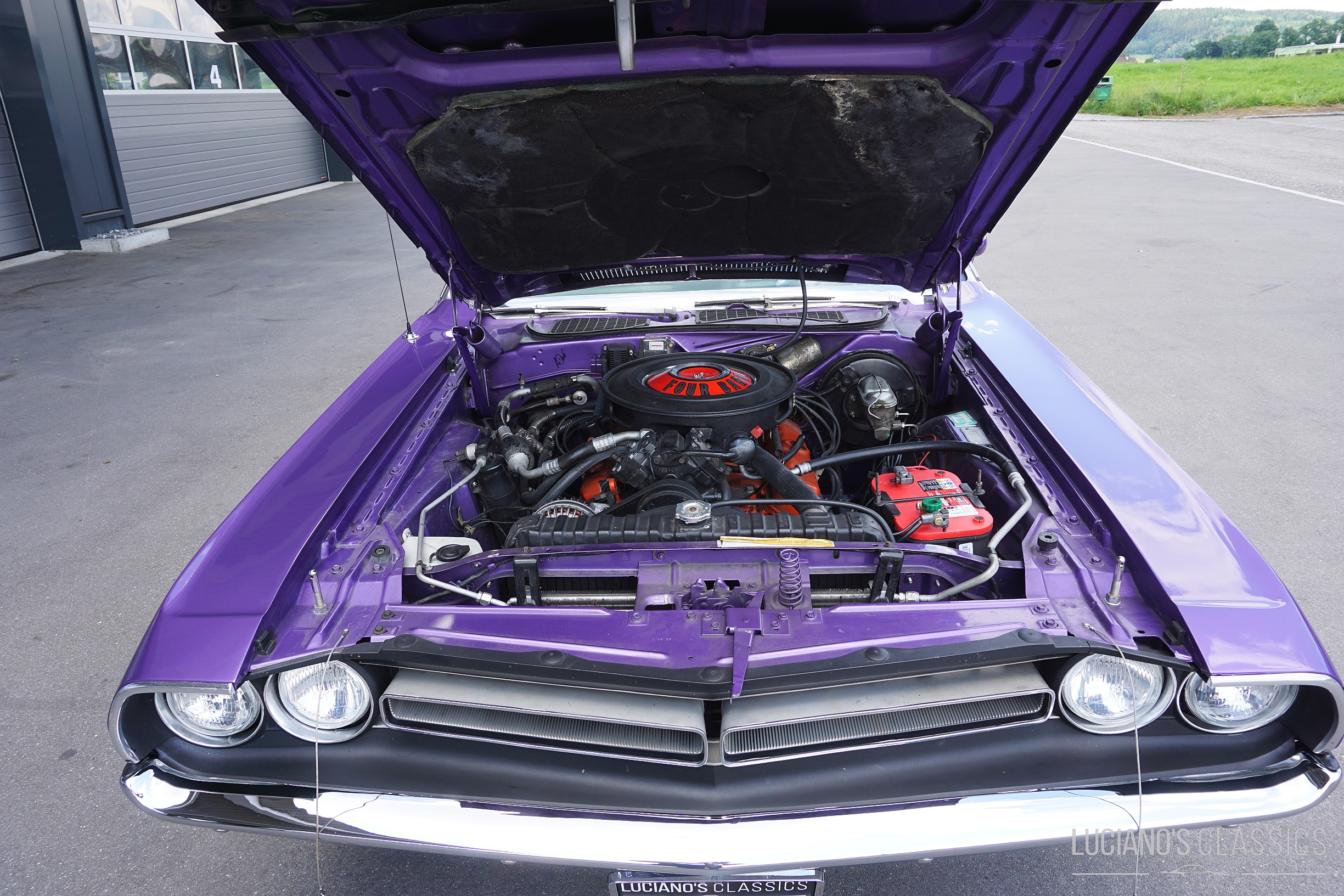
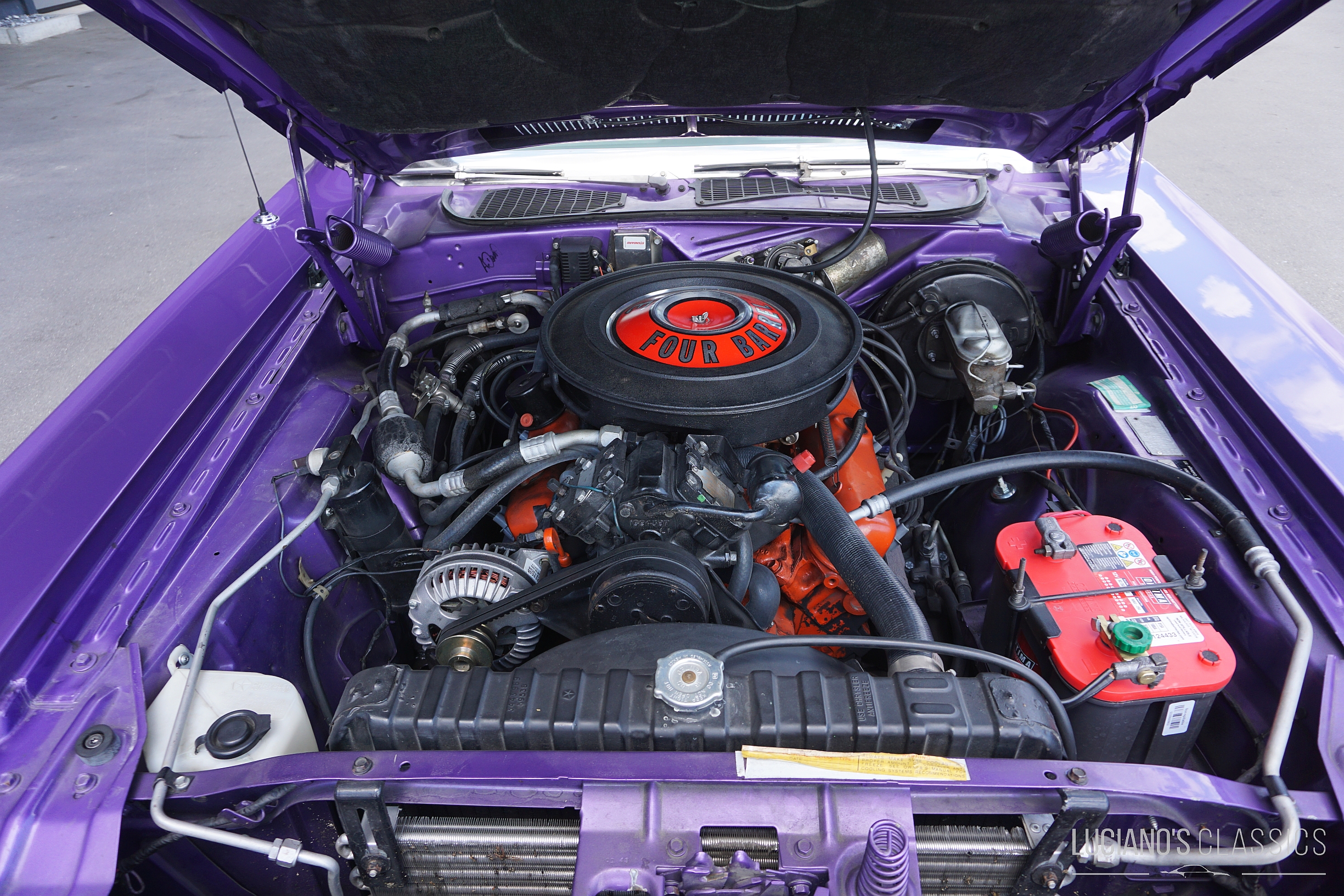
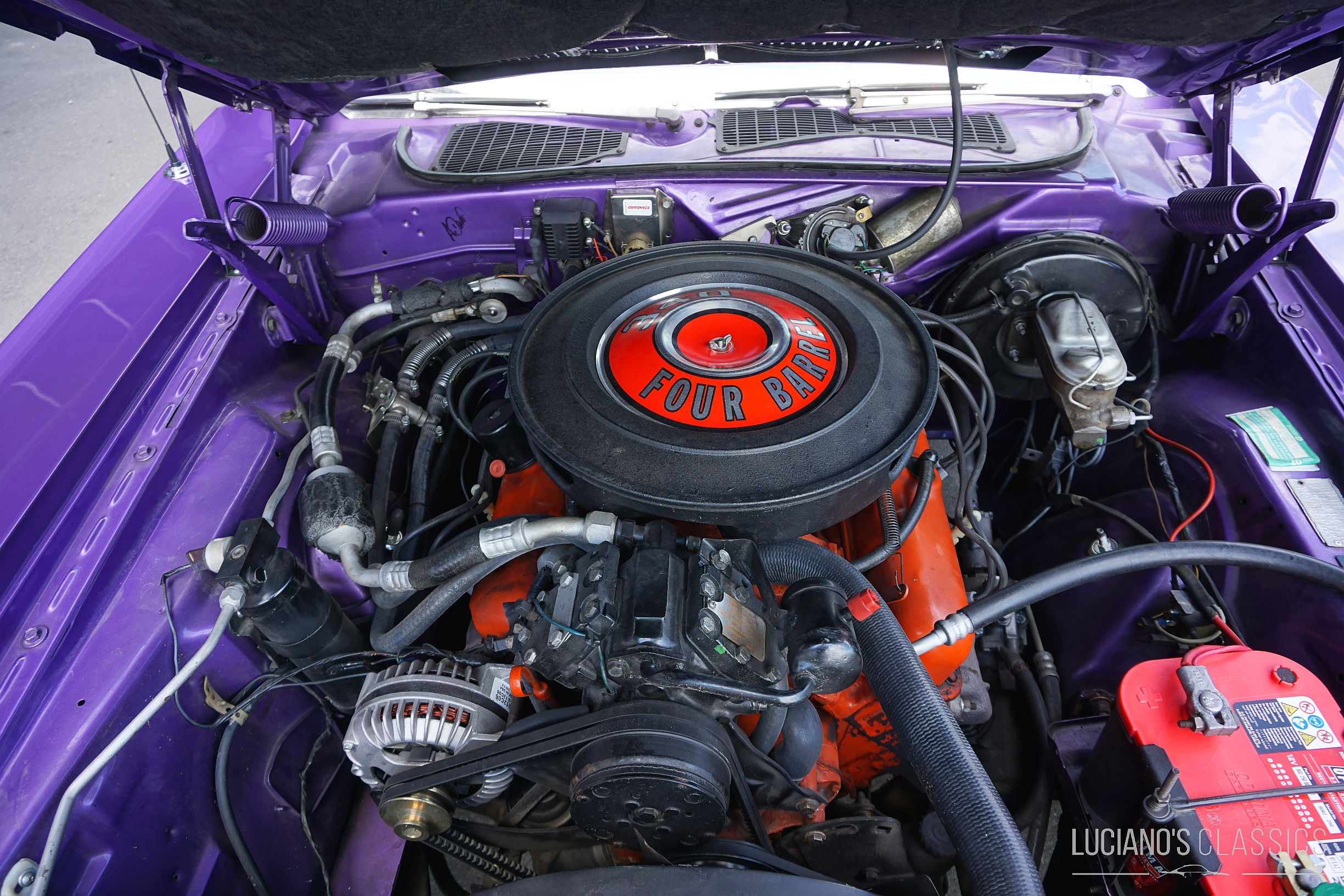
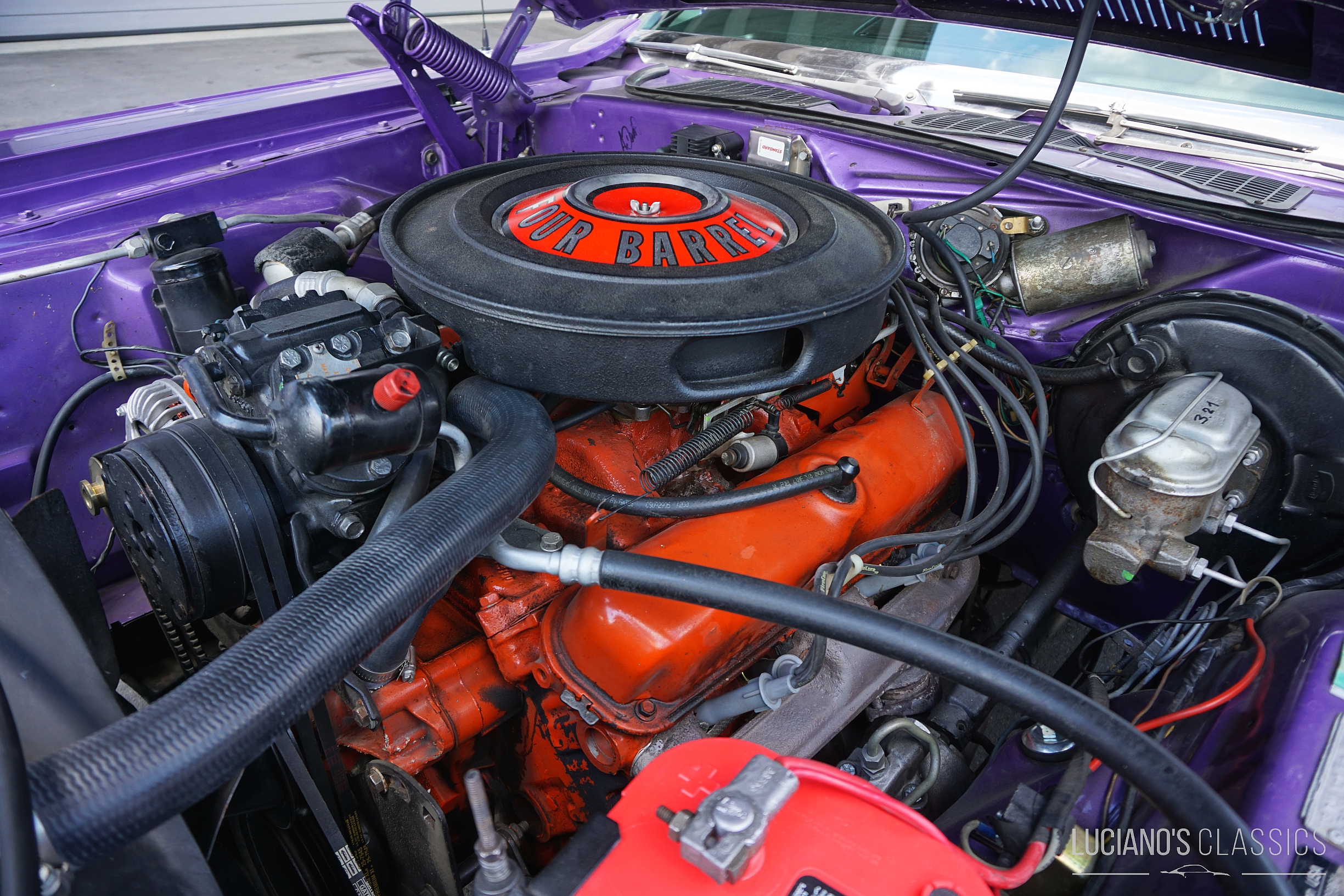
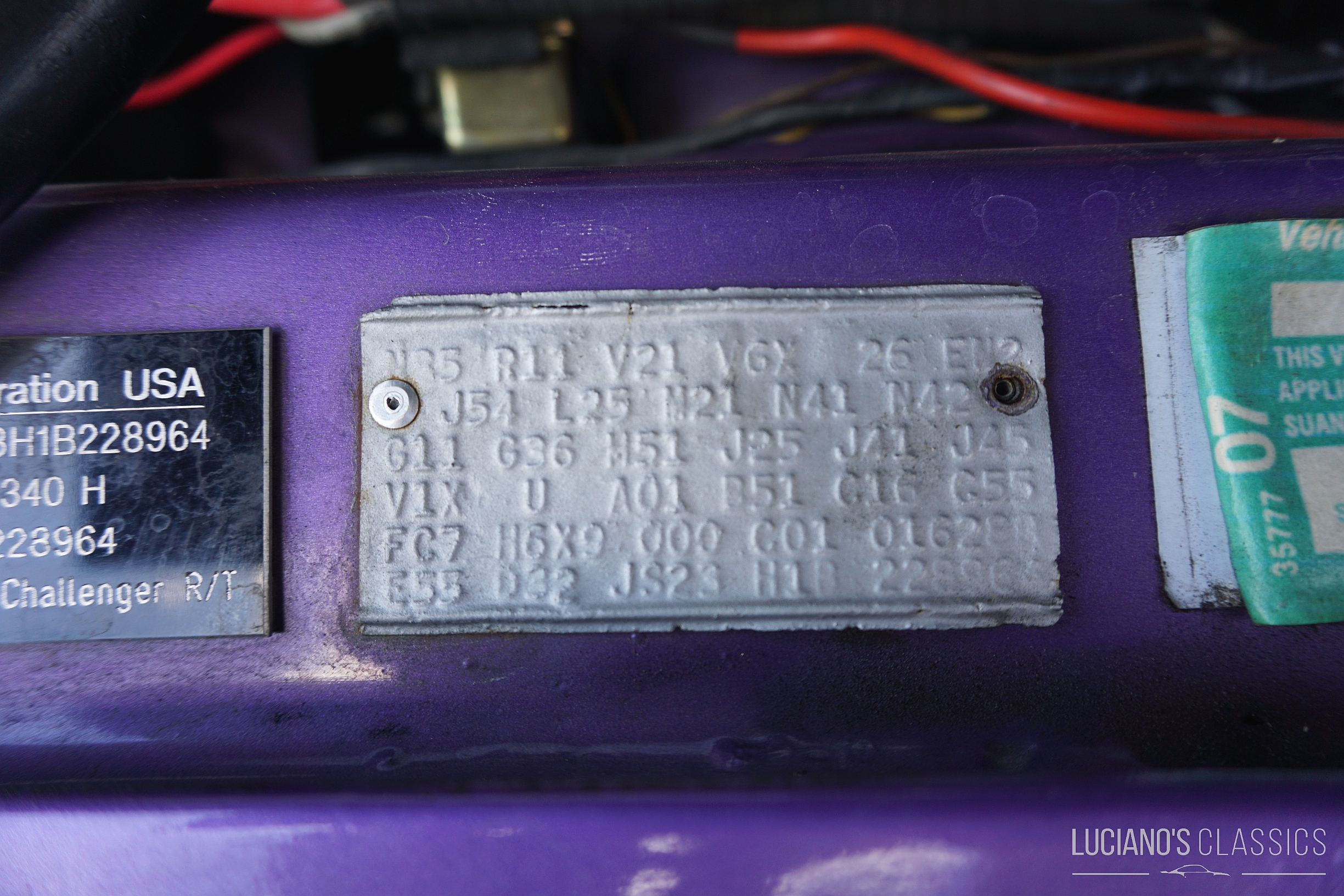
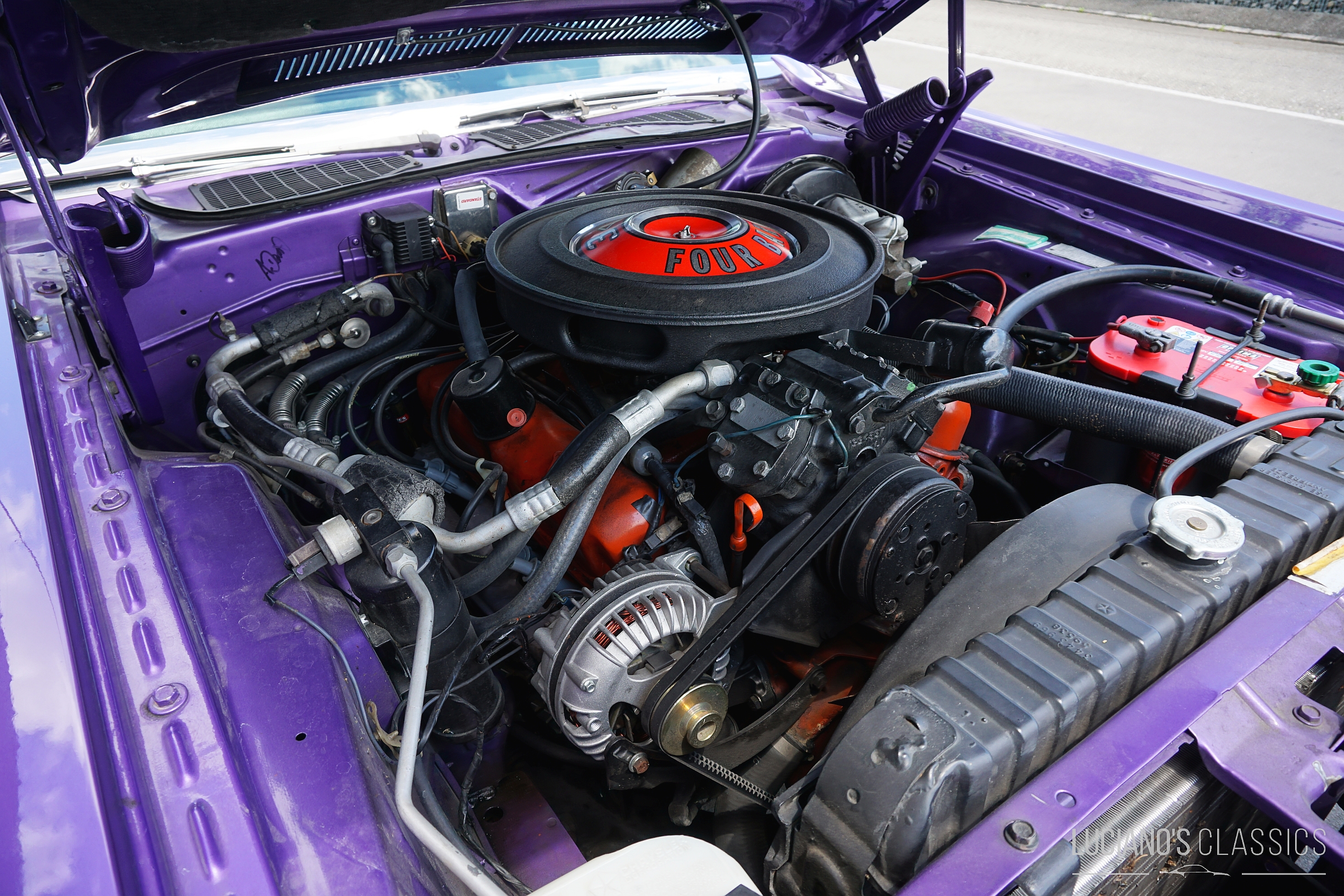
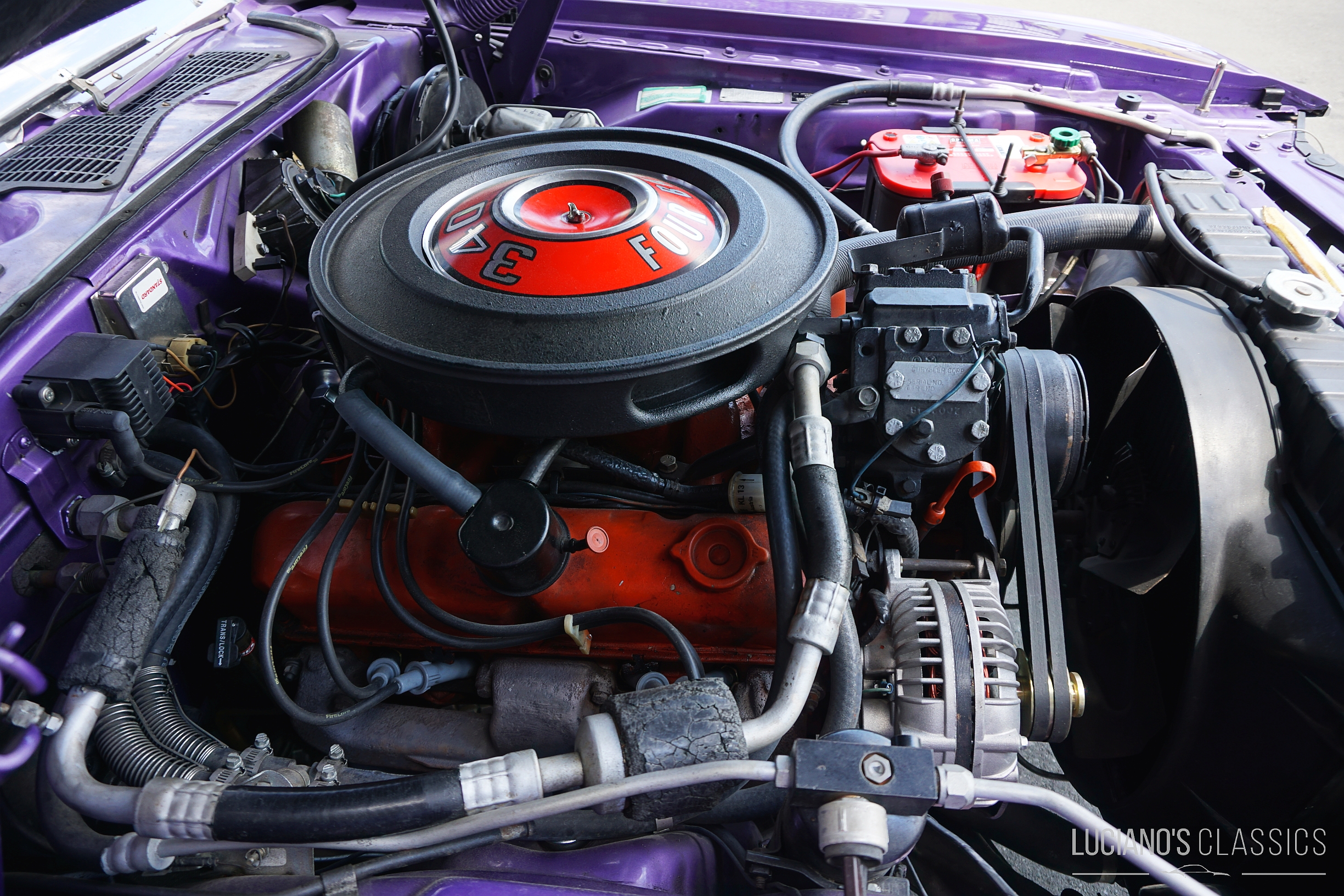
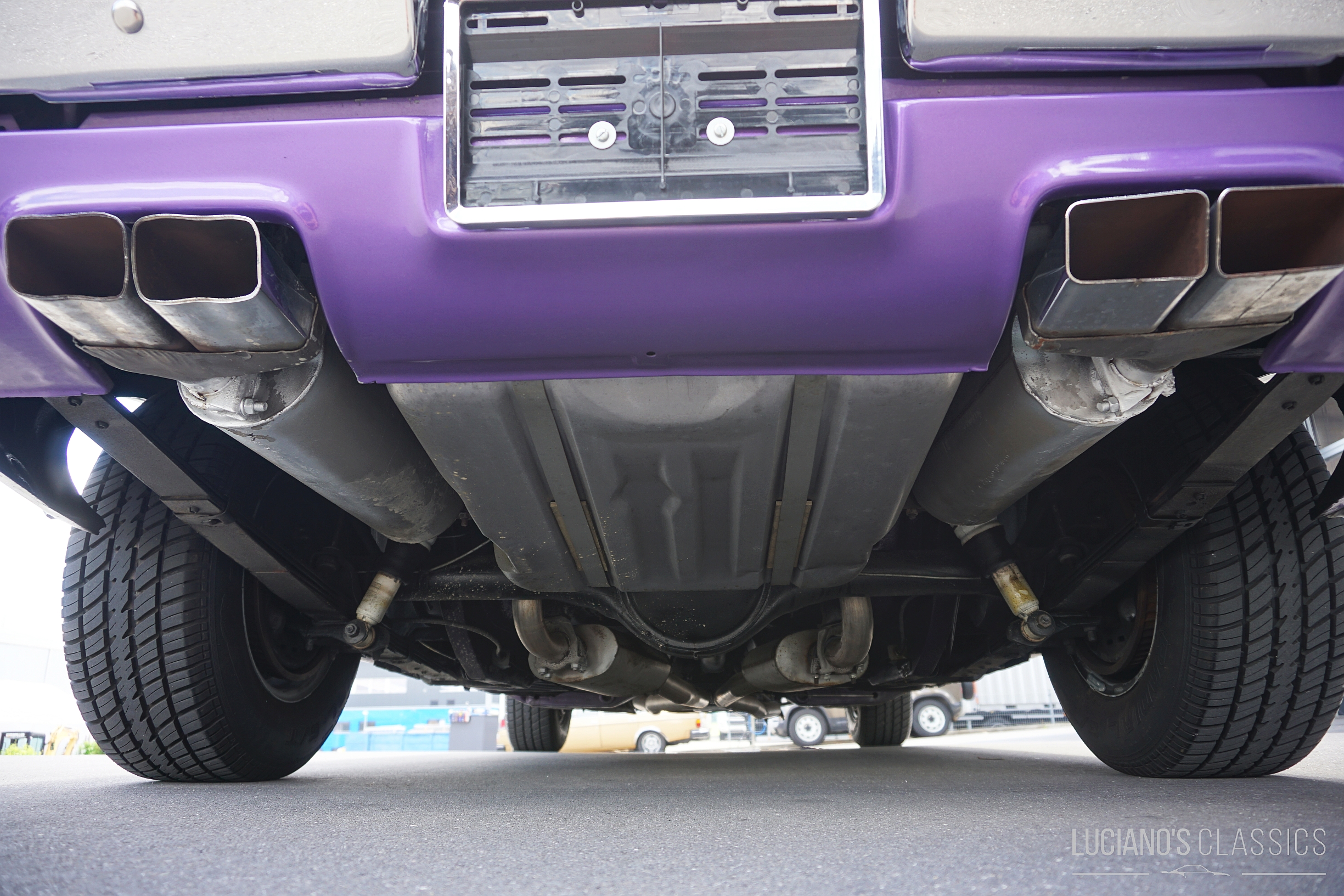
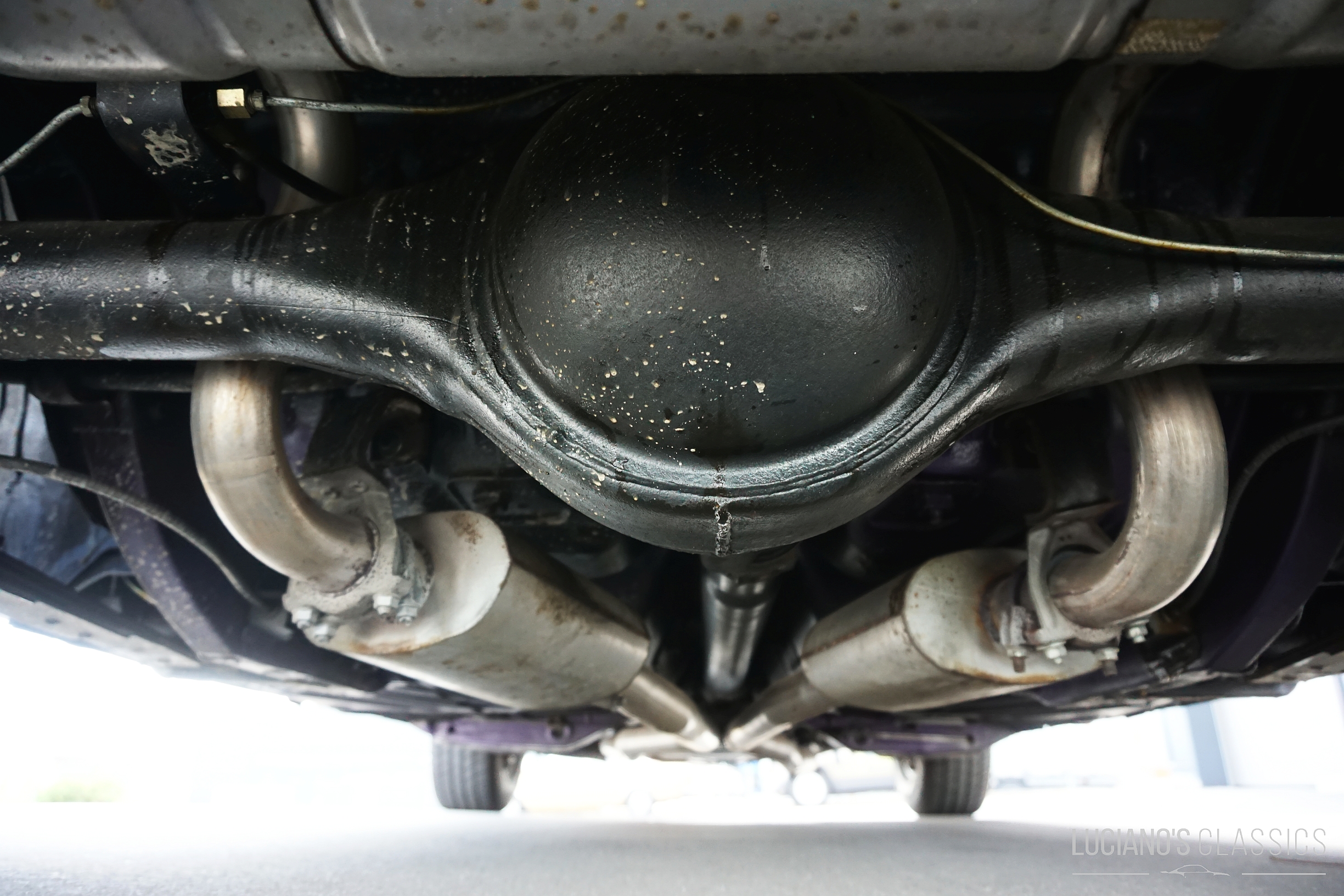
From the factory, the car was equipped with power steering, power brakes, rally suspension, rally dashboard, rev counter, clock, tinted G11 glass, H51 air conditioning, Music Master AM radio, painted sports twin mirrors, 3-speed windshield wipers, chrome exhaust tips, 15X7 rally wheels with hubcaps, space saver spare wheel, sport hood, hood pins, trunk lights, map light, pedal dress-up, H-code 340 V8 (number 228964, casting number 2780930) and 3.55 Sure Grip rear axle. The original paint was FC7 Plum Crazy and the Chally was ordered with a black interior, black vinyl top, black V21 performance hood wrap and black R/T stripes. This is exactly how the collector's car still looks today, only completely and superbly restored.
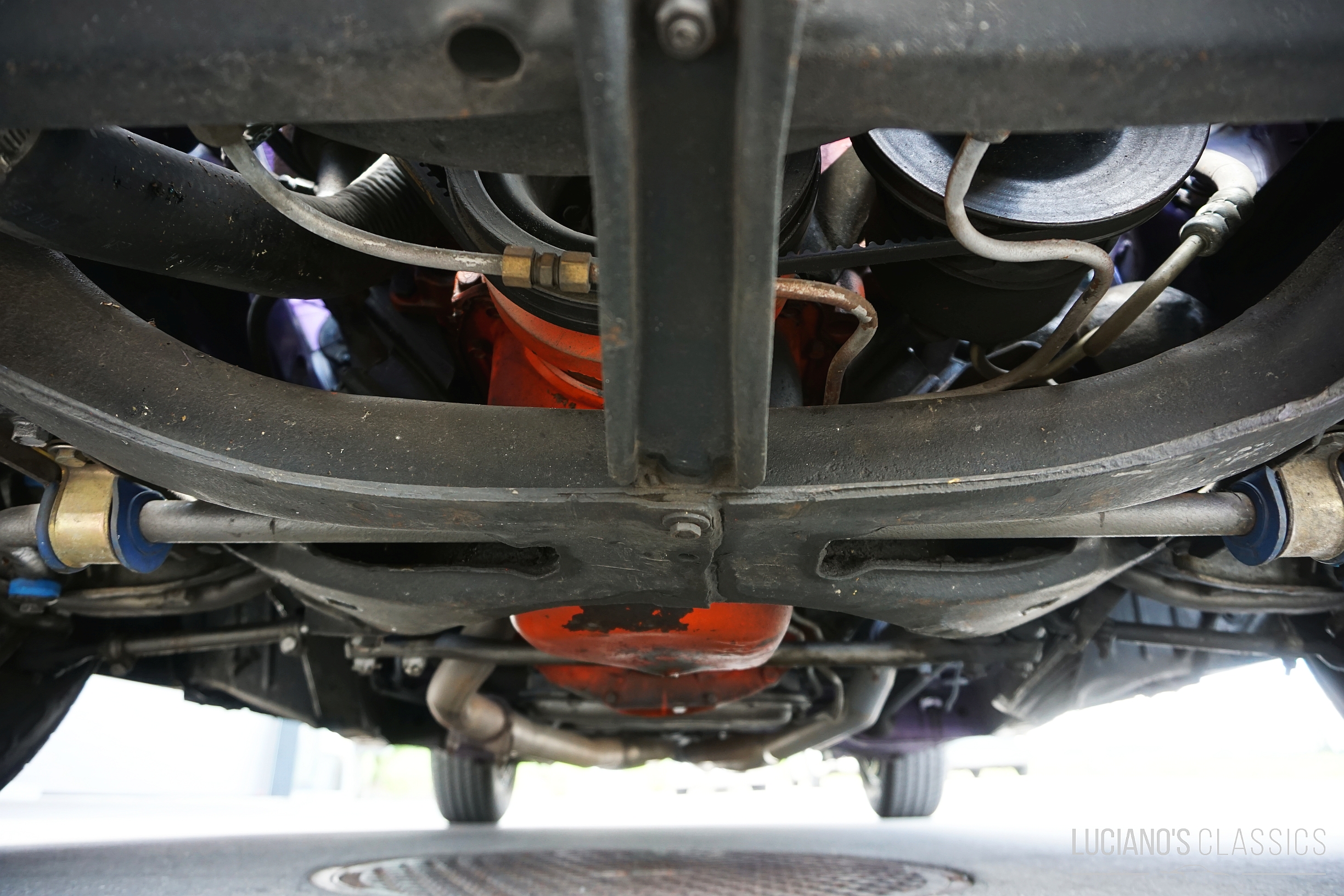
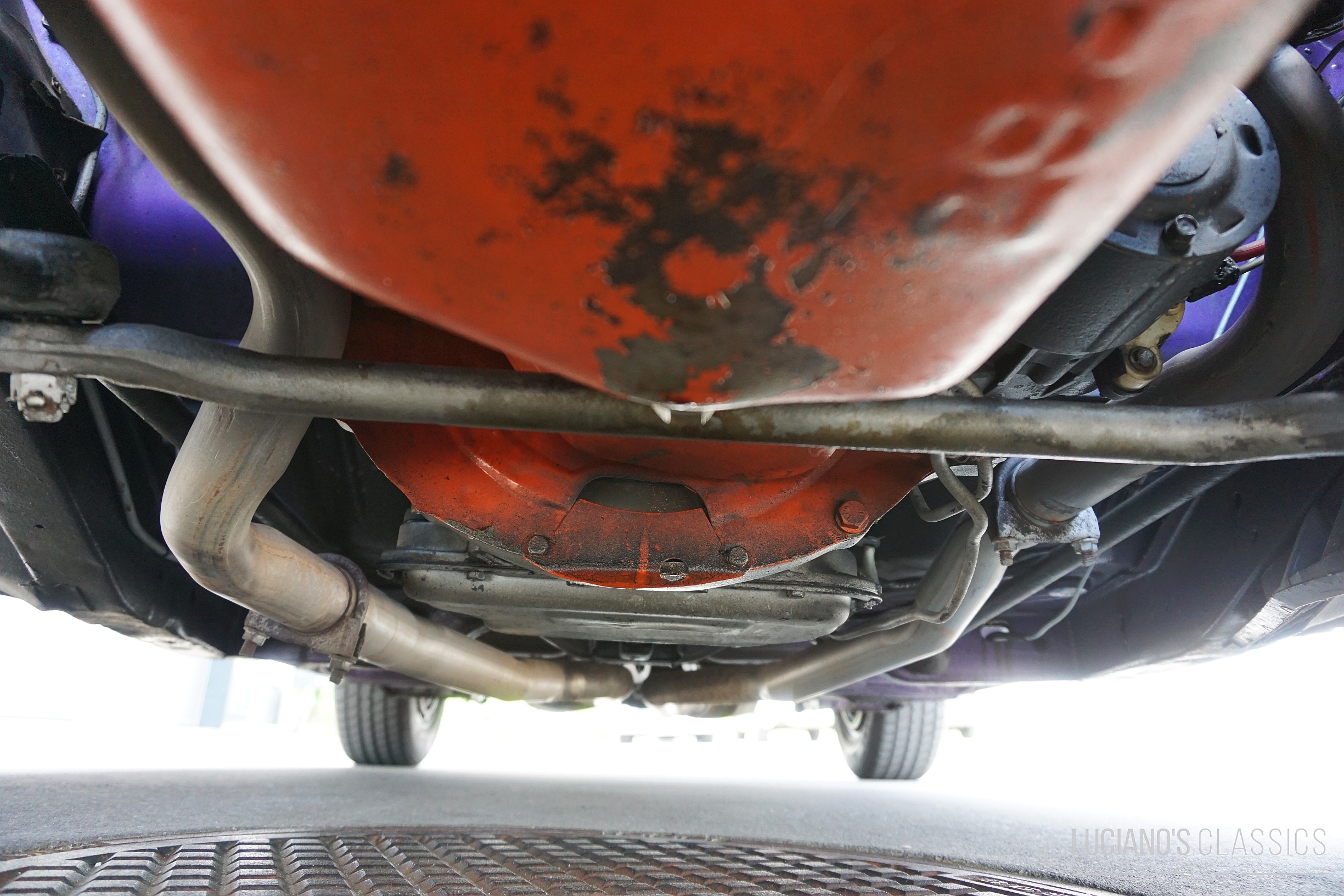
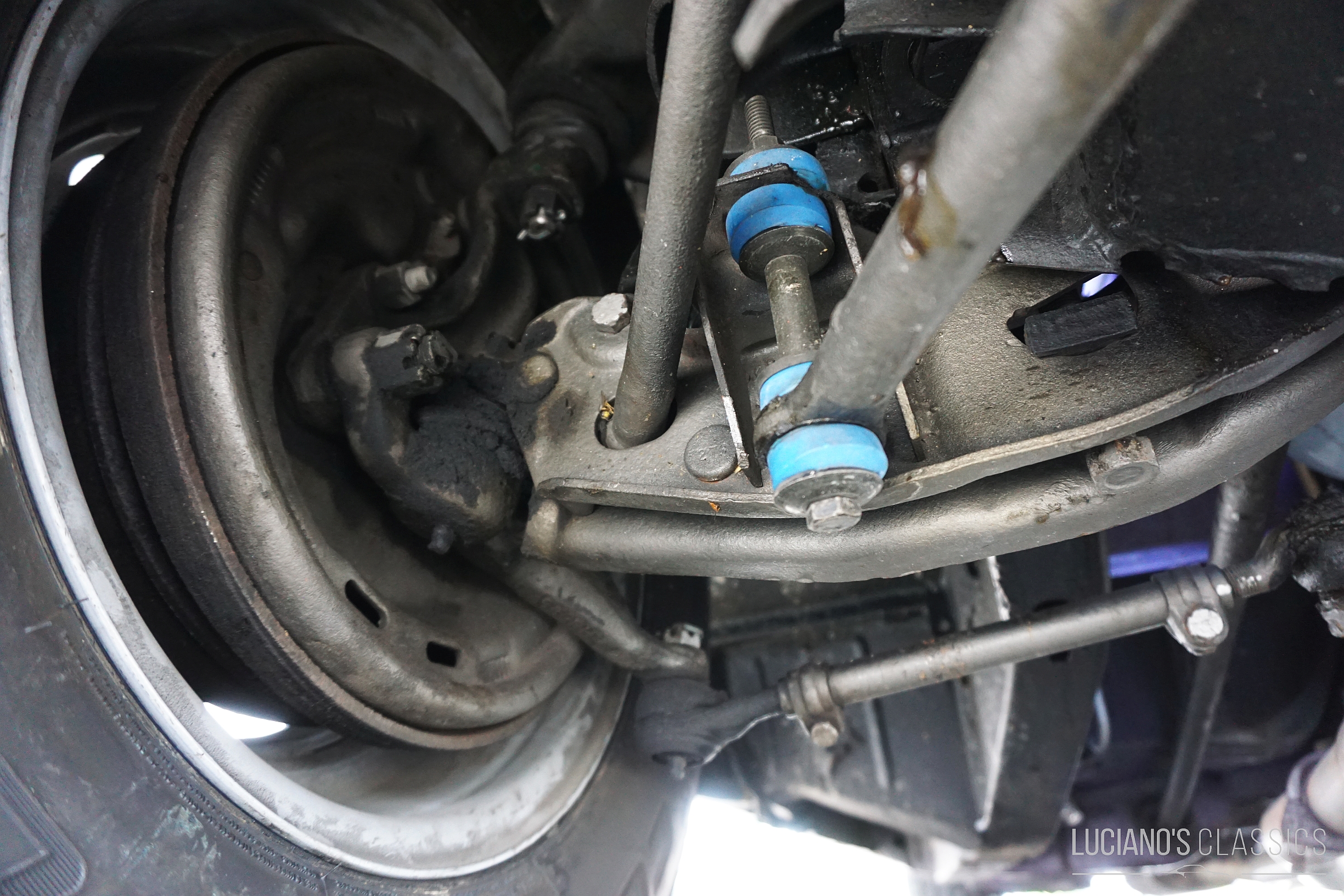
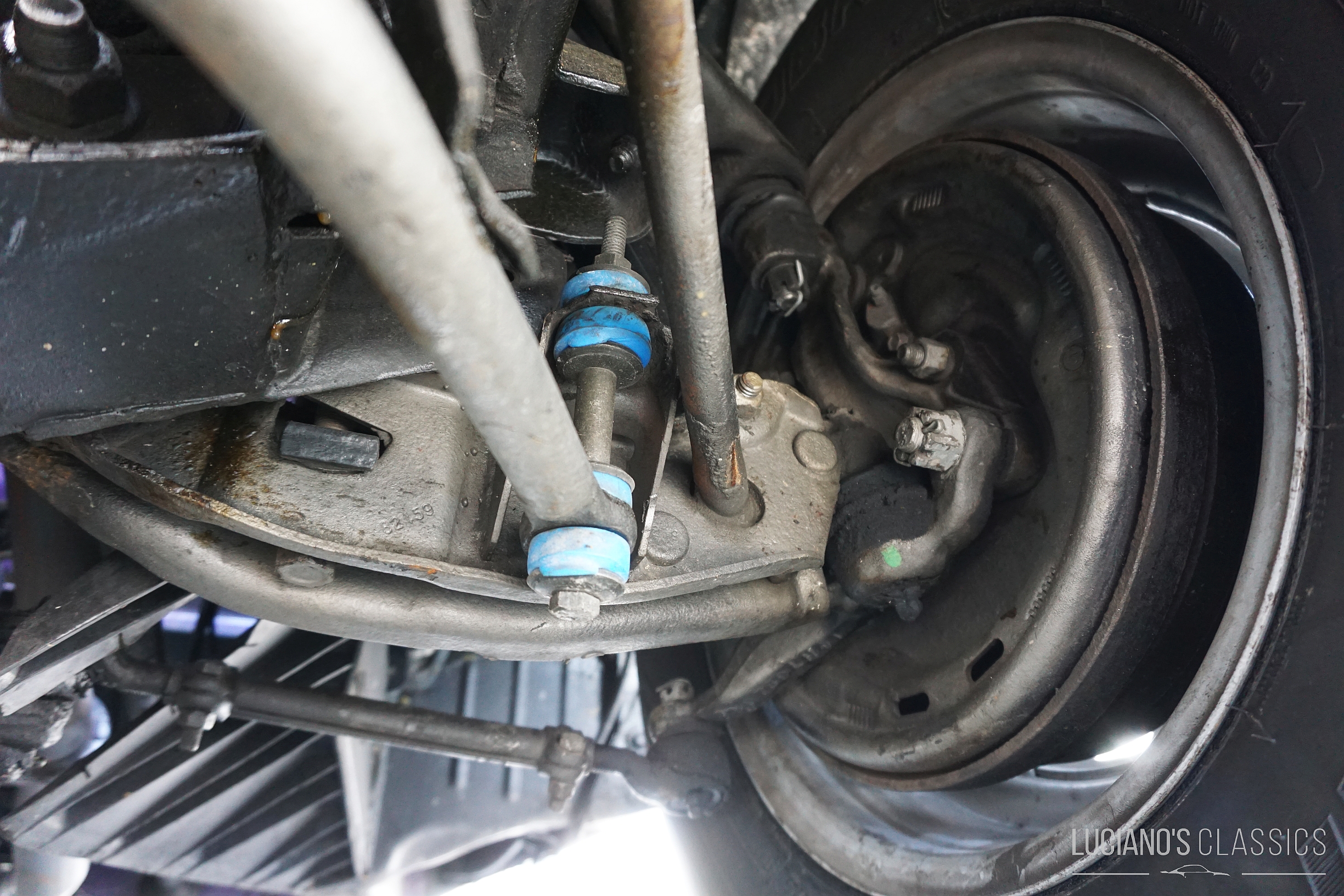
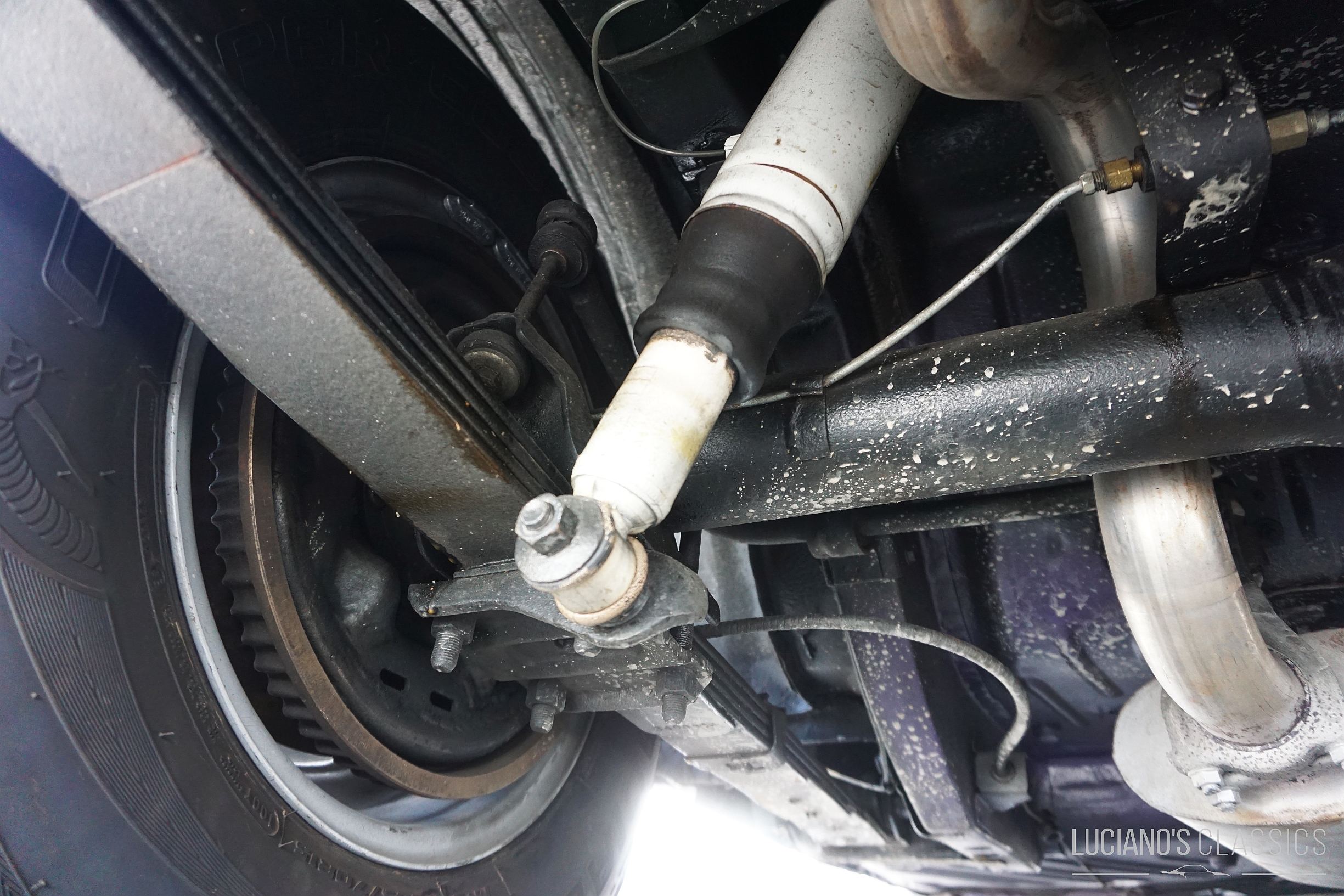
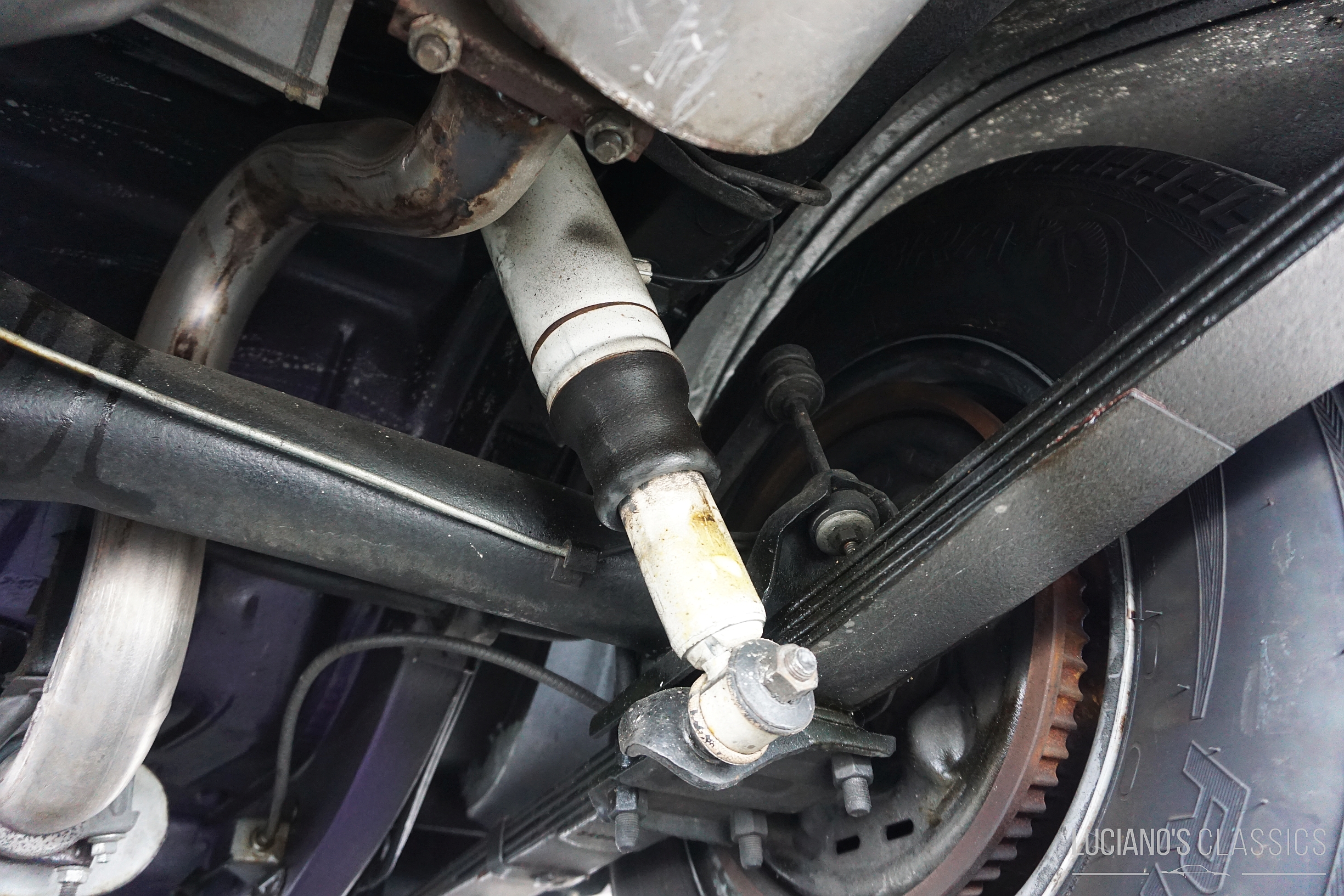
This Challenger Road & Track was restored to amazing condition in 2013 through a very extensive restoration and is the finest example of a «matching numbers» '71 Challenger R/T we have ever seen. The paintwork was applied to the bare steel bodywork and is still absolutely immaculate today - not least thanks to several layers of clearcoat. The chrome parts are just as stylish, showing no signs of age thanks to triple treatment. From top to bottom and from front to rear, the Challenger, including all options, has been restored to its original condition, just a little better. In order to retain the originality, the original drivetrain was retained and reinstalled in a revised condition. Even the jack in the trunk and the fan and housing were overhauled. The list of all the work and revised or replaced parts is almost endless, but is available.
As the car was native to the Southwest, well cared for and therefore in good condition, the factory fender tag is still visible, along with any numbers worth knowing on sheet metal and drivetrain. The history of the machine is short, as according to the insurance it had only known one previous owner in Canada and was imported to Switzerland by the second owner at the end of 2013.
The 340 version of the Challenger R/T was an excellent street car and one of the few cars that were designed for handling in 1971. The R/T option brought a decent amount of power to the market and proved that you didn't need a big block to show the pavement who was the new sheriff around town. In 1971, only 731 vehicles were produced with this drivetrain, unfortunately we have not been able to determine for certain how many of them were in the Plum Crazy color.
If you are looking for an almost perfect, original Challenger in new car condition and in the «High Impact» color Plum Crazy, you can't go wrong with this car. The value retention is guaranteed and the excellent technical condition allows the new owner to use the car spontaneously for a longer road trip without hesitation - even without having saved the towing service or the mechanic of trust on speed dial. And yes, the air conditioning works.
You can find the video of the Chally at the bottom of this page.
This vehicle has already been sold.
Model history
In 1967, the market for pony cars was in full swing. Chrysler predicted that the „specialty compact“ segment would grow to 1.5 million sales by 1970, of which the company could easily claim 200,000 or more. They set out to design a replacement for the Plymouth Barracuda, with the caveat that Dodge would finally get its own version. It was to be an upscale model to compete with Pontiac's new Firebird and the Mercury Cougar.
The original 1964 Plymouth Barracuda, which was actually launched two weeks before the famous Ford Mustang, leading Mopar fans to believe that the class should be called Fish Cars rather than Pony Cars, had a problem: it and its 1967 successor were based on Chrysler's compact A-body platform, which was overwhelmed by Chrysler's big-block V8 engines. For the 1970 models, Chrysler therefore designed a new E-body platform that combined parts of the A-body with the Charger's mid-size B-body.
Dodge introduced the 1970 Challenger in the fall of 1969, and although it looked very similar to the Barracuda, the two cars not only had different bodies, they were not the same size. The Challenger's wheelbase was two inches longer and the car was 4.6 inches longer and 2 inches wider overall than the Barracuda. Innovative features included concealed windshield wipers, flush door handles, an energy-absorbing steering column and the industry's first molded polypropylene door panels.
Dodge offered the Challenger as a standard and R/T model, with the latter having a stiffer suspension, larger brakes and bigger engines. Dodge offered both versions as either a coupe or convertible, plus a luxurious SE coupe with a padded vinyl roof and a slightly fancier interior. The engine range included virtually all Chrysler engines, from the economical Slant Six to the huge 440 V8 and the legendary 426 Hemi. There was a choice of three- and four-speed manual transmissions as well as the three-speed TorqueFlite automatic.
The only thing the Challenger lacked was good timing. By the early 1970s, muscle cars were on the wane, victims of rising insurance premiums and changing consumer tastes. Buyers began to shun the heavy Detroit powerhouses in favor of smaller, more economical and sensible cars. In 1970, Chrysler sold fewer than 140,000 E-bodies, 83,000 of which were Challengers - and many of those sales came at the expense of the Charger. In 1971, Challenger sales dropped to just under 30,000, while Plymouth sold not quite 19,000 Barracudas. The glory days of the E-Body were over before they had begun.
The year 1972 is widely regarded as the end of the muscle car era. Horsepower numbers were dropping across the industry, not only because of the switch from gross to net horsepower, but also because of declining compression ratios in response to new emissions standards. The 1972 Dodge Challenger received a styling refresh, but the company canceled the convertible along with the R/T model and all big-block engine options. The '73 Challenger received massive bumpers to meet the new collision standards, and engine choices were limited to the 318 with 150 horsepower and the 340 with 240 horsepower. Sales were up a bit - 1973 was a good year for the industry as a whole - but then the OPEC oil embargo hit, plunging the US into an energy crisis. Ford's downsized Mustang II was an instant success, but Dodge sold only 16,000 Challengers in 1974. After only five years of production, Chrysler discontinued production of the E-body as sales targets were not met and the program was reportedly losing money.
Details
- 96’071km
- 1. inv. 01.07.1971
- Veterans MFK 08.09.2020
- 5,576 cc V8 engine
- 280 HP
- Type certificate X
- Master number 177.248.630
- Chassis JS2 3H1 B22 896 4
- Unladen weight 1,670 kg
- Payload 420 kg
not what you are looking for?
We will be happy to find your individual dream vehicle.
Simply make a non-binding inquiry and benefit from our network.